
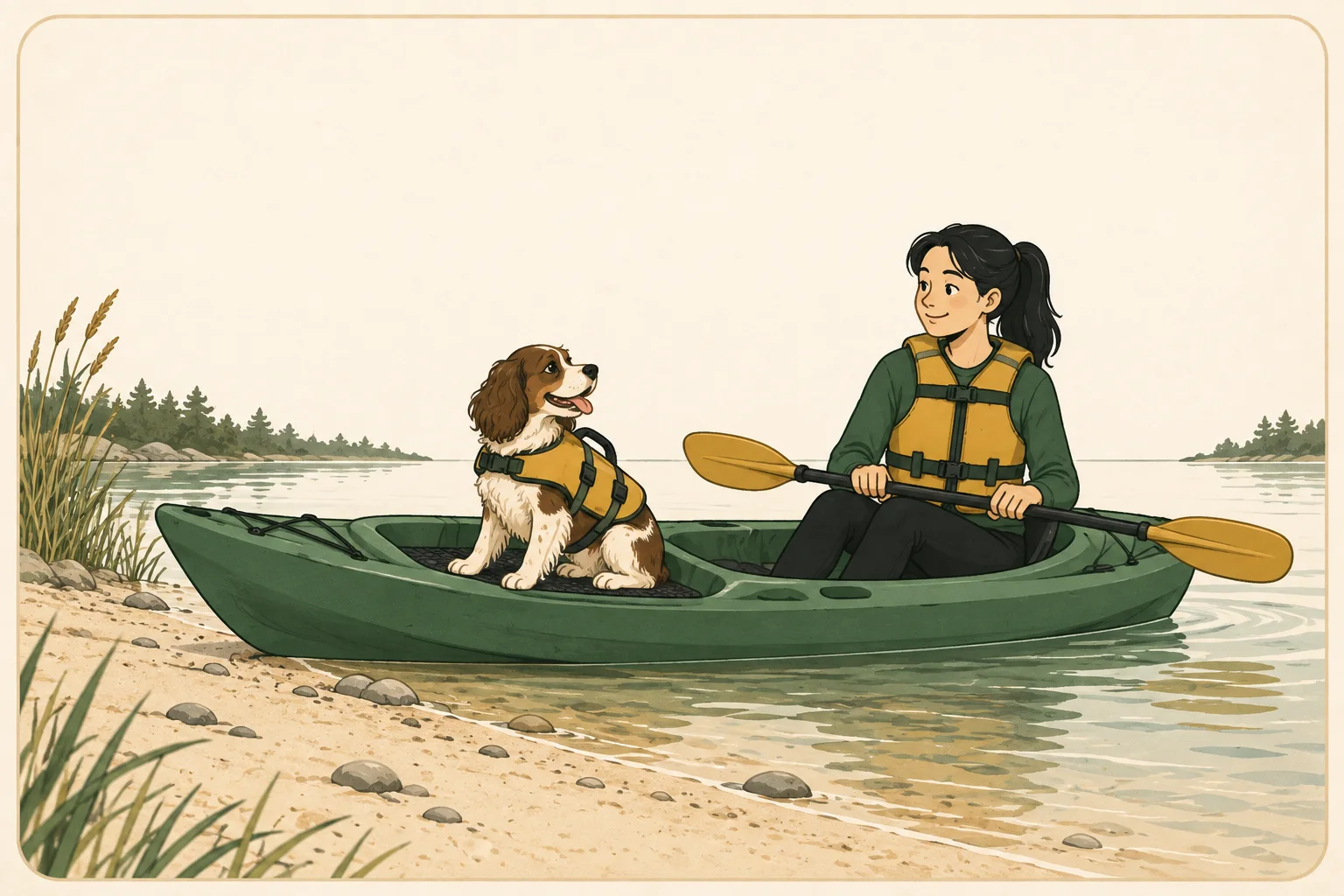
- Confirm the boat, venue and conditions suit both paddler and dog.
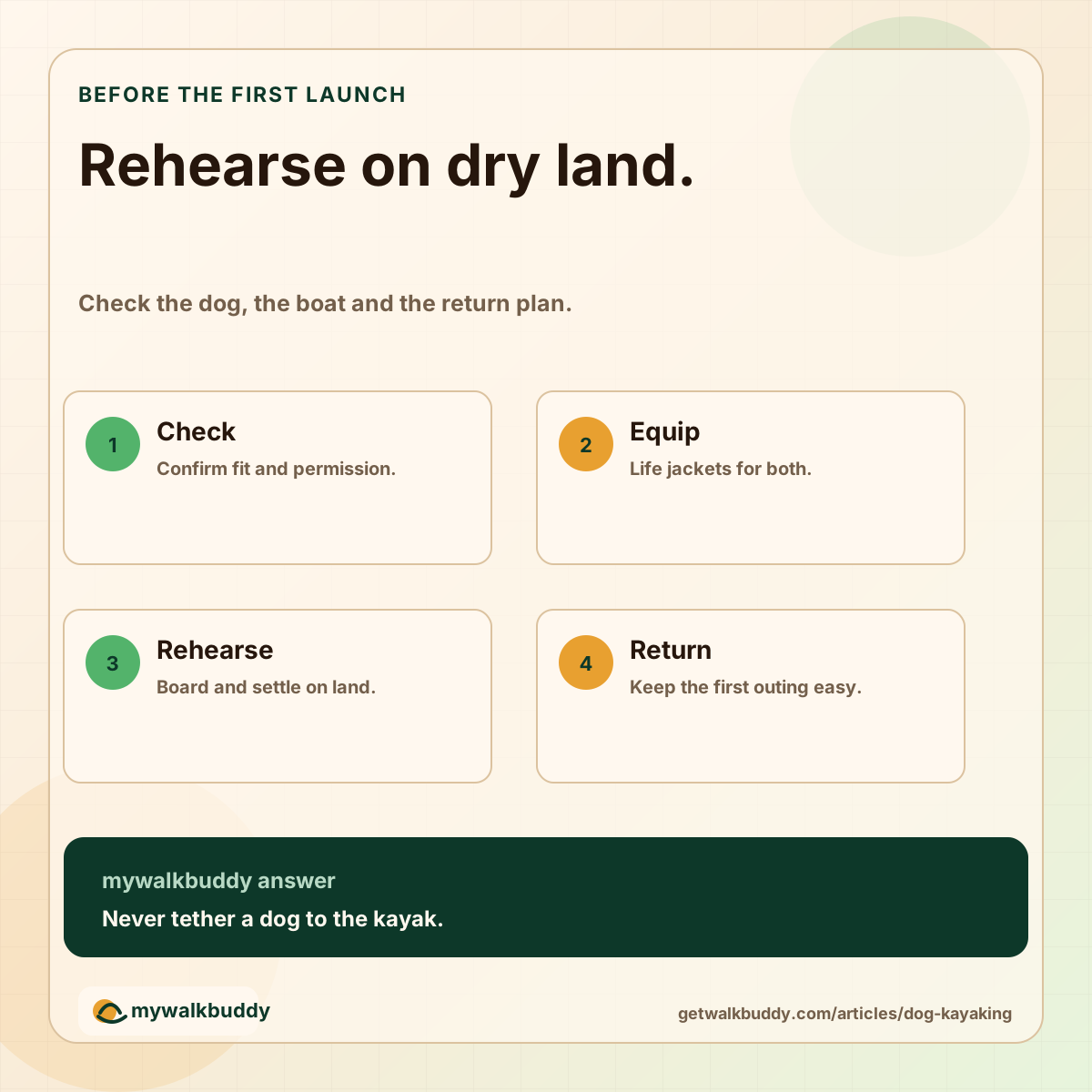
- Practice boarding, settling and leaving before a real trip.
- Never attach the dog to the kayak while on the water.
Turn this answer into a walk you can actually track.
GetWalkBuddy is a dog walking app for owners who want a simple route tracker, timer, distance view, and daily walk log without turning the walk into a spreadsheet.
Is your dog ready to join a kayak outing?
Readiness involves comfort with the boat and your ability to manage it safely. AKC recommends gradual introduction, moving at the dog’s pace and returning to an easier step if the dog is distressed.
Make three separate decisions: whether the dog enjoys the setup, whether the equipment suits both of you and whether you have the skills for the location. A yes to one does not answer the others.
If you are new to paddling, learn without the dog first. Ask a qualified instructor about capsize recovery and how adding a moving passenger affects balance. A calm dog does not remove the need for paddling competence.
Choose a shore-based outing if the dog cannot settle comfortably, if conditions are uncertain or if you cannot explain your return plan. The day can still include a pleasant walk without launching.
Sources: AKC: boating and kayaking with dogs
What equipment decisions matter most?
Use a suitable stable craft and properly fitted flotation for the dog and paddler. AKC recommends a canine life jacket even for strong swimmers and warns never to tether a dog to the vessel.
Check the craft’s capacity with the total load: people, dog and equipment. Confirm dog permission and any restrictions with the rental provider or venue before arriving. Ask whether a supervised fitting or land trial is possible.
Give the dog a secure place to stand or settle without blocking your paddling movement. In a PetsRadar interview, behaviorist Rachel Rodgers recommends a nonslip surface and practicing with the boat before the trip.
Bring fresh drinking water and essential supplies in an accessible arrangement. A dry bag is useful only if you can identify what is inside without unpacking everything at the launch. Keep the dog’s space clear of loose equipment.
Sources: AKC: boating and kayaking with dogs; PetsRadar: kayaking advice from behaviorist Rachel Rodgers
How can you rehearse before launching?
Introduce the kayak on stable land, let the dog explore voluntarily and reward comfortable boarding and settling. Practice the movements and sounds the dog will encounter before adding water.
Use a short rehearsal sequence: approach the stationary boat, enter if comfortable, pause in the intended spot and leave calmly. Do not push through hesitation to complete the sequence. Repeat the easier part on another occasion if necessary.
Then sit in your own position and make gentle paddle movements clear of the dog. Watch whether the dog stays comfortable when your posture changes. This is a rehearsal, not a balance challenge or a reason to rock the boat deliberately.
Agree on simple boarding and exit cues you can use consistently. If another adult helps, decide who manages the launch and who watches the dog before moving the boat.
Sources: AKC: boating and kayaking with dogs; PetsRadar: kayaking advice from behaviorist Rachel Rodgers
What should the first water session include?
Choose calm water, a simple launch and an immediate return option. Rodgers recommends a short, manageable introduction rather than making the first attempt an ambitious route.
Identify the landing place before leaving it. Avoid adding sightseeing, a group event or a distant destination to the same first session. The useful question is whether the setup works, not how far you can travel.
Keep the dog untethered from the boat. Manage shore access in accordance with local rules, but do not solve jumping or wandering by tying the dog to the kayak. If safe management is not possible, postpone the launch and obtain instruction.
Return when the dog becomes unsettled or conditions change. Do not wait until the original planned duration has elapsed. Your route should allow that decision without an exhausting journey back.
Sources: AKC: boating and kayaking with dogs; PetsRadar: kayaking advice from behaviorist Rachel Rodgers
What belongs on a pre-launch checklist?
Use a short checklist that supports a real decision to stay ashore when something is missing.
This is a planning prompt, not a substitute for paddling instruction or site-specific safety guidance:
- Before: confirm dogs are allowed and check current conditions.
- Fit: suitable craft, capacity and flotation for both passengers.
- Practice: calm boarding, settling and exit rehearsed.
- Return: an easy landing and a plan for changed conditions.
- Stop: no tether, no forced boarding and no pressure to complete a route.
Questions owners ask when the leash is already in their hand
-
Should I clip my dog’s leash to the kayak?
No. Tethering can trap a dog if the kayak capsizes. If you cannot manage the outing without tying the dog to the boat, seek instruction and postpone launching.
-
Does a strong swimmer need a life jacket?
Yes. AKC recommends canine flotation even for strong swimmers because an accident may leave a dog tired or disoriented.
-
Can our first practice happen on land?
Yes. Calm voluntary boarding and settling on land are useful preparation before adding water and movement.
-
How long should the first trip be?
Keep it manageable with an easy return rather than using a universal time target. End when the dog or conditions require it.
Keep the shore walk simple.
GetWalkBuddy records your walking route, time and distance. Keep kayaking plans and safety checks separately; the walking app is not a paddling navigation tool.