
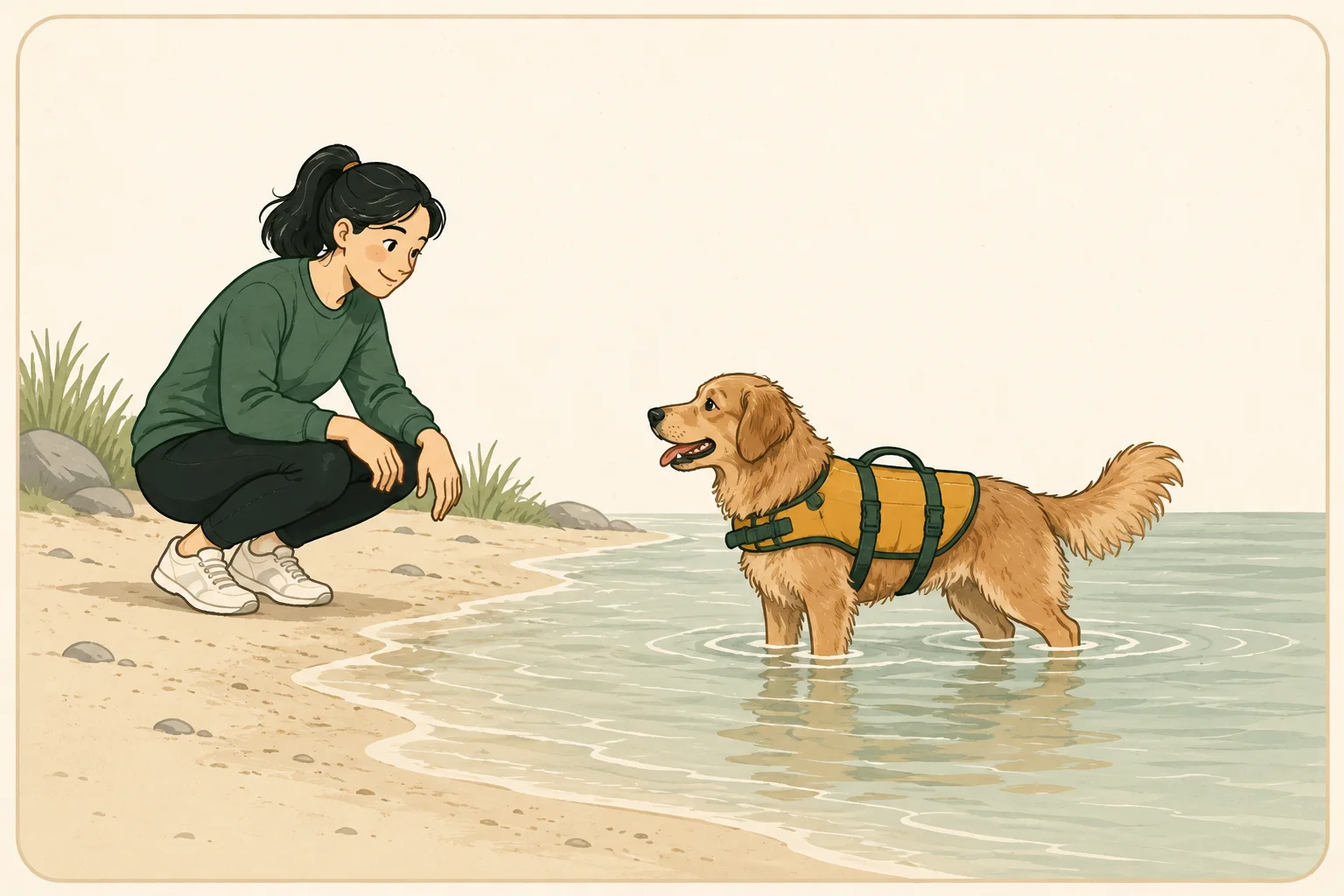
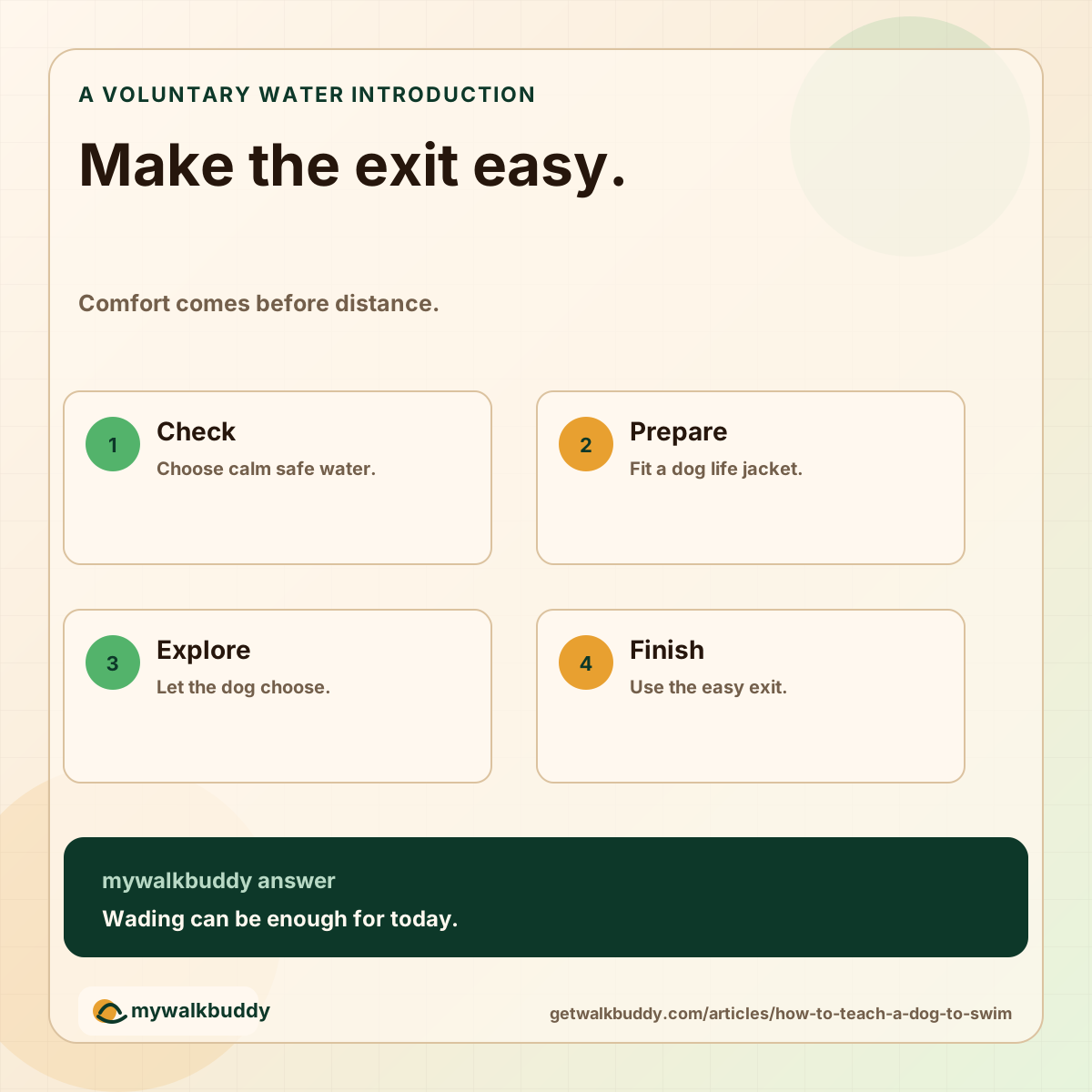
- Check the water and exit before inviting the dog in.
- Separate comfortable wading from the harder task of swimming.
- End while the dog is comfortable; do not turn distance into a target.
Turn this answer into a walk you can actually track.
GetWalkBuddy is a dog walking app for owners who want a simple route tracker, timer, distance view, and daily walk log without turning the walk into a spreadsheet.
What should you check before the first lesson?
Not every dog is a natural or capable swimmer. AKC recommends a gradual introduction and a fitted flotation aid rather than assuming breed or enthusiasm makes water safe.
If your dog has health, breathing or mobility concerns, discuss the activity with your veterinarian first. A recreational swim lesson is not a substitute for prescribed rehabilitation.
Choose a permitted location with known water conditions, a stable gentle bank or accessible pool steps, and room to leave without a scramble. Check current local advisories and closures before traveling. A pretty photograph does not tell you about currents, water quality or submerged hazards.
Bring drinking water, a towel and a dry place to rest. Designate one adult to watch the dog throughout the activity; being near the water while looking at a phone is not the same task.
Sources: AKC: teaching a dog to swim
What can a successful first visit look like?
A successful visit may involve only approaching the edge or standing in the shallows. AKC advises letting the dog enter willingly and keeping the introduction positive, without throwing or forcing them in.
Treat the outing as a chance to learn what is comfortable. The dog might sniff the bank, watch the water and walk away. That gives you a useful starting point even if no swimming happens.
Keep the route back to dry ground obvious. Avoid positioning yourself so the dog feels caught between you and deeper water. If the dog chooses to leave, allow the break rather than immediately calling them back.
For an illustrative first-visit plan, choose one aim: calmly approach the edge. On another visit, the aim might be voluntary shallow wading. These are planning examples, not a timetable every dog should follow.
Sources: AKC: teaching a dog to swim
How do you progress beyond wading?
Move gradually from comfortable shallow exploration toward supported swimming only when the setting and dog are suitable. Keep close, use the fitted life jacket and ensure the dog can return to the exit.
Separate the decisions. A dog being happy near water does not automatically mean the dog is ready for deeper water, a moving boat or a thrown toy. Add one challenge at a time so you can tell what changed.
If you are uncertain how to support your dog safely, use a qualified canine swimming instructor in a suitable supervised facility. Ask how they introduce flotation equipment, handle a dog who wants to leave and teach the exit before booking.
Do not use your dog’s willingness to chase something as the only measure of readiness. An exciting game can make it harder to notice fatigue or repeated swallowing of water.
Sources: AKC: teaching a dog to swim; AKC: preparing a dog for water activities
When should you stop?
Stop if the dog is frightened, tiring or struggling, and return to a manageable activity. AKC’s water guidance emphasizes supervision, suitable conditions and avoiding excessive water intake.
Plan the break before you need it: where will the dog stand, where is the towel and how will you leave the site? A clear end to the session is more useful than promising “just one more” attempt.
Do not estimate a safe swim duration from a walking distance or a generic minutes-per-day rule. Conditions, health, swimming skill and exertion differ. Ask your veterinarian about individual limitations.
If the dog has breathing difficulty, collapses or appears unwell after water exposure, seek urgent veterinary help. Do not continue the outing to see whether more exercise fixes the problem.
What should you remember for next time?
Keep a short note about the environment and the easiest comfortable step, rather than recording a swimming achievement score.
A useful example is: “Quiet bank, willing to stand in shallows, left calmly; repeat the same setup.” Record uncertainty too: if you could not judge the current or water quality, choose a different supervised location.
- Before: check entry, exit and water conditions.
- Comfort: what the dog chose to do voluntarily.
- Stopping point: what prompted the break.
- Next visit: repeat the comfortable step or obtain guidance.
Questions owners ask when the leash is already in their hand
-
Can all dogs swim naturally?
No. Do not assume a dog can swim safely because of its breed or because it likes water.
-
Should I throw a toy farther out to encourage swimming?
Do not use distance or excitement to push a hesitant beginner beyond a manageable depth. Establish comfort, supervision and a usable exit first.
-
Does a life jacket replace supervision?
No. It is a flotation aid, not permission to leave a dog unattended or enter unsafe water.
-
What if my dog only wants to paddle in the shallows?
That can be a suitable activity in safe conditions. There is no requirement to progress to swimming.
Plan the walk around the water visit.
GetWalkBuddy records walking route, time and distance. Keep swimming observations separately; a walking log does not measure swimming effort.