
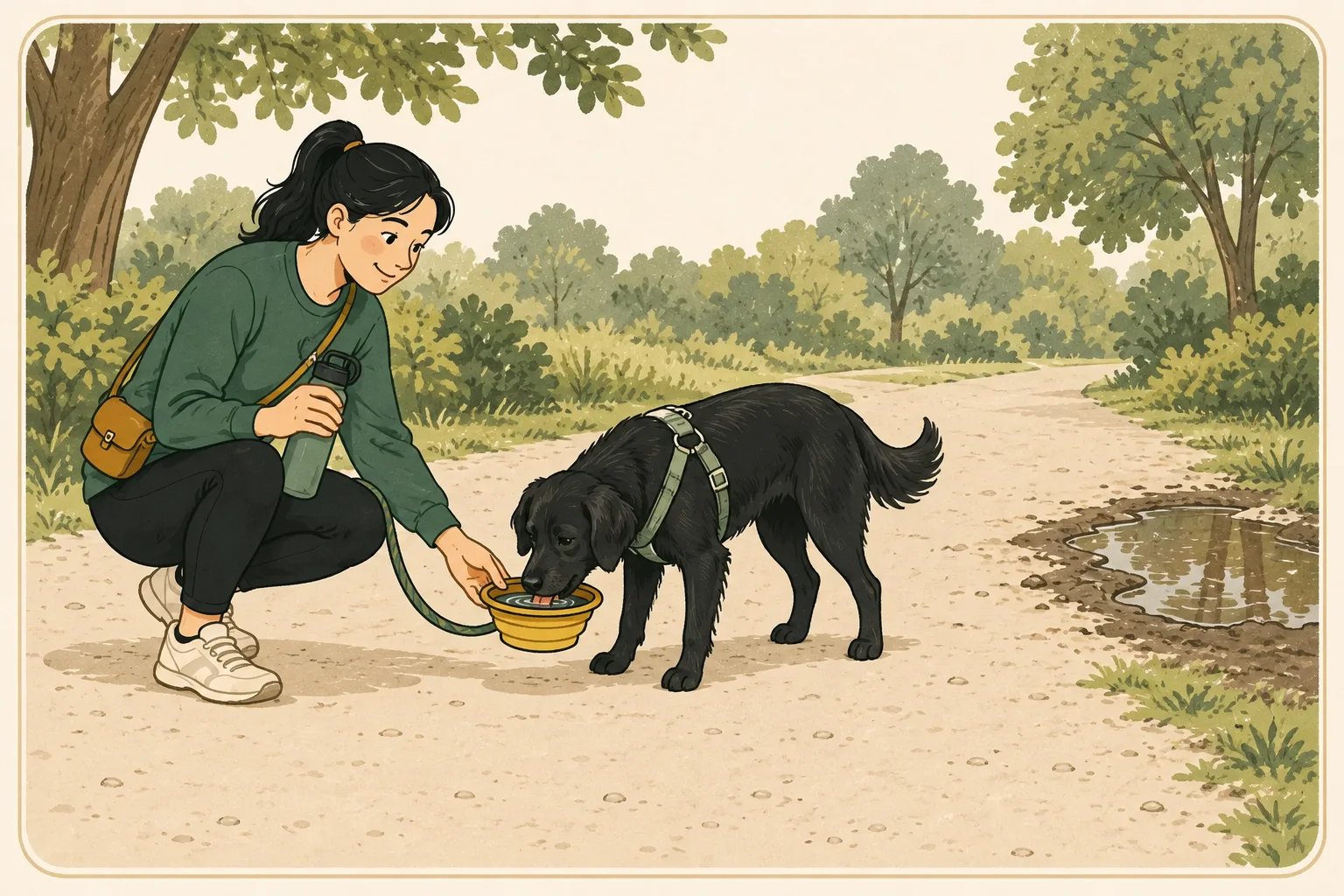
- Do not judge water safety by appearance alone.
- Note where and when the dog drank if exposure occurs.
- Carry fresh water and a clean bowl on your walk.
Turn this answer into a walk you can actually track.
GetWalkBuddy is a dog walking app for owners who want a simple route tracker, timer, distance view, and daily walk log without turning the walk into a spreadsheet.
Can a dog get sick from drinking puddle water?
Yes. CDC describes contaminated water as a route for leptospirosis infection, and AKC notes that Giardia can occur in standing water such as puddles.
That does not mean every drink causes illness. It means a puddle is not a reliable drinking-water source, and looking clear is not enough to establish what it contains.
Keep the question practical: can you offer a known fresh-water source and avoid this puddle? You do not need to identify a pathogen at the path edge before making that choice.
If you are worried about a specific exposure, your veterinarian can assess the circumstances. A general article cannot determine the contents of the water your dog drank.
Sources: CDC: Leptospirosis in Animals; AKC: Communal Water Bowl Safety
What should you do after your dog drinks from a puddle?
Move away to prevent further drinking, offer fresh water and note the location and time. Contact your veterinarian if the dog is unwell or you are concerned about the exposure.
Keep an exposure note with three observations: where the water was; approximately when the drink occurred; anything unusual you actually saw. “Small roadside puddle beside parked cars” is more useful than guessing a chemical or infection.
If you suspect a poisonous substance, get advice promptly rather than waiting for symptoms. ASPCA Poison Control handles suspected poison exposures in the United States at (888) 426-4435; a consultation fee may apply.
Do not give leftover medicine or improvise a treatment because an online discussion mentions a particular disease. Tell the veterinarian about anything already given and follow their instructions.
If the water was part of a flooded area or a posted contamination zone, mention that specifically. Follow local access warnings and choose another route.
Sources: ASPCA Poison Control
Which changes should prompt a call?
Report illness after the exposure, including vomiting, diarrhea, unusual tiredness, appetite changes or changes in drinking and urination. These signs have multiple possible causes and need veterinary assessment.
CDC lists several of these signs in dogs with leptospirosis and advises immediate veterinary contact when the disease is suspected. The signs alone do not diagnose leptospirosis, and a normal appearance immediately afterward does not prove there was no risk.
If your dog collapses, has trouble breathing or appears severely unwell, seek emergency veterinary care. Give the clinic the exposure note while arranging help.
Use times and observations in your notes. An illustrative entry is “drank at the park at noon; refused the evening meal.” Avoid converting that sequence into “the puddle caused it” without assessment.
Sources: CDC: Leptospirosis in Animals; AKC: Communal Water Bowl Safety
Does vaccination make puddles safe?
No. CDC states that leptospirosis vaccination does not provide complete protection, and a vaccine for one disease does not address every possible contaminant.
Discuss your dog’s vaccination and prevention plan with your veterinarian. Describe your usual walks, travel and water exposure so the discussion reflects your actual routine.
Keep prevention and route management together. Having a vaccination conversation is useful; continuing to carry fresh water and avoiding unknown sources is still practical.
Do not use a dog’s age, breed or city address as proof that standing water is harmless. CDC notes that dogs in urban, suburban and rural settings can be at risk.
Sources: CDC: Leptospirosis in Animals
What should you carry instead?
Pack fresh water and a clean personal bowl or dog drinking bottle. AKC recommends a separate water source and regular cleaning of bowls.
Use this simple packing check: enough water for the planned outing and return; a container your dog will drink from; a way to carry the used bowl; and a reliable refill or shorter-route option.
Try the container at home before depending on it outdoors. A clever bottle is not helpful if the dog will not drink from its opening or you cannot use it while safely managing the leash.
For multiple dogs, decide how you will offer water without tangling leads or letting an unattended dog reach the puddle. Practice the handling setup in an easy place first.
Clean the bowl after use and inspect it for damage. A personal bowl still needs care; ownership alone does not keep it clean.
Sources: AKC: Communal Water Bowl Safety
How can you make prevention part of the walk?
Plan a water break and a route around persistent standing water. Give other walkers a specific location note when a familiar path is affected.
For example, “use the upper path until the flooded entrance clears” tells another walker what to do. “Watch out for water” leaves the decision unclear.
If the dog repeatedly seeks puddles, review whether you are offering fresh water conveniently and often enough for the outing. Unusual thirst or a clear change in drinking deserves a veterinary discussion.
After a rainy period, reassess the route rather than assuming yesterday’s dry crossing is unchanged. A shorter familiar loop can be a practical alternative when the usual path is waterlogged.
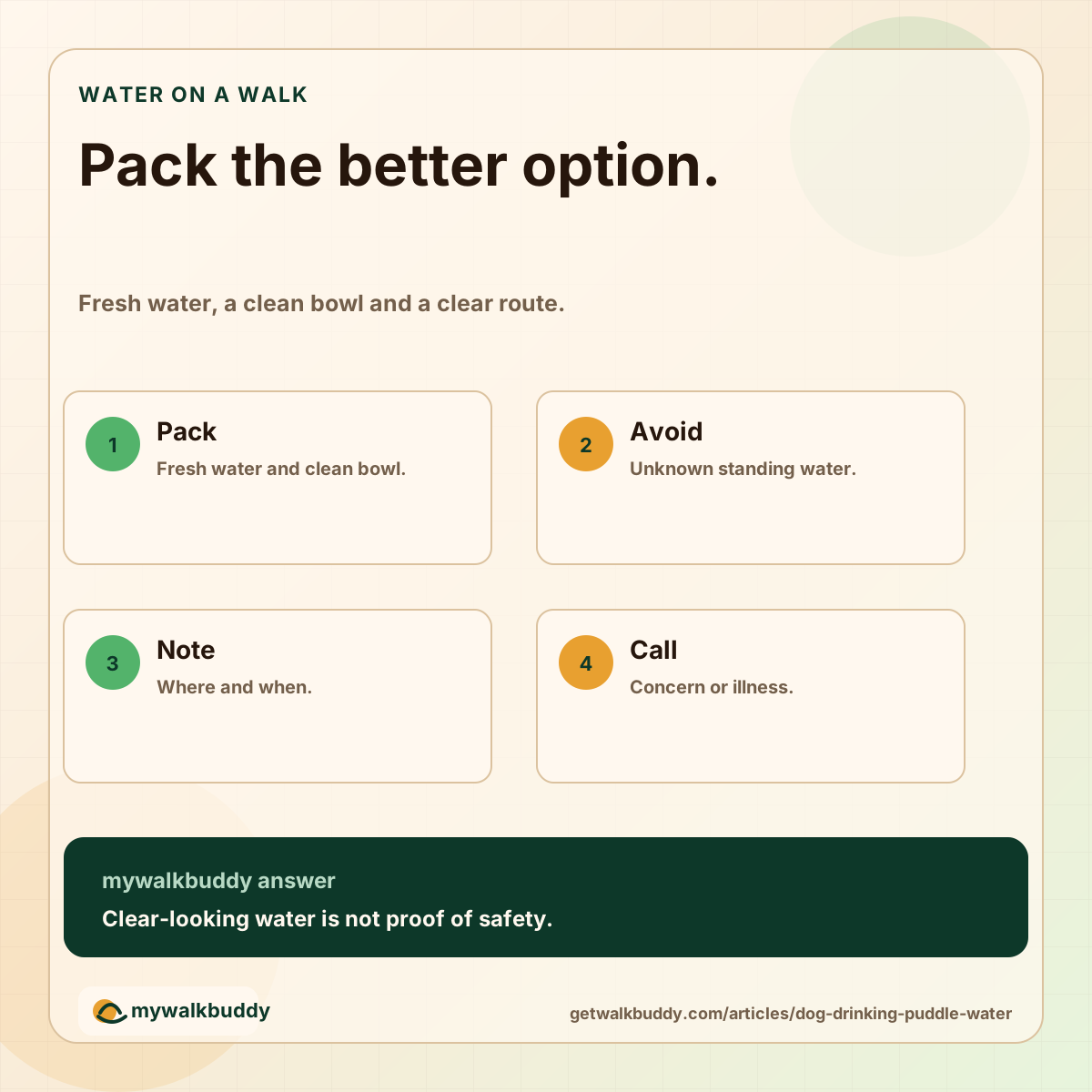
- Before: pack water and a clean container.
- During: avoid unknown standing water.
- After exposure: note time, place and observations.
- If unwell: contact the veterinarian and share the note.
Questions owners ask when the leash is already in their hand
-
Is a clear puddle safe for a dog?
Appearance cannot establish that the water is free of contamination. Offer fresh water from your own container.
-
Will every dog get sick after drinking puddle water?
No, but the outcome cannot be predicted from the drink alone. Seek advice if there is illness, suspected contamination or concern about the exposure.
-
Can I use a communal bowl instead?
Communal bowls may also be contaminated. A clean personal bowl with fresh water gives you more control over the water source.
-
Should I give antibiotics just in case?
Do not use leftover or unprescribed medicine. A veterinarian should decide whether testing or treatment is needed.
Keep track of your route.
GetWalkBuddy records route, time and distance. Use that history when choosing a drier alternative; keep health concerns and exposure notes for your veterinarian.