
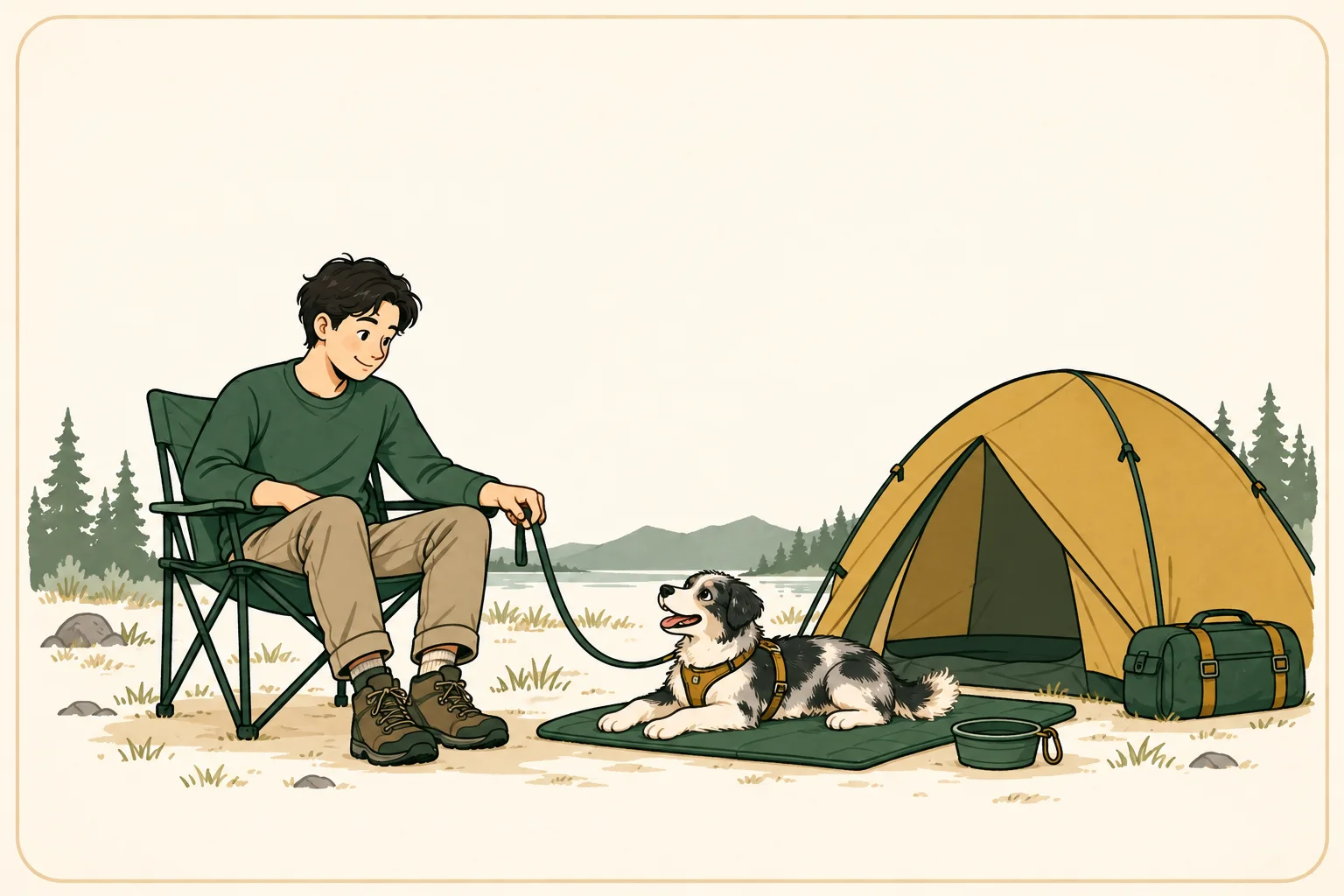
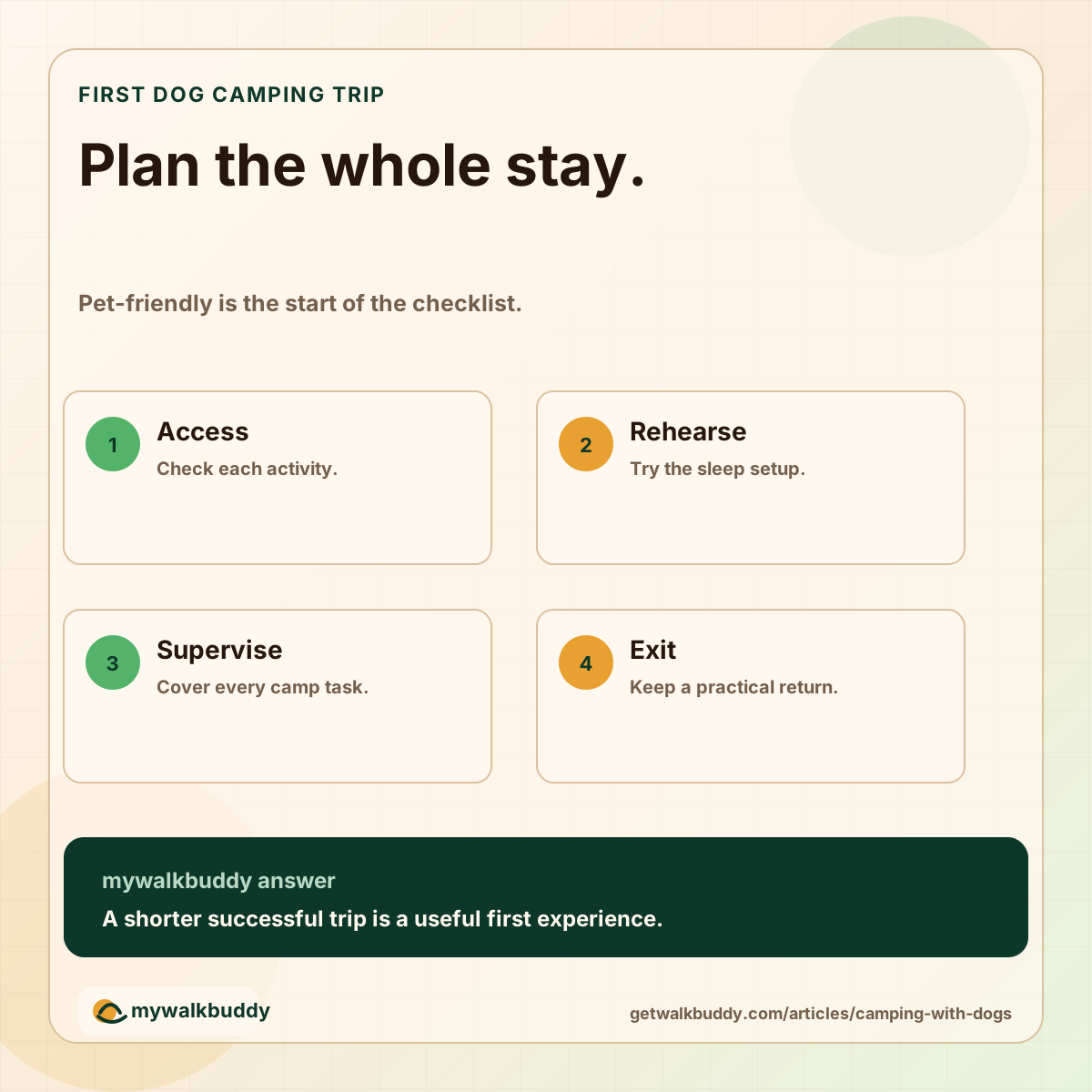
- Check the entire itinerary, not just the campsite’s pet-friendly label.
- Assign supervision during setup, cooking and visits to shared facilities.
- Keep the first overnight easy to shorten or abandon.
Turn this answer into a walk you can actually track.
GetWalkBuddy is a dog walking app for owners who want a simple route tracker, timer, distance view, and daily walk log without turning the walk into a spreadsheet.
What should you check before booking a dog-friendly campsite?
Check permitted areas, leash rules and whether dogs can join your planned walks and other activities. The National Park Service notes that parks may allow pets in some areas while restricting trails, water access or backcountry areas.
Build a simple itinerary with one line per activity: arrival, sleeping, toilet trip, walk, meal and departure. Beside each line, record where the dog will be and which rule you checked. Save the official page and the date checked.
For example, a campground may welcome dogs but the signature trail may exclude them. Resolve that before booking: choose an allowed walk, change the trip or arrange suitable care elsewhere. Do not assume a tent or parked vehicle is an acceptable place to leave the dog.
If a rule is unclear, ask the operator about the exact situation. “Can my dog use the lakeside path from this campground?” is more useful than asking only whether the destination is dog friendly.
How can you rehearse before the first overnight?
Try the sleeping arrangement somewhere easy to leave before making it part of a remote trip. This is a practical preparation exercise, not a test that guarantees the dog will settle at a busy campground.
Set up the tent or travel sleeping space and let the dog investigate calmly with you present. Introduce the mat, zipper noise and normal movement without combining them with a long journey and unfamiliar neighbors on the first attempt.
Write down what you learned. A dog who rests beside an open tent may not yet be comfortable inside it while the entrance is closed. Keep those observations separate rather than calling the tent “done.”
Choose a nearby first destination with straightforward access and a flexible return. The useful outcome is learning whether the setup works, not proving that you can stay for a planned number of nights.
What should you pack for camping with a dog?
Bring food, drinking water, bowls, identification, suitable walking equipment, waste bags, towels and appropriate first-aid supplies. The NPS also recommends checking health and parasite protection with your veterinarian for the destination.
Pack by task so essentials remain reachable: walking items together, feeding items together, sleeping items together. Do not bury the leash and waste bags beneath the tent you have yet to unload.
Add prescribed medication with its instructions, a familiar resting mat and the contact details of an emergency veterinary service near the destination. Check opening arrangements and the route there before relying on a phone signal at camp.
Ask the campsite how pet food, treats and waste must be stored. Keep this answer with your packing list; a generic camping checklist cannot establish the wildlife and food-storage rules for the particular site.
How do you manage the dog while setting up camp?
Assign one person to the dog while another handles tasks that need both hands. The NPS advises keeping dogs leashed, respecting noise and waste rules and never leaving them unattended, especially in a hot vehicle.
For solo camping, think through the awkward moments before arrival: carrying gear, using shared facilities and pitching the tent. If you cannot meet the site’s rules and supervise the dog through those tasks, choose a different setup or bring suitable help.
Walk the immediate area for hazards before settling in. Identify the permitted toilet route while it is light and use the same waste-disposal arrangement throughout the stay. Keep the dog away from cooking equipment and busy paths.
After outdoor time, include a tick inspection. The CDC recommends daily checks for pets that go outdoors. Make that part of returning to camp rather than waiting until the whole trip is over.
Sources: National Park Service: camping with pets; CDC: preventing ticks on pets
What should make you change the plan?
Decide in advance what would make the trip unsuitable. A practical exit plan removes pressure to keep going simply because you have arrived.
Use these four decisions before committing to the overnight:
- Before: verify the campground and activity rules from official sources.
- Supervise: identify who stays with the dog during every necessary task.
- Settle: check whether the sleeping setup and surroundings are manageable.
- Leave: shorten the stay if conditions, health or distress make the plan unsuitable.
Questions owners ask when the leash is already in their hand
-
Can I leave my dog in the tent while I hike?
Plan to keep your dog with a responsible person. NPS camping guidance says not to leave pets unattended. If the hike excludes dogs, change the activity or arrange suitable care.
-
Does dog-friendly mean every nearby trail allows dogs?
No. Check the specific trail or activity separately. Permission at the campground does not establish access elsewhere.
-
What if my dog keeps barking at camp?
Respond early, give other campers space and assess whether the setting is manageable. If you cannot keep the stay comfortable and within the site’s noise rules, leave rather than continuing an unsuitable overnight.
-
Should the first trip be a long backcountry hike?
Choose a trip that fits your dog’s health and experience and permits an easy change of plan. A nearby first overnight makes it simpler to learn about the setup without adding a difficult return.
Keep permitted walks easy to repeat.
Use GetWalkBuddy to record the route, time and distance of your campsite walks. Keep official access rules and emergency information separately available offline.