
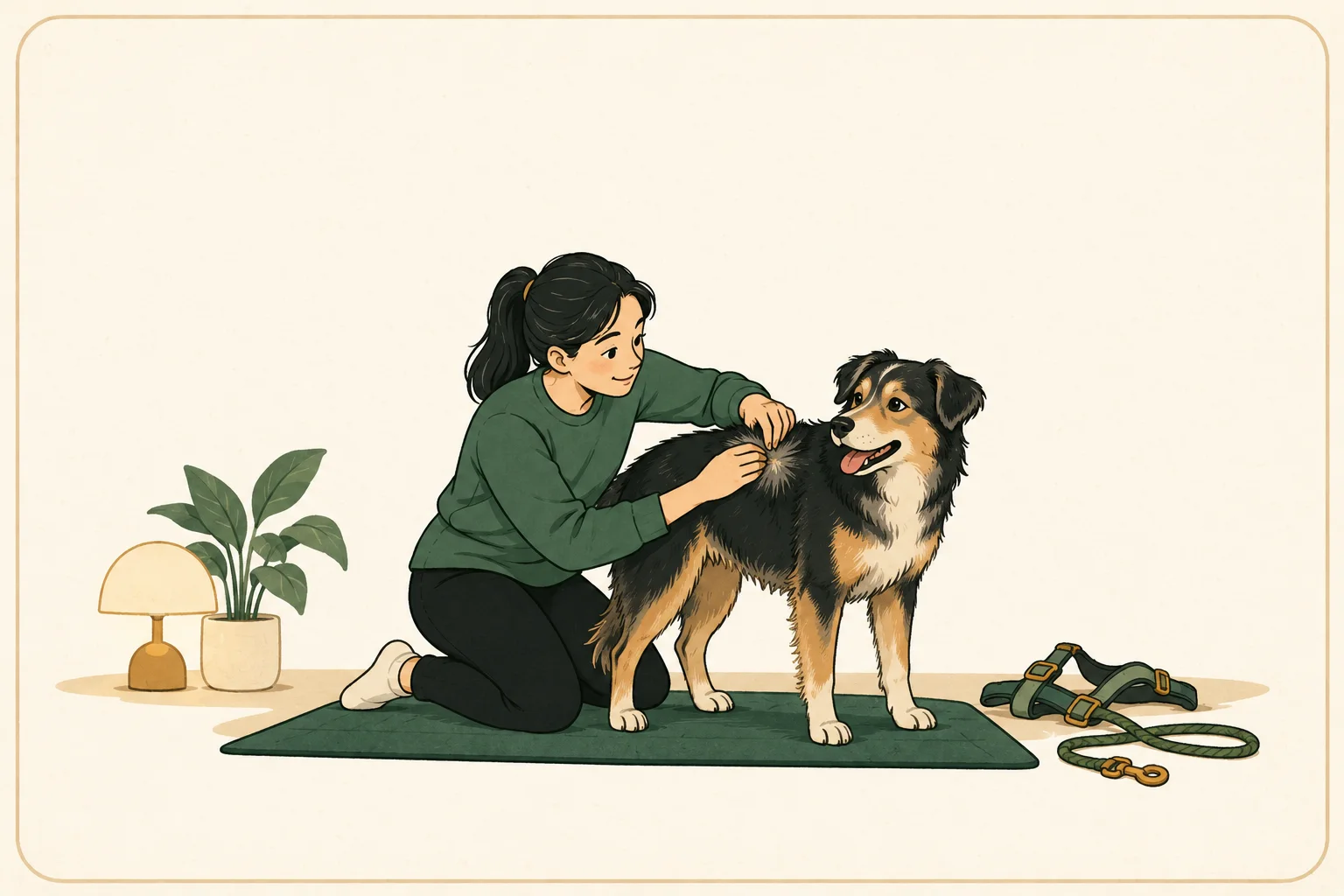
- Use the same whole-body sequence so awkward spots are not forgotten.
- Distinguish an attached tick from an uncertain skin bump before acting.
- Combine checks with a veterinarian-advised prevention plan.
Turn this answer into a walk you can actually track.
GetWalkBuddy is a dog walking app for owners who want a simple route tracker, timer, distance view, and daily walk log without turning the walk into a spreadsheet.
When should you check your dog for ticks?
The CDC recommends daily checks for pets that go outside, particularly after outdoor activity. Long or dark coats can make ticks harder to see. A quick glance from above is therefore not the same as inspecting the skin beneath the coat.
Attach the check to a routine you already remember: returning from the main walk and putting equipment away. Choose a well-lit place where you can see the dog clearly and handle them calmly.
Agree who completes the check when different household members share walks. “Someone probably did it” leaves a gap. A simple checked / not yet checked note is more useful than an elaborate tracker nobody updates.
If your dog is uncomfortable with handling, avoid turning the inspection into a struggle. Ask your veterinary team how to complete necessary checks safely and how to make future handling easier.
Sources: CDC: preventing ticks on pets
Where should you look for ticks on a dog?
Check the whole dog, with particular attention to the CDC’s commonly affected areas: in and around ears, near eyelids, beneath the collar, under front legs, between toes, between hind legs and around the tail.
Use a consistent head-to-tail sequence, looking through the coat rather than checking only its surface. Move equipment aside in a secure setting so covered skin can be inspected. Keep fingers and tools out of eyes and ear canals.
Try a two-pass checklist: first mark areas examined; then list areas you could not check comfortably. For example, “both sides checked; right paw still needs help” tells the next person exactly what remains. Do not mark the whole check complete because the easy areas were clear.
A thick coat may make the task slower. Good light and a deliberate sequence are preferable to a rushed time target. The aim is coverage, not completing an advertised two-minute routine.
Sources: CDC: preventing ticks on pets
What should you do if you find an attached tick?
Remove it promptly. The CDC’s pet guidance links to its removal instructions: use clean fine-tipped tweezers close to the skin and pull steadily without twisting or jerking. If the location, identification or handling is uncertain, contact your veterinarian promptly for help.
Do not grab every bump with tweezers. If you cannot tell whether you are looking at a tick or part of the skin, stop and get help identifying it. A clear photo can support the conversation, but it should not delay dealing with a confirmed attached tick.
The CDC warns against trying to make a tick detach with heat, petroleum jelly or nail polish. Do not improvise chemical treatments. For a specialist removal tool, use its specific instructions and your veterinary team’s advice.
After removal, clean the area and your hands. Continue the rest of the inspection. If something remains embedded or the dog cannot be handled safely, ask the veterinary team what to do instead of repeatedly digging at the spot.
What should you record after finding a tick?
Record the date found, where on the dog it was, recent outdoor locations and what you did. If you do not know how long it was attached, write “unknown.” A precise-looking guess is less useful than an honest gap.
For example: “October 4, under collar, found during evening check, walked woodland path yesterday and today, removed; attachment time unknown.” This is an example of a useful note, not a claim that either walk caused the bite.
The CDC advises watching for changes in behavior or appetite after a suspected bite. Contact your veterinarian about concerning changes and mention the tick history. Do not assume a dog is in the clear because they seem normal immediately afterward.
Discuss local tick risks and prevention with your veterinarian. A check and a preventive product address different parts of the problem; finding nothing today is not a reason to abandon the prescribed prevention plan.
Sources: CDC: preventing ticks on pets
What belongs on the after-walk checklist?
Keep the routine visible where the walking equipment is stored. Leave room for incomplete checks and questions, rather than only a box that suggests certainty.
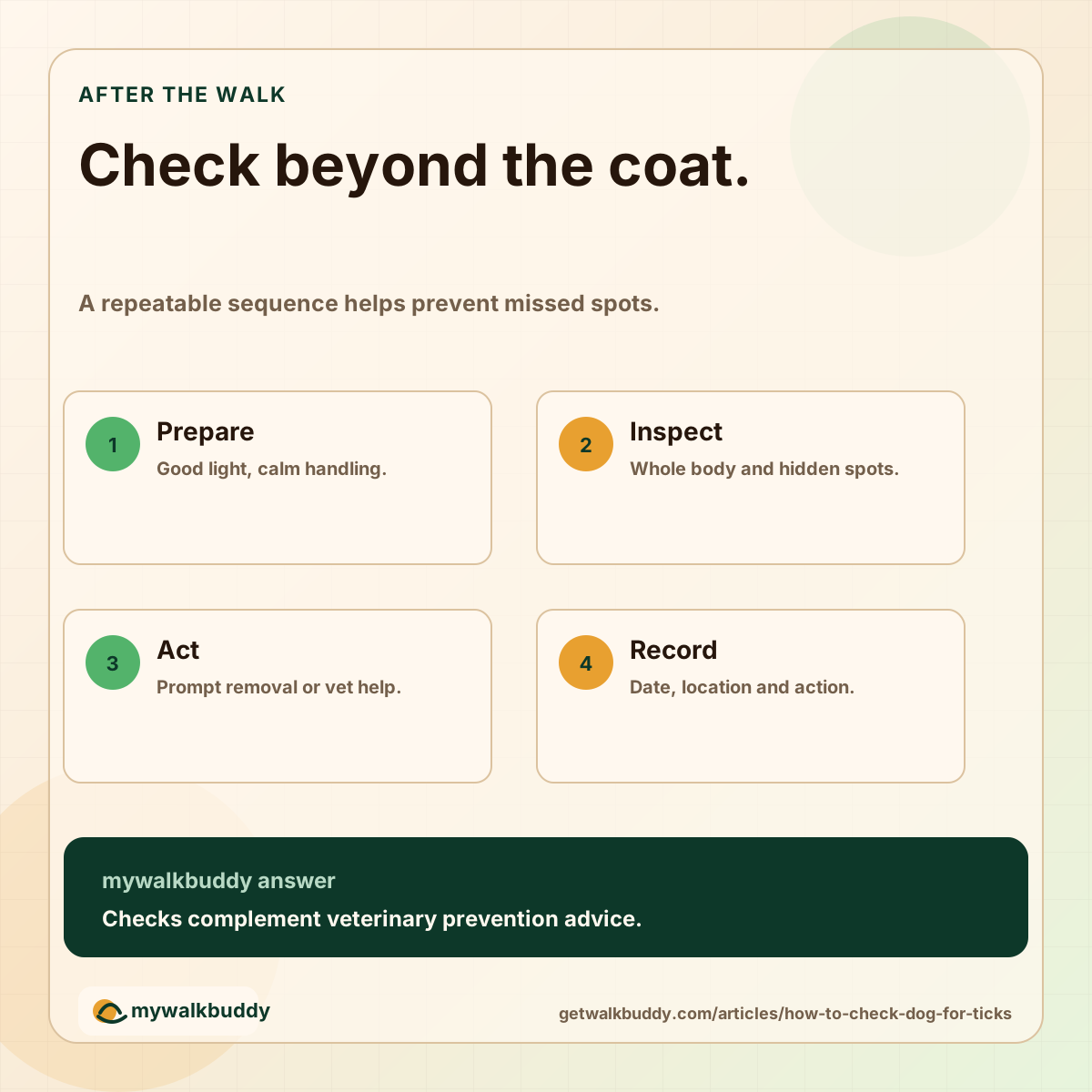
Copy these four prompts:
- Before: bring the dog into a secure, well-lit place and prepare for calm handling.
- Inspect: work through the whole coat and hidden spots; note any area left unchecked.
- Act: remove confirmed attached ticks promptly and get help for uncertainty or difficult locations.
- Record: note the date, body location, action and any later changes to discuss with your vet.
Questions owners ask when the leash is already in their hand
-
Do dogs on tick prevention still need checks?
Yes. The CDC recommends both daily checks and a suitable preventive product. Ask your veterinarian which prevention plan is appropriate for your dog and area.
-
Can ticks hide under a collar or between toes?
Yes. Both are among the areas highlighted by the CDC. Include them deliberately rather than checking only the dog’s back.
-
Does finding no ticks prove there was no bite?
No. Record what you actually checked and found. A negative inspection is an observation, not proof that a bite could not have happened.
-
Should I wait for a tick to fall off?
No. The CDC advises prompt removal of attached ticks. If you cannot safely identify or remove one, seek veterinary help promptly.
Keep the outing history available.
GetWalkBuddy can record a walk’s route, time and distance. Keep any tick findings and veterinary advice in your pet-care notes so you can describe the recent outings accurately.