
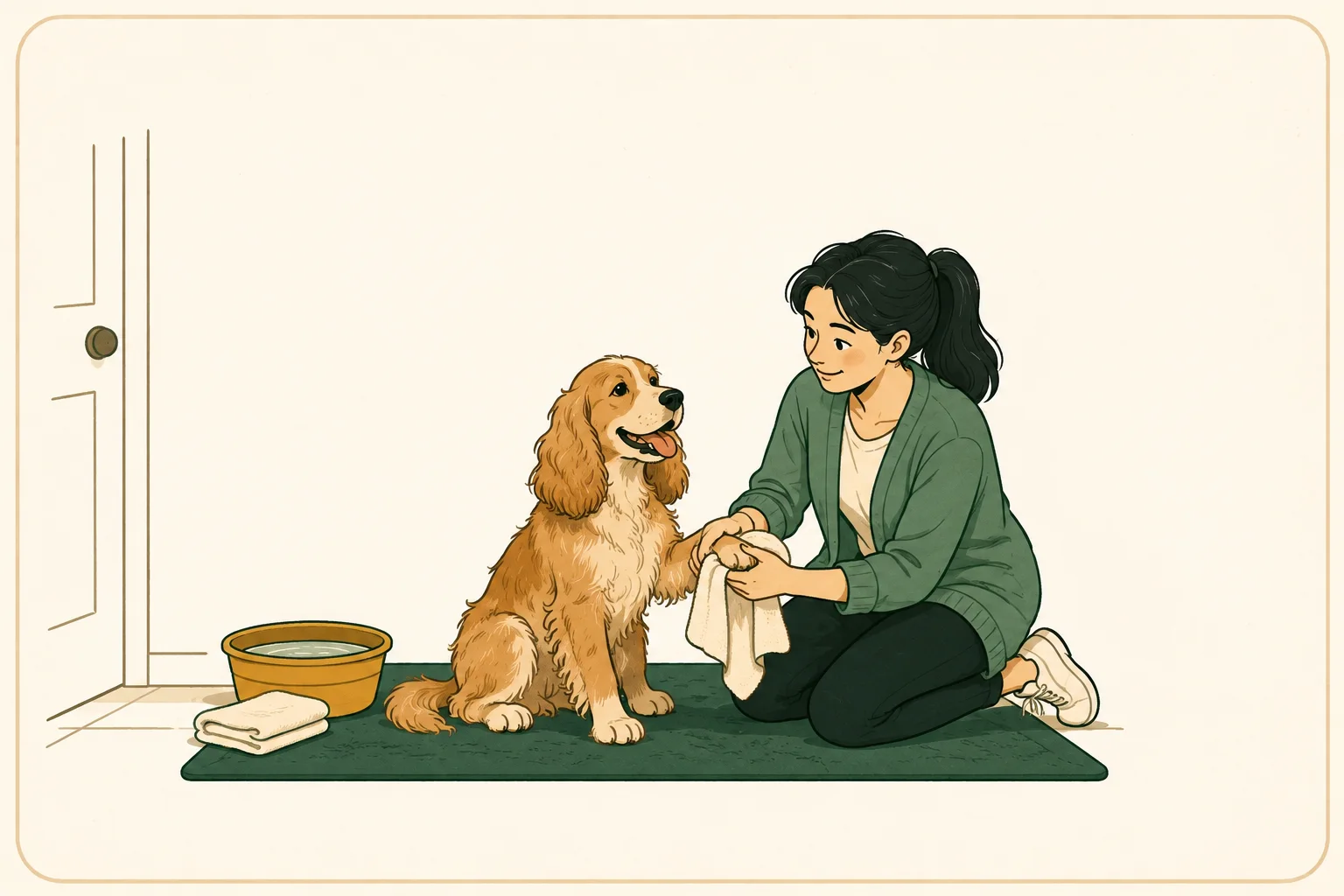
- Match cleaning to what is actually on the paws.
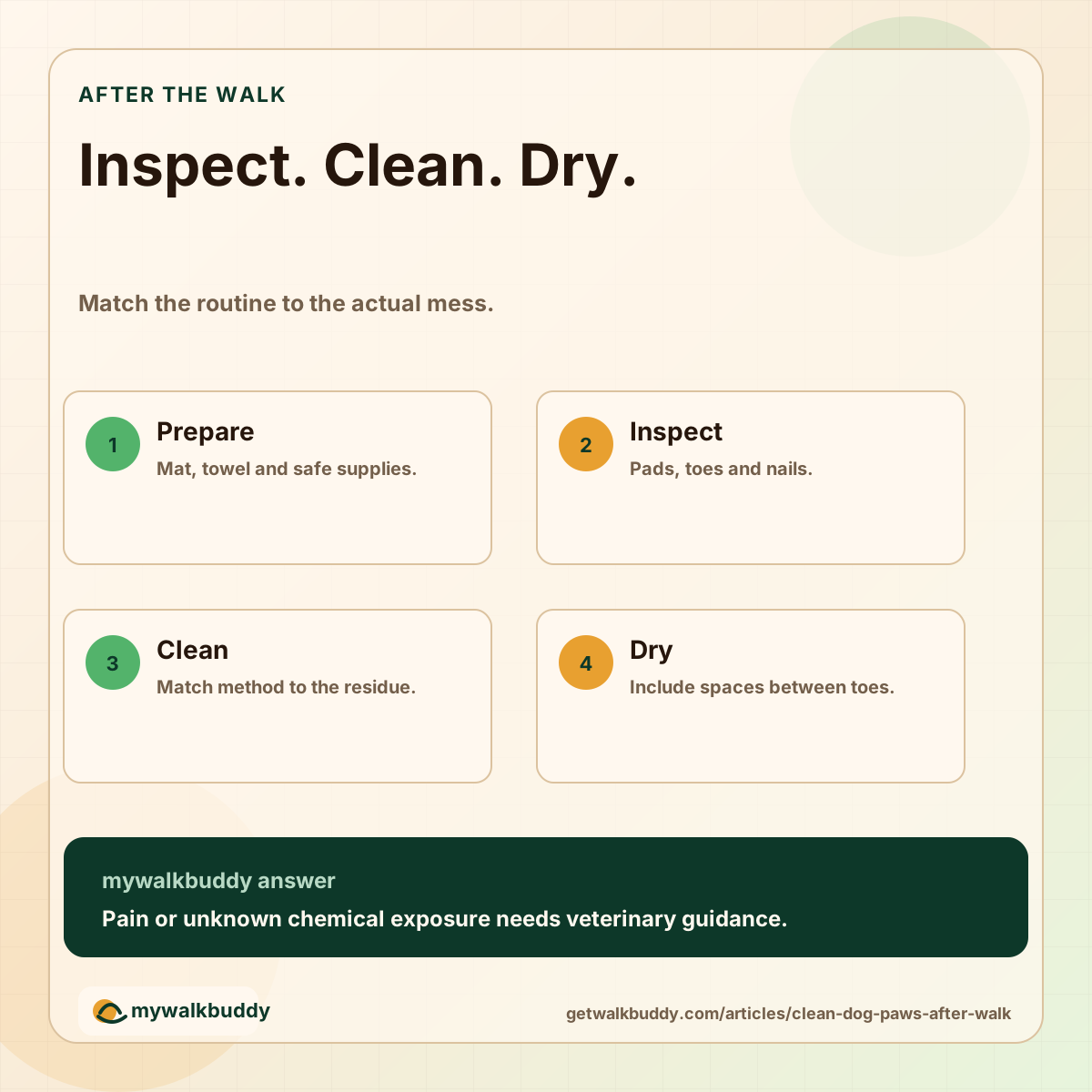
- Look between toes and pads, then finish with thorough drying.
- Prepare a calm place to work, with supplies already within reach.
Turn this answer into a walk you can actually track.
GetWalkBuddy is a dog walking app for owners who want a simple route tracker, timer, distance view, and daily walk log without turning the walk into a spreadsheet.
Do paws need washing after every walk?
Not every return needs the same cleaning. AKC distinguishes clean but wet paws, which can be towel-dried, from dirt or road salt that needs removal. Pet-safe wipes can be convenient for a small mess; heavier contamination may require washing.
Use a quick decision before reaching for a product: are the feet simply wet, visibly dirty, or contaminated by something you cannot identify? Keeping these situations separate avoids turning every short outing into a full grooming session.
Put the clean towel where you can reach it before starting. Once cleaning is done, the dog should not have to stand on the dirty cloth or walk through the same puddle again. This is a setup decision, not a reason to buy a special device.
Sources: AKC: cleaning and caring for paws
What should you inspect while cleaning?
Look around the pads, between the toes and near the nails. AKC notes that dirt and salt can collect in these spaces. Gently clean and dry them rather than wiping only the surfaces that leave footprints.
Work in a consistent order so you do not lose your place when the dog shifts position. For example, start with the near front paw and move around the dog, pausing whenever needed. The order is just a memory aid, not a required handling technique.
If one area looks different, describe it clearly to the veterinary team: which paw, which side, when you noticed it and whether the dog is favoring it. Stop the routine for a painful or injured area instead of repeatedly handling it to get a better look.
A clean floor does not prove that the spaces between the toes are clean or dry. Make drying the final part of the routine rather than an optional step after the visible mud is gone.
Sources: AKC: cleaning and caring for paws
What if the paws touched oil, chemicals or an unknown spill?
Treat possible toxic exposure differently from ordinary mud. ASPCA recommends prompt professional advice for suspected toxicity or ingestion because appropriate decontamination depends on the substance.
Tell the veterinarian or animal poison service what you know: the location, any product name or container, when contact happened and whether the dog licked the paws. Keep yourself protected when handling contaminated fur, and do not delay seeking advice while trying several household remedies.
ASPCA’s guidance for oily or chemical residues includes specific washing instructions. That does not make those instructions the default for every dog after every walk. Ask for advice suited to the exposure, especially when you cannot identify the material.
Once the immediate concern is handled, remove that route from your next walk plan until the hazard is resolved. A cleaning station is useful, but avoiding a known spill is better than planning to wash it off again.
Sources: ASPCA: skin and fur exposure
What if your dog pulls away from paw cleaning?
Pause and consider discomfort or fear. Dogs Trust advises giving worried dogs space and choice rather than forcing an interaction. A new aversion to handling or signs of pain should be discussed with your veterinarian.
Separate familiarization from the urgent return home. At a calm time, let the dog investigate the towel and stand comfortably in the cleaning area. Keep practice small enough that the dog remains relaxed; a qualified reward-based trainer can help you build cooperative handling.
Avoid using the narrow doorway as a place to corner the dog. Choose a secure indoor area with enough room for both of you, away from children or other pets waiting to pass. If the paws require immediate cleaning and handling is unsafe, ask your veterinary team for help.
Notice exactly where the difficulty starts: approaching the mat, seeing the basin, reaching toward a leg or touching one particular paw. That observation is more useful than assuming the dog dislikes the entire routine.
Sources: Dogs Trust: recognizing fear and helping dogs feel safer
How can you set up a simple post-walk station?
Arrange the supplies in the order you will use them. You need a workable place to inspect, clean when necessary and dry, plus somewhere separate for used cloths.
Try this layout before the next muddy outing:
- Before: place a stable nonslip mat and clean towel in a secure area near the entrance.
- Inspect: keep enough light and space to see each paw without rushing or cornering the dog.
- Clean: have the appropriate pet-safe supplies ready, and keep used cloths separate from clean ones.
- Finish: dry thoroughly, put away the supplies and replace the towel before the next walk.
Questions owners ask when the leash is already in their hand
-
Can I use any wet wipe?
Choose a product labeled safe for pet use and follow its instructions. A wipe intended for a household surface is not interchangeable with a pet-care product.
-
Should I give a full bath after every muddy walk?
The cleaning should match the mess. If only the paws are dirty, focus on those areas; ask your veterinarian about an appropriate routine if your dog has a skin condition.
-
Can a paw-cleaning cup replace inspection?
No. Whatever cleaning method you use, you still need to notice debris, discomfort and whether the paws are dry afterward. A gadget does not perform that assessment for you.
-
What if one paw is sore?
Stop routine cleaning of the painful area and contact your veterinarian for guidance. Do not assume that more scrubbing or a new cleaning product will solve the cause.
Make the return part of your walking routine.
Track your route, time and distance with GetWalkBuddy. Keep any paw concerns in separate notes to discuss with your veterinarian.