
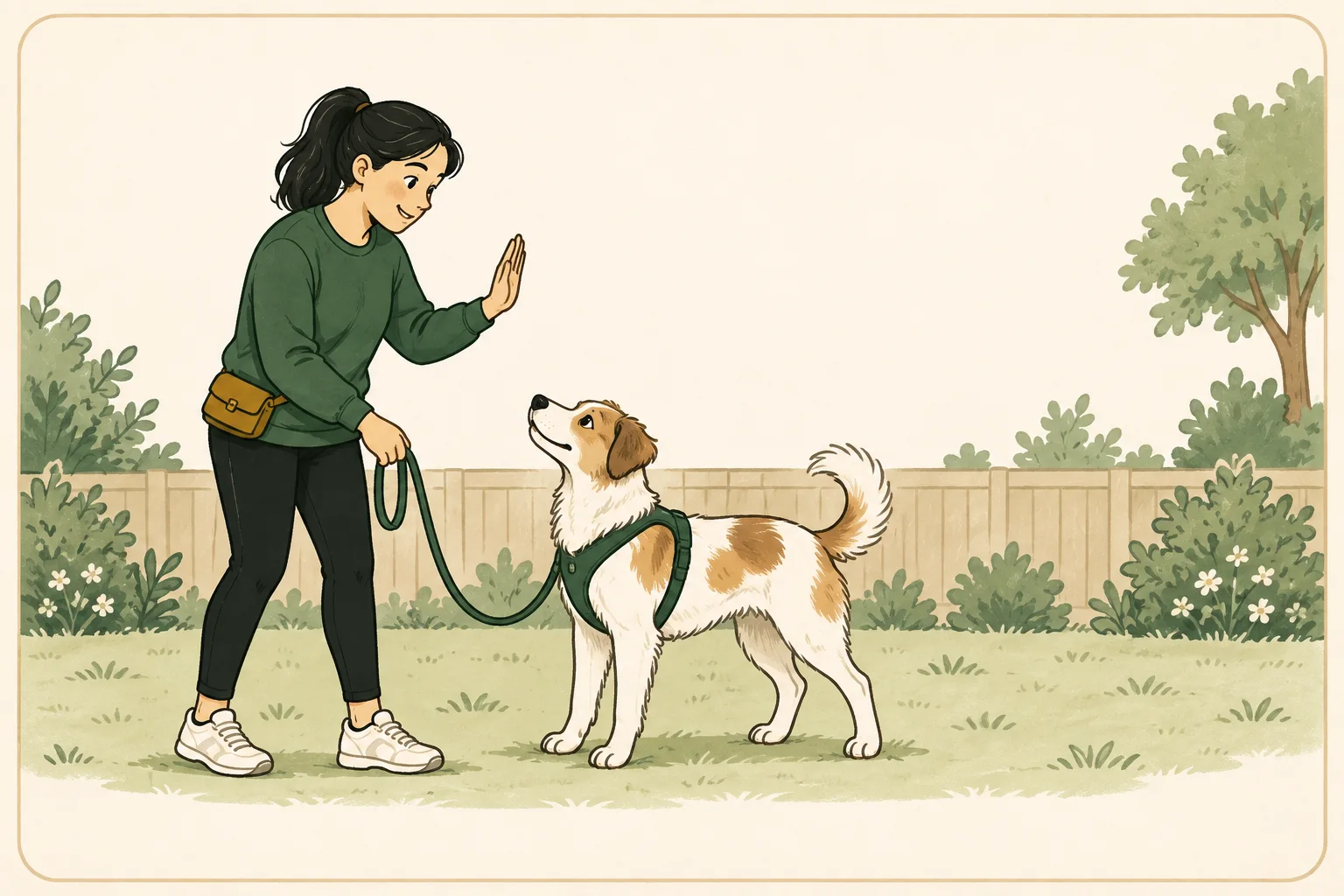
- Agree on a small set of distinct visual cues.
- Practice attention before asking for another behavior.
- Share the actual signals with every person who walks the dog.
Turn this answer into a walk you can actually track.
GetWalkBuddy is a dog walking app for owners who want a simple route tracker, timer, distance view, and daily walk log without turning the walk into a spreadsheet.
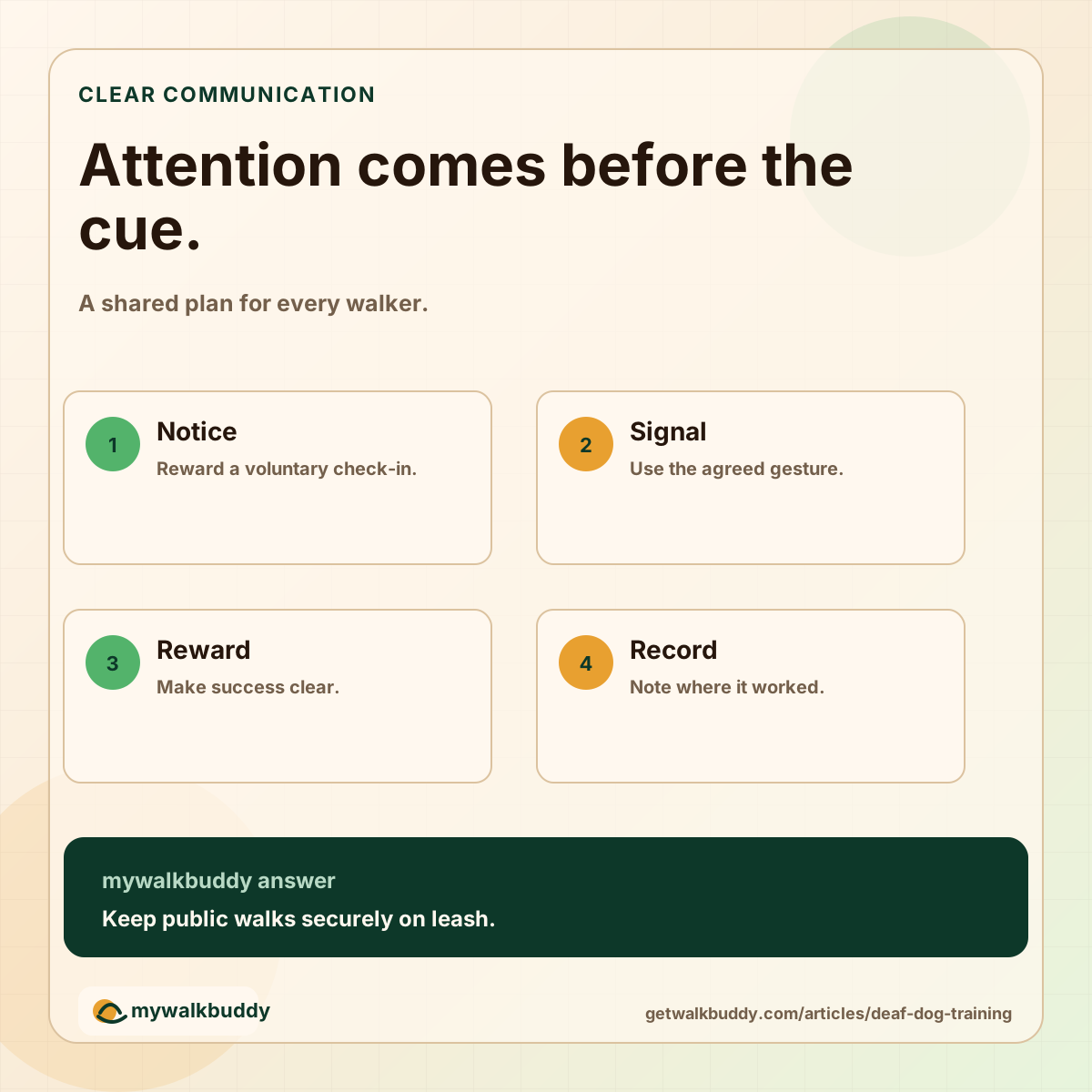
How do you get a deaf dog’s attention?
AKC recommends rewarding voluntary looks toward you and teaching an attention signal. A hand cue cannot work while the dog is looking elsewhere.
Begin somewhere familiar with few competing things to watch. Notice the moment your dog turns toward you and reward that choice. You are making checking in worthwhile, not demanding continuous eye contact throughout a walk.
Separate three jobs in your mind: gaining attention, asking for a behavior and marking a correct response. Giving all three the same gesture would make your message difficult to understand.
For your first practice, choose one job. If you spend the whole session learning how to stand where your dog can see you, that is useful information for the next outing.
Sources: AKC: training a deaf dog
Which hand signals should the household use?
Choose distinct, consistent gestures. AKC explains that there is no required universal set; a visual reward marker such as a thumbs-up can be taught by pairing it with a reward.
Make a household cue card with four columns: meaning, a photo of the gesture, what the dog currently understands and where it has been practiced. Use your own photos so a new walker does not have to interpret a written description of hand position.
An illustrative first card might include an attention cue, a familiar sit cue, a come-toward-me cue and a reward marker. This is an organizational example, not a claim that those skills can be installed in one session.
Add a note about the handler’s position. A cue practiced directly in front of the dog may need careful practice from a different angle. Do not label a skill reliable outdoors solely because it worked in the kitchen.
Sources: AKC: training a deaf dog
How do you take the training outside?
Dogs Trust advises keeping deaf dogs on a leash in public and ensuring they can see you when you communicate. Choose an outing where managing safety leaves room for clear signals.
Before leaving, decide where you can pause away from traffic and passing dogs. A wide, quiet section of path may be more useful for familiar practice than a busy destination with a longer route.
Keep rewards accessible and the leash secure while leaving a hand available for communication. Check this arrangement at home; juggling a phone, bags and treats for the first time beside a road adds an avoidable task.
Consider two separate goals: enjoying the outing and practicing one known cue. If the setting becomes busy, drop the practice goal and manage the route. You do not need to turn every encounter into a lesson.
What should friends and other walkers know?
Dogs Trust recommends letting the dog see a person before any approach and allowing the dog to choose whether to move closer. Unexpected touching can startle a deaf dog.
Prepare a short spoken explanation for people: “Please give us space while I get my dog’s attention.” This is easier to use in the moment than explaining the entire training plan.
Give a dog walker the cue card before the first outing. Ask them to demonstrate the gestures to you, then practice together in the familiar setting. A shared word such as “come” does not guarantee that two people make the same movement.
The handover should also include the route, equipment, how to leave a crowded area and who to contact if something changes. These practical details belong beside the cues rather than in a separate conversation that can be forgotten.
How can you tell what needs more practice?
Record the situation and the response, not a label such as stubborn or disobedient. A brief context note helps you decide what to ask a reward-based trainer.
For example: “Looked toward me in the garden; did not notice the same gesture beside the park entrance.” That note identifies a change in setting without pretending to diagnose the cause.
If hearing seems to change suddenly or your dog becomes uncomfortable, arrange veterinary advice. Training notes cannot establish why hearing or behavior changed.
- Before: check the cue card, equipment and route.
- During: make sure the dog can see the signal.
- If unclear: return to an easier familiar task.
- After: record the setting and one next practice goal.
Questions owners ask when the leash is already in their hand
-
Do deaf dogs need special hand signals?
They need signals that are clear and consistent, rather than one mandatory sign language. Teach their meaning with rewards and use the same gestures across the household.
-
Can I let my deaf dog off leash in public?
Dogs Trust recommends keeping deaf dogs on a leash in public. A visual cue does not provide a way to call a dog who cannot see you.
-
Should I shout louder if my dog ignores me?
Use a communication method the dog can perceive. Check whether the dog can see your signal and whether the task is familiar in that setting.
-
How do I brief a new dog walker?
Share photos of the actual cues, demonstrate them together and explain the route and equipment. Include which skills are still being learned.
Keep the route easy to repeat.
GetWalkBuddy records walking route, time and distance. Keep your cue card and training notes separately so everyone has the same communication plan.