
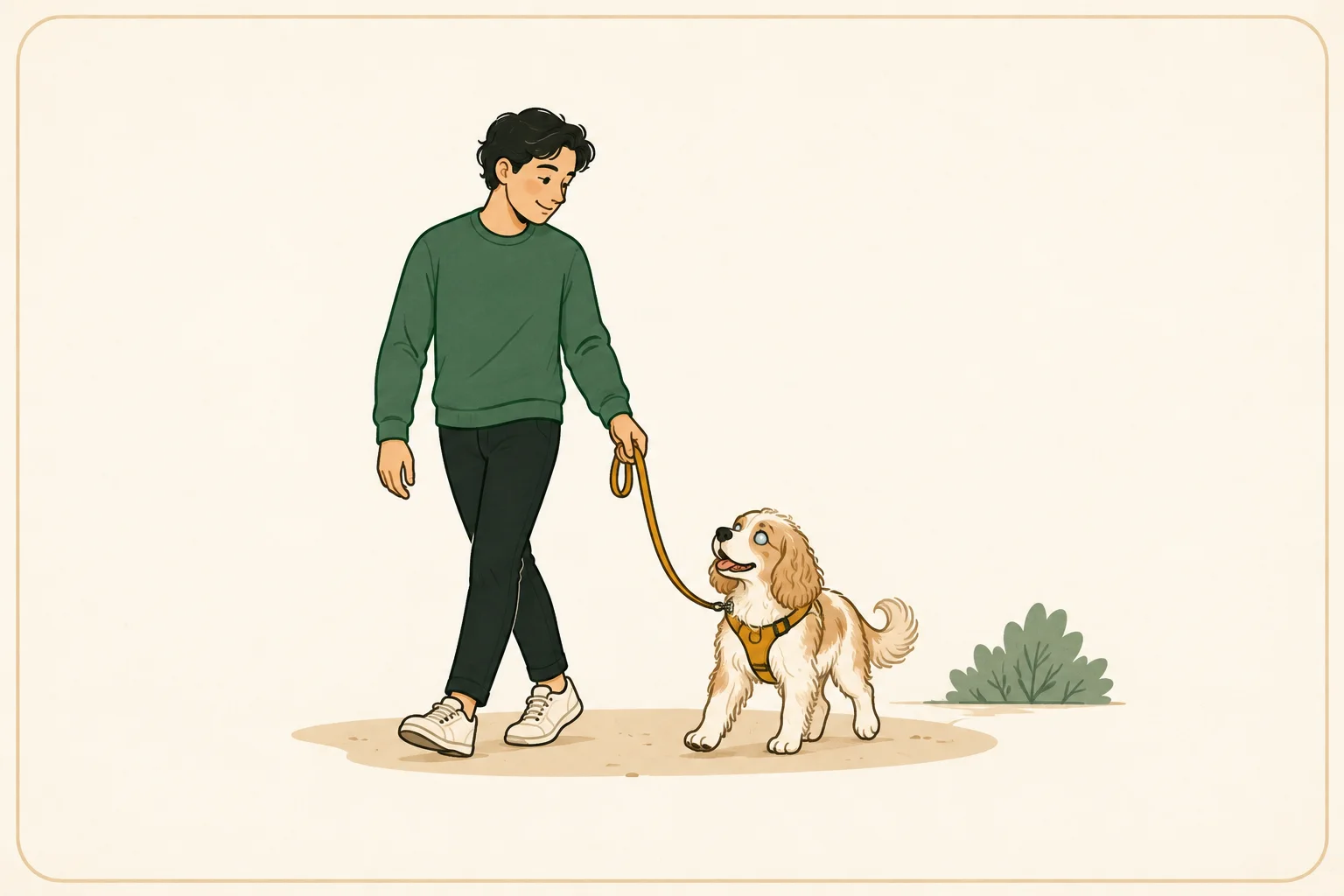
- Make the route predictable and check it for changes each time.
- Agree on the same cues and greeting rules with every walker.
- Judge the outing by comfort and orientation, not a distance target.
Turn this answer into a walk you can actually track.
GetWalkBuddy is a dog walking app for owners who want a simple route tracker, timer, distance view, and daily walk log without turning the walk into a spreadsheet.
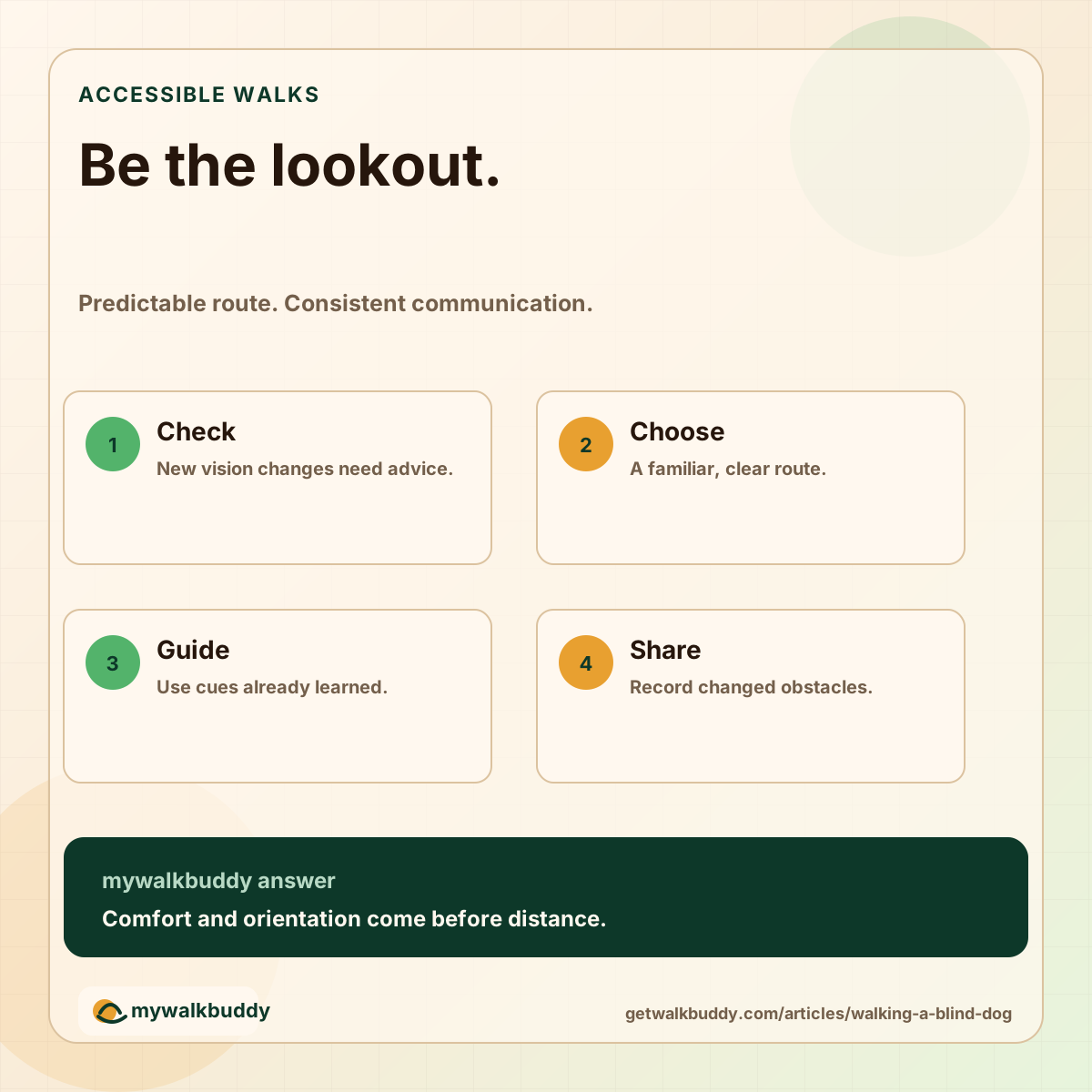
Should a newly blind dog go straight back to normal walks?
First discuss the vision change with your veterinarian. PDSA advises contacting a vet as soon as changes in eyes or vision appear: some causes are painful and earlier assessment can matter. An established diagnosis and an individual activity plan give you a better starting point than guessing.
Write down what changed and when: difficulty in dim light, bumping into objects, reluctance at a doorway or a change in the appearance of an eye. These observations describe the problem without diagnosing its cause.
For the first conversation, ask three practical questions: which activities are suitable now, what changes should prompt another call, and whether any equipment or handling needs adapting. Keep those answers with the walk plan so the household is working from the same advice.
Sources: PDSA: blindness in dogs
How do you choose a route for a blind dog?
Start with somewhere familiar and easy to inspect. PDSA recommends acting as your dog’s lookout for hazards such as branches and uneven ground. Dogs Trust advises slow, leashed exploration in unfamiliar places. A route being familiar does not mean it remains unchanged.
Divide the outing into places you can name: front gate, quiet path, sniffing patch and return. Before setting off, consider where a parked vehicle, bin, construction barrier or crowd could interrupt that sequence. Pick an easy return point before you need it.
For example, your usual loop may now include pavement works. Returning along the clear part of the route may be simpler than adding an unfamiliar crossing to complete the loop. This is a planning example, not a prescribed route or exercise dose.
Keep the first comparison fair: repeat a comfortable route before changing several things at once. Record which part worked and what was different, rather than labeling the entire walk “good” or “bad.”
Sources: PDSA: blindness in dogs; Dogs Trust: caring for a blind or deaf dog
What cues help when walking a blind dog?
Use a small, consistent set of spoken cues that your dog has learned. Dogs Trust suggests teaching an obstacle warning and having everyone use the same words. A word you say for the first time beside a curb is not yet a reliable safety cue.
Make a cue glossary for your household. Give each cue a meaning and describe what the person does next. For example, an agreed pause cue should have the same meaning with each walker; it should not mean “wait” to one person and “come closer” to another.
Practice new communication in an easy, secure setting with qualified help if needed. On the actual walk, manage the hazard yourself instead of testing whether an unfamiliar cue works. Do not lead the dog into an obstacle to create a lesson.
If your dog also has hearing loss, a voice-only plan is insufficient. Discuss a suitable communication approach with your veterinary or qualified behavior team.
How should other people approach your blind dog?
Tell people your dog cannot see and ask them to wait. Dogs Trust recommends letting the dog choose whether to approach; an unexpected touch can startle them. You can decline a greeting entirely.
A useful sentence is: “Please give us space; he cannot see you.” Say it early enough that the other person can stop. A labeled leash or tag may help explain the situation, but do not assume everyone has read it.
Before another person takes over walking, have them join a familiar outing if practical. Show the actual narrow point or noisy gate rather than relying on a vague instruction to “be careful.” Ask them to repeat the agreed route and return option in their own words.
What should you hand over to the next walker?
Give the next person a short, specific plan they can use outside. Keep medical advice, route decisions and observations distinct so a useful note does not become an unsupported diagnosis.
Use these four prompts, then add one concrete observation after the walk:
- Before: check current veterinary advice, equipment and the clear route out.
- Route: name the familiar path and an easy place to turn home.
- Communication: list learned cues and the rule for unexpected greetings.
- After: record where the dog hesitated and what had changed there.
Questions owners ask when the leash is already in their hand
-
Can a blind dog still enjoy walks?
Many dogs adapt well to vision loss, according to PDSA. What suits an individual depends on their health and comfort. An enjoyable outing need not cover the distance they walked before losing sight.
-
Can I let my blind dog off leash?
PDSA recommends keeping the leash on during walks, with off-leash time only in secure enclosed areas checked for hazards. Do not treat familiarity with an open route as containment.
-
Does cloudy eye color prove that my dog is blind?
No. Appearance alone does not establish a diagnosis or the amount of vision remaining. Arrange a veterinary assessment for new eye or vision changes.
-
Should I keep changing routes to build confidence?
There is no need to make novelty the goal. Start with a manageable familiar outing, then consider changes in light of your dog’s comfort and the advice you have received.
Keep the familiar route easy to find.
Use GetWalkBuddy to record the route, time and distance of a comfortable outing. Keep veterinary instructions and communication notes with your household care plan.