
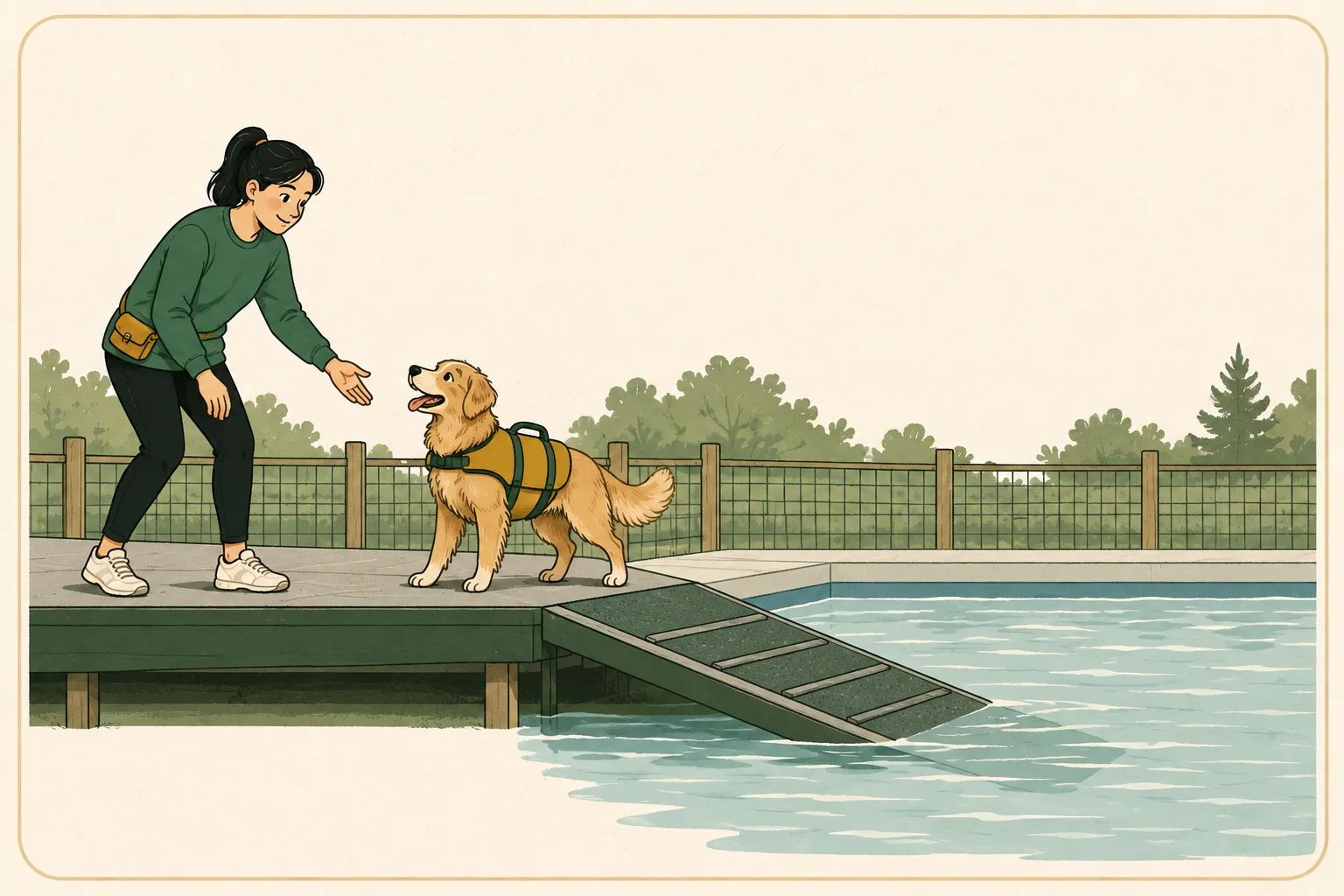
- Treat swimming ability and jumping as separate skills.
- Choose a facility that can explain its beginner process.
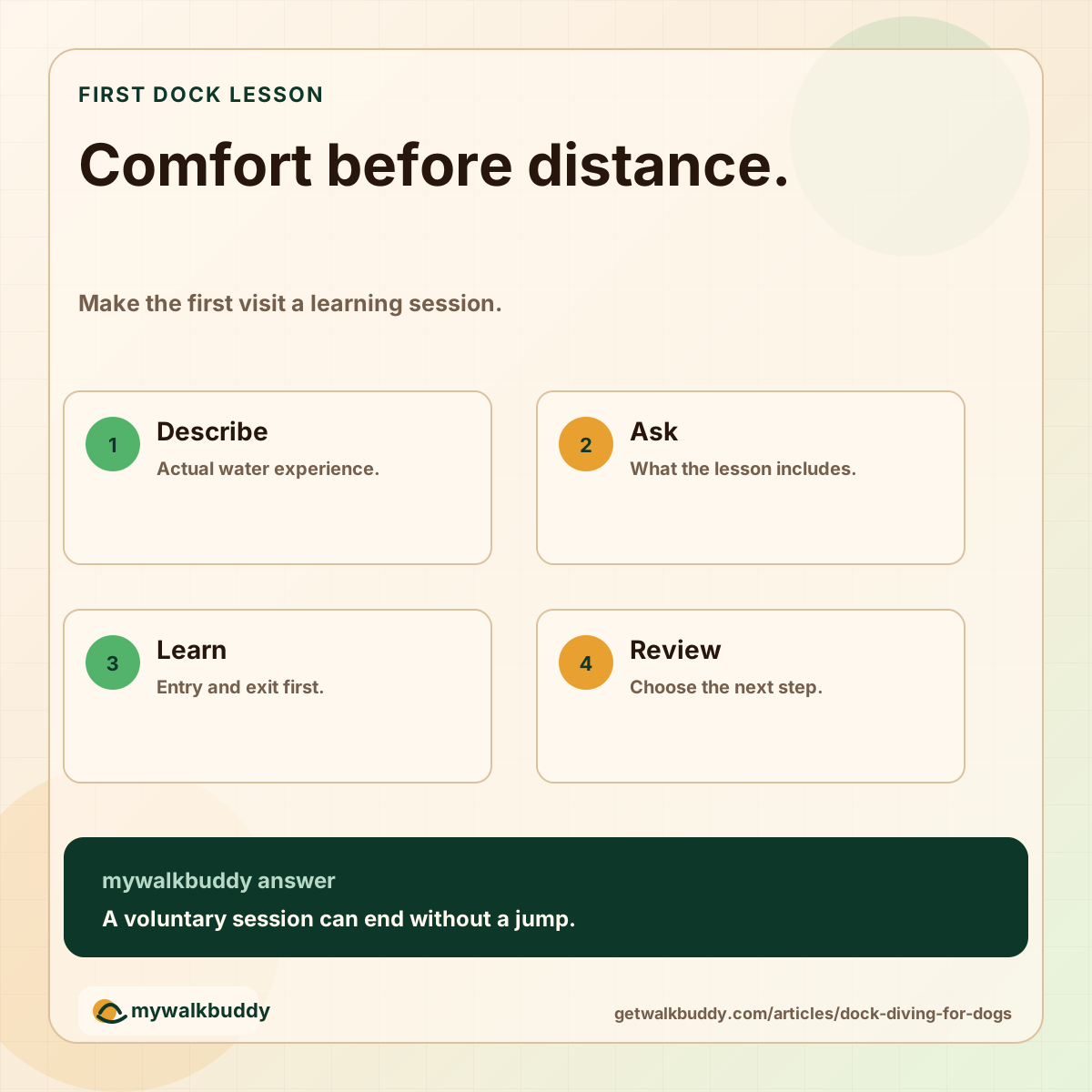
- Judge the first lesson by comfort and learning, not distance.
Turn this answer into a walk you can actually track.
GetWalkBuddy is a dog walking app for owners who want a simple route tracker, timer, distance view, and daily walk log without turning the walk into a spreadsheet.
What is dock diving?
In distance jumping, the dog launches from a dock toward a toy and the jump is measured. AKC also describes Air Retrieve, where the dog aims for a suspended bumper.
That competition picture is useful context, but it is not a checklist for your first visit. You do not need to recreate a tournament setup or choose a target distance before you have met an instructor.
A beginner’s question is narrower: what does this dog already enjoy, and which part of the activity is new? Swimming, retrieving, waiting near water and jumping from a platform are different experiences.
Keep your first enquiry focused on instruction. An event entry, a pool rental and a beginner lesson may provide different levels of supervision, even when they are advertised by the same venue.
Sources: AKC: Diving Dogs 101
Does enjoying water mean the dog is ready?
Water enjoyment, swimming ability and interest in retrieving are relevant starting points in AKC’s introduction. They do not replace an assessment of the individual dog or a careful first lesson.
Describe the dog’s actual experience to the instructor. “Wades at the beach” and “swims comfortably in a pool and finds the exit” are not interchangeable descriptions. Be equally clear if you have never seen the dog swim.
Discuss health or activity concerns with your veterinarian before jumping work. Competition eligibility rules are administrative requirements, not a guarantee that a particular dog is physically prepared.
If the dog is still learning to swim, make that the learning goal and use appropriate instruction. There is no need to add a dock simply because the class name sounds more exciting.
Sources: AKC: getting involved in Diving Dogs
What should you ask a training facility?
Ask how it introduces beginners, how dogs enter and leave the water, who supervises and what happens if the dog does not want to participate.
Use this booking checklist: Is the appointment instruction or unsupervised rental? What swimming skills are expected? How is the exit introduced? Is flotation equipment available and fitted? Where does the dog wait between turns?
Also ask about required health documentation, cleaning arrangements, weather cancellation and what equipment you should bring. Those details vary by venue; confirm them directly rather than relying on an old review.
AKC links to North America Diving Dogs facilities and suggests local clubs as a way to find instructors. A directory entry is a starting point for questions, not evidence that a particular lesson suits your dog.
Sources: AKC: Diving Dogs 101; AKC: getting involved in Diving Dogs
What is a realistic first-session goal?
Choose a learning goal with the instructor before adding a performance goal. A useful session may focus on the environment, the exit or comfort around the equipment.
Our practical first-session card has three spaces: what is familiar; what is new; what we will leave for another day. For example, a dog may know retrieving on land while the pool and ramp are entirely new.
Ask the instructor how they will make the task easier if the dog hesitates. Do not push the dog into the water or keep throwing a toy farther away to force a decision. Participation should remain voluntary.
Write down the instructor’s next step before you leave. “Return for another supported introduction” is more useful than “needs confidence,” because it tells you what to do next.
How do you review the lesson afterward?
Record what the dog chose to do and what support was needed. Keep jump measurements separate from notes about the learning process.
A simple review might say: “Approached the ramp, followed the exit with help, took a break, no dock jump attempted.” This is an illustrative record, not a report from a dog we tested.
If you want to compete later, check the current organizer’s rules and entry requirements. AKC notes that the NADD rulebook is updated annually; a general introduction should not be treated as the current rulebook.
- Before: explain the dog’s swimming experience.
- Ask: confirm instruction, entry and exit procedures.
- During: follow the agreed beginner goal.
- After: note comfort and the instructor’s next step.
Sources: AKC: Diving Dogs 101
Questions owners ask when the leash is already in their hand
-
Can a dog that cannot swim start with a dock jump?
Begin with appropriate swimming instruction and comfort in the water. A jump is not a way to teach basic swimming.
-
Does my dog need to be a Labrador?
The sport includes different breeds and mixed-breed dogs. Individual interest, swimming ability and suitability matter more than a breed label.
-
Can I practice from any lakeside dock?
Do not assume an ordinary dock or unknown water is suitable. Start at a purpose-suited facility with instruction and a clear safe-exit plan.
-
What if my dog never jumps during the lesson?
The session can still provide useful information and foundation practice. Ask the instructor whether to repeat an easier step or choose another activity.
Keep walks and water sessions distinct.
GetWalkBuddy tracks your ordinary walks by route, time and distance. Record pool lessons separately so your activity notes remain clear.