
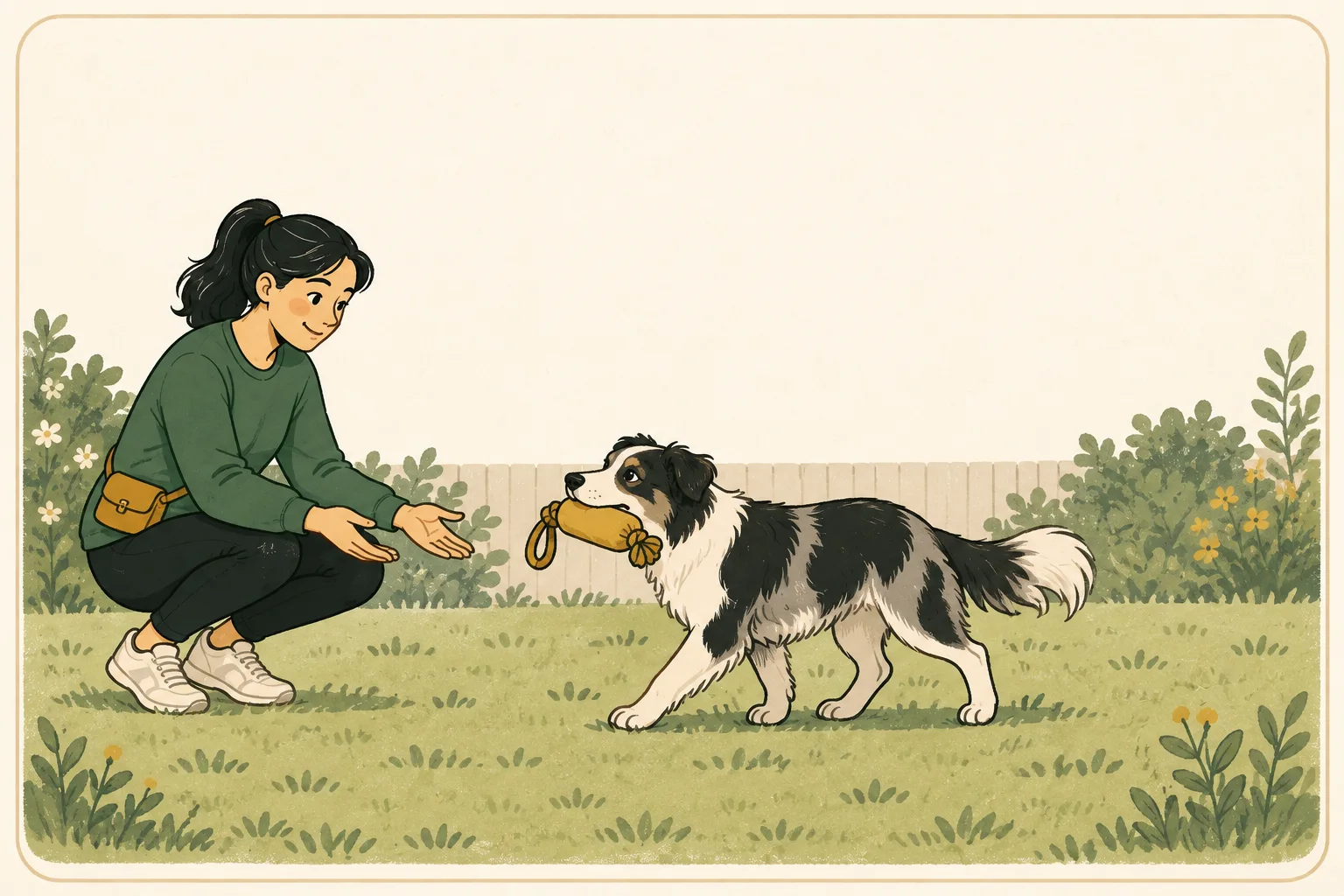
- Identify the missing part of the retrieve before changing the game.
- Begin nearby in a quiet safe space with a suitable toy.
- Practice a voluntary exchange rather than grabbing the toy.
Turn this answer into a walk you can actually track.
GetWalkBuddy is a dog walking app for owners who want a simple route tracker, timer, distance view, and daily walk log without turning the walk into a spreadsheet.
Why does a dog chase a toy but not bring it back?
Chasing, picking up, carrying and releasing are different parts of a retrieve. AKC recommends building the skill gradually instead of assuming the complete game comes naturally.
Watch one easy attempt and describe where it stops. “Runs toward the toy but leaves it on the ground” is a different training problem from “brings it close but keeps holding it.” You do not need to repeat a long throw to see the distinction.
Choose a quiet place where the dog cannot run into traffic or disturb other animals. Use a toy that fits the dog and is in good condition. The aim of the first session is understanding, not a workout measured in throws.
Sources: AKC: teaching a dog to fetch
How do you start teaching the retrieve?
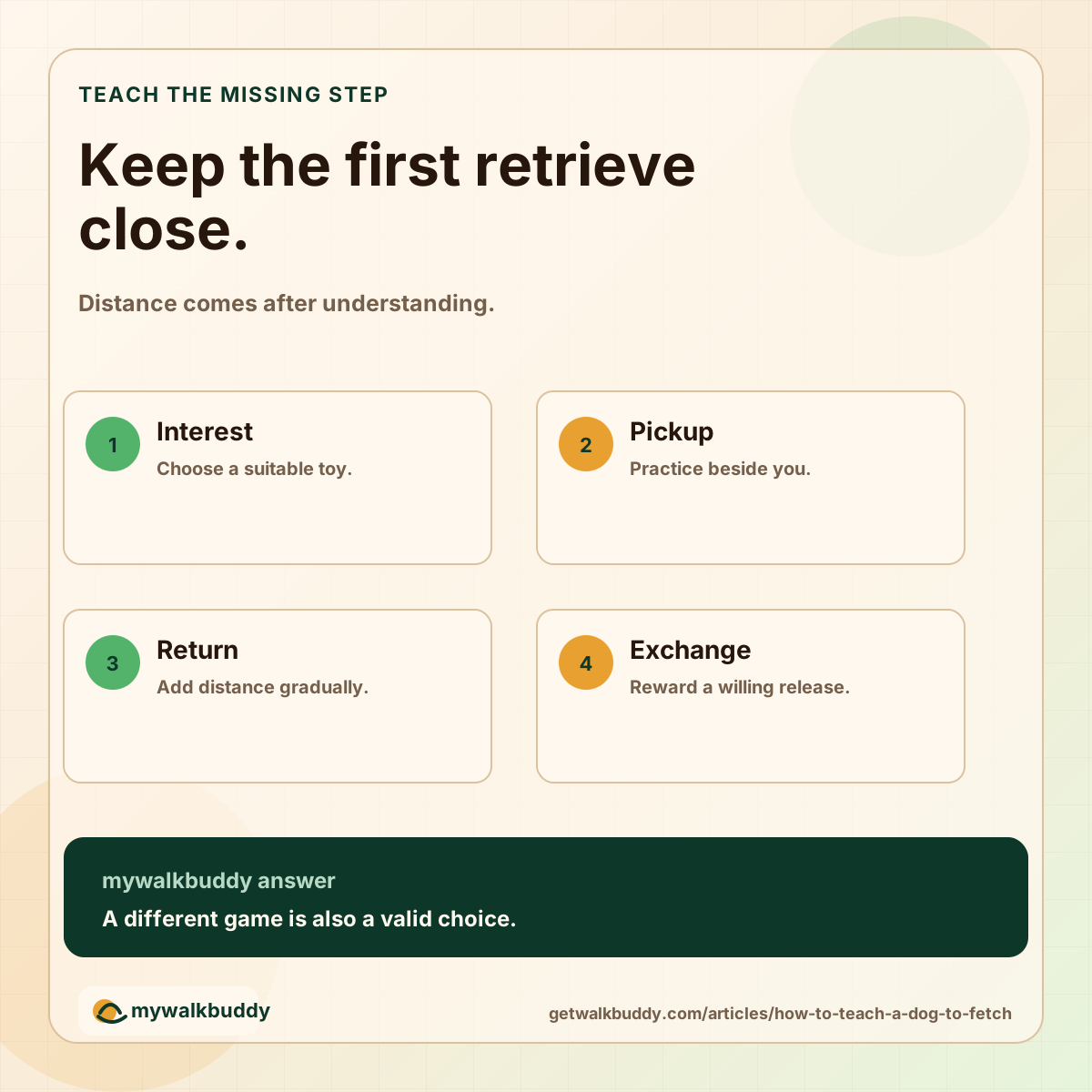
Begin by rewarding interest in the toy, then taking and briefly holding it. Once that is comfortable, practice picking it up close to you and gradually add distance. AKC describes this progression from a hold to a nearby retrieve.
Decide what you will reward before presenting the toy. At one stage it may be investigating it; later it may be lifting it. If your criteria change every attempt, it becomes harder for both of you to recognize progress.
Keep the same simple setting while teaching a new part. Moving outdoors, changing the toy and increasing distance together creates three possible explanations if the dog stops responding.
For example, if a dog takes a toy from your hand but ignores it on the ground, work on that small transition nearby. Throwing it across the garden skips the unresolved step. This is an illustrative troubleshooting example, not a promise about how quickly an individual dog learns.
Sources: AKC: teaching a dog to fetch
How do you get the toy back without a struggle?
Teach a willing exchange. AKC recommends trading a safe, lower-value toy for a reward and returning the toy during practice, so releasing does not always end the fun.
Keep this practice separate from a frantic chase at first. Have the reward ready before offering the toy, and use an easy item rather than the dog’s most prized possession.
Do not turn collecting the toy into a race. If the dog repeatedly moves away with it, reduce the excitement and get help with the exchange instead of pursuing them.
If the dog guards objects, stiffens or threatens when approached, stop the exercise and consult a qualified professional. Do not use the game to test whether you can take something by force.
Sources: AKC: teaching a voluntary drop
What should you change when fetch breaks down?
Change the part that is confusing, rather than making the whole game harder. Use a brief observation to choose the next small practice task.
No interest in the toy: try a suitable familiar toy the dog already chooses during play, or offer a different activity. Walking away is useful information.
Chases but does not pick up: return to nearby toy engagement and pickup. Comes close but does not release: practice the exchange separately. Understands indoors but not outside: choose a quieter outdoor space and reduce distance.
These are starting points, not a diagnosis. A sudden change in willingness, movement or toy handling deserves veterinary advice, especially if the dog appears uncomfortable. End play if the surface, weather or the dog’s condition makes continuing unsuitable.
How can you keep practice consistent?
Write down the one skill being practiced and what you will make easier if it does not work.
An example note is: “Pickup beside me worked; repeat here before adding distance.” A useful session can be short and does not have to end with a long retrieve.
- Before: choose a safe space, suitable toy and one clear task.
- During: reward the specific behavior you are teaching.
- Pause: stop if interest fades or play becomes difficult to manage.
- After: inspect and store the toy; note the next small step.
Questions owners ask when the leash is already in their hand
-
Does every dog enjoy fetch?
No. Some prefer sniffing, searching or other shared activities. Fetch is optional.
-
Should I chase my dog when they run off with the toy?
Avoid turning retrieval into a chase. Practice an easier voluntary exchange and seek help if the toy is guarded.
-
Why can my dog fetch indoors but not at the park?
The park adds distractions and space. Return to a nearby easy version in a quieter setting.
-
How many throws should a session include?
There is no universal target. Match the activity to the dog and conditions, and stop before it becomes uncomfortable or difficult to manage.
Keep play and walking in balance.
GetWalkBuddy records walking route, time and distance. Keep fetch practice notes separately so the household can repeat the same small task.