
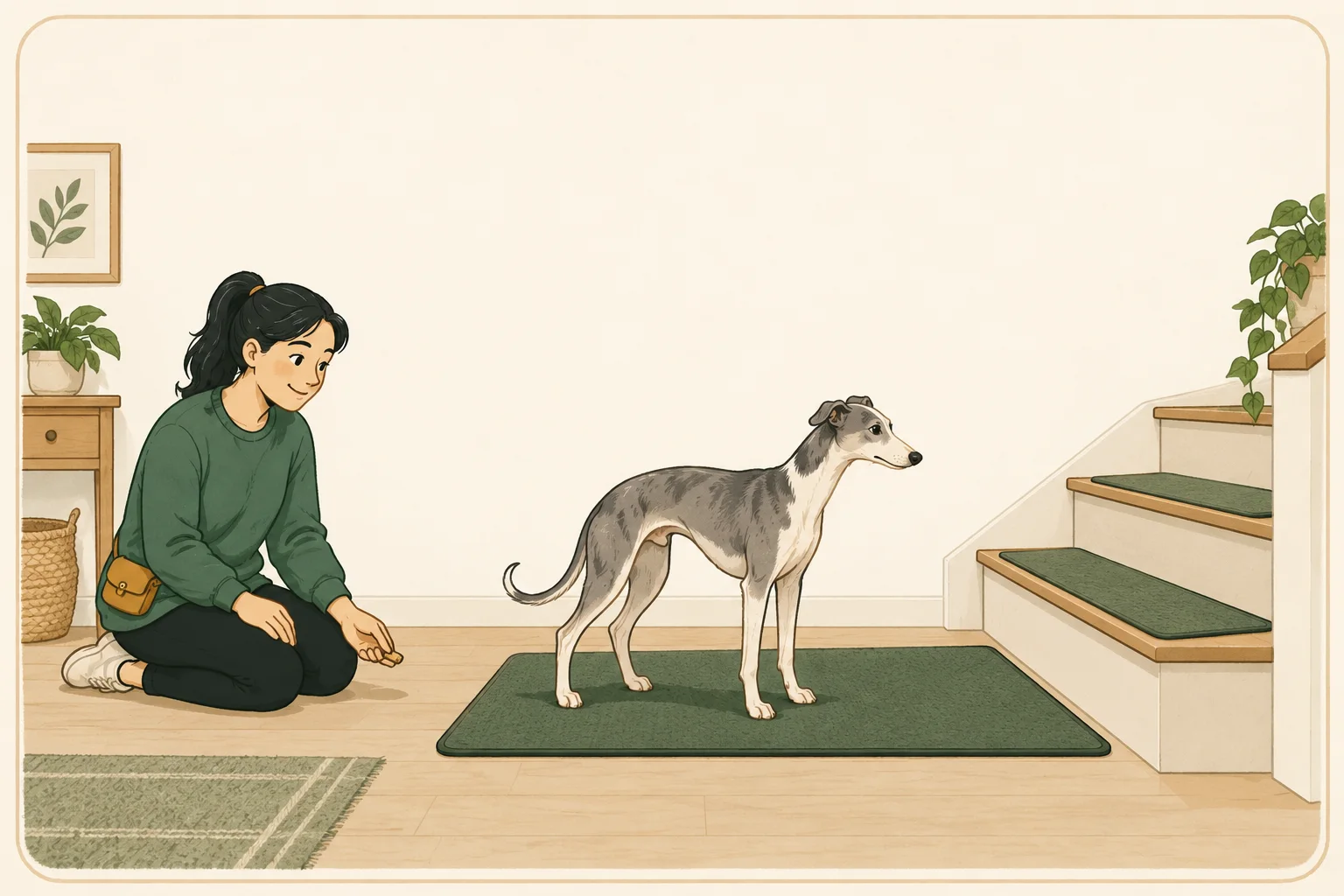
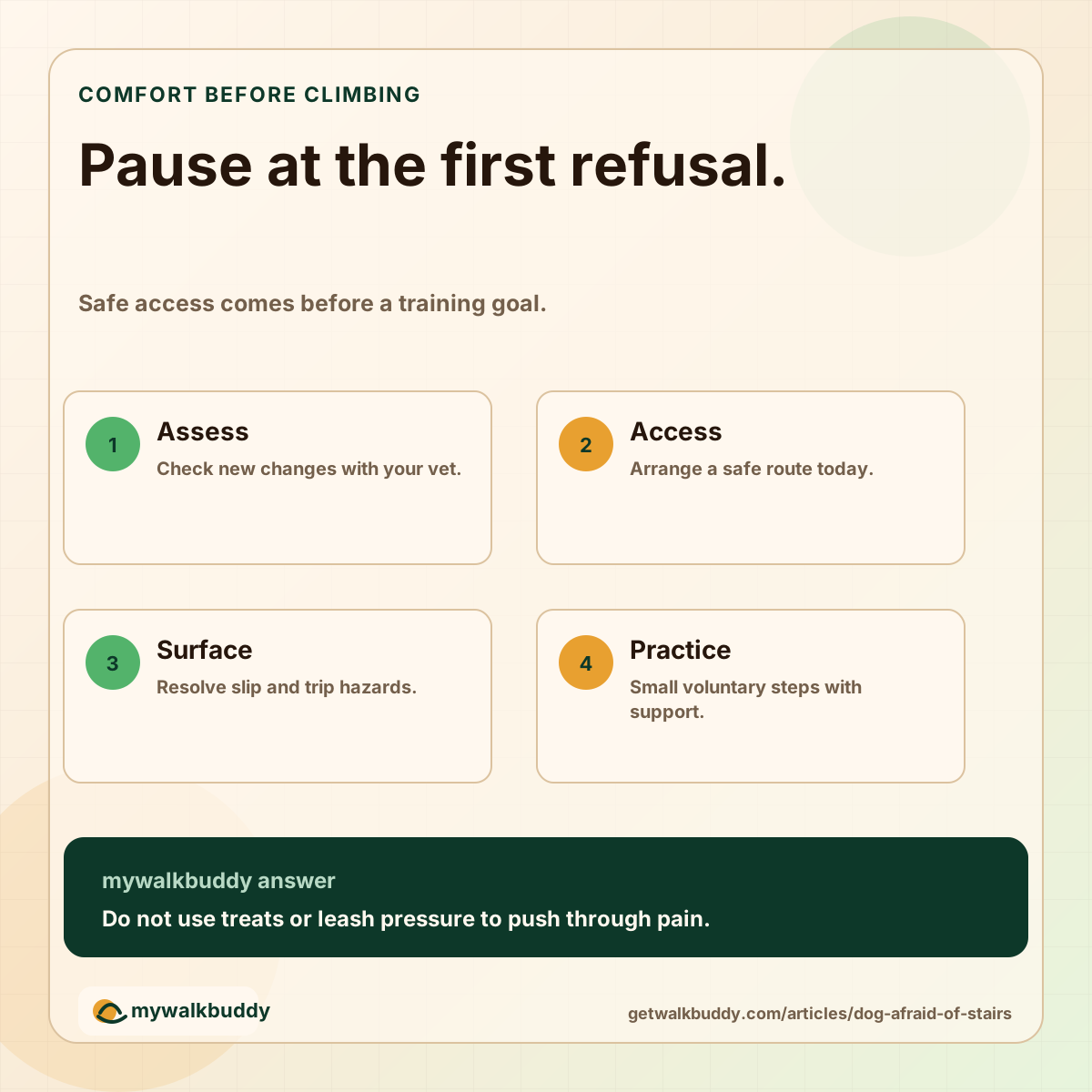
- A new refusal can be a sign of discomfort, not simply fear.
- Solve safe access to toileting and essential spaces first.
- Practice at the dog’s pace, with an easy way to move away.
Turn this answer into a walk you can actually track.
GetWalkBuddy is a dog walking app for owners who want a simple route tracker, timer, distance view, and daily walk log without turning the walk into a spreadsheet.
Why might a dog suddenly refuse the stairs?
Pain is one possibility that needs checking. VCA includes reluctance to use stairs among behavior changes that can indicate pain in older dogs. A past frightening event can also matter; Journey Dog Training describes a dog avoiding stairs after a scare at a gate.
These are possibilities, not a diagnosis of your dog. Record when the change started and whether it affects going up, going down, one staircase or several. Note other movement changes without repeatedly asking the dog to demonstrate the problem.
A useful message to the veterinary clinic is specific: “Since yesterday, she stops at the first step down and is slower getting up from bed.” It gives more information than “she is stubborn about the stairs.” Use your own observations, not the example’s details.
Ask the clinic how to manage access while waiting for the assessment. If the dog is injured or cannot move normally, seek prompt veterinary guidance rather than beginning a training exercise.
Sources: VCA: recognizing pain in aging dogs; Journey Dog Training: a behavior consultant on stair fear
How do you handle today’s walk if stairs block the exit?
Make a temporary access plan before trying to train through the problem. Dogs Trust recommends avoiding situations that overwhelm a frightened dog and allowing them space to move away.
List the essential destinations: the toilet area, water, resting place and the exit for veterinary care. Check whether a level entrance or another already comfortable route exists. A longer route on level ground may be more workable than repeated attempts on the same staircase.
If no safe alternative exists, contact your veterinarian for a handling and access plan suited to the dog and the building. Do not improvise carrying a large or struggling dog on stairs, or assume a support harness solves every mobility problem.
Tell every household member which route to use. Consistency here means following the same safe plan, not insisting that everyone persuade the dog to finish the same flight.
Sources: Dogs Trust: recognizing fear and helping dogs feel safer
What should you check on the staircase itself?
Check for slipping surfaces, clutter, steepness and anything linked to the earlier scare. Journey Dog Training recommends making the environment easier, including suitable grip and clearing obstacles, before rebuilding confidence.
Do this inspection without asking the dog to climb. Look at the approach and landing as well as the steps. A loose item at the bottom can make an otherwise manageable route awkward for both dog and handler.
Any tread or mat should be securely fitted, not a loose towel that can slide. Ask the property owner or a suitable professional about structural or permanent changes. A quick makeshift alteration that creates a trip hazard defeats the purpose.
Write down what changed and what still needs assessment. Better footing may help the environment, but it does not rule out pain or make every staircase suitable for every dog.
Sources: Journey Dog Training: a behavior consultant on stair fear
How can you begin rebuilding confidence safely?
After physical suitability and access safety are addressed, begin with a small voluntary response near the stairs. Journey Dog Training describes rewarding a glance or slight approach before asking for climbing, using short positive sessions and the dog’s pace.
Choose a starting place on stable level ground where the dog is comfortable. A first goal might simply be looking toward the stairs and returning attention to you. You do not need to finish a flight to have a useful session.
Avoid drawing a worried dog farther than they can comfortably manage with a trail of treats. Keep a clear retreat and stop when the dog needs space. A qualified reward-based trainer can design the next progression for the actual staircase and dog.
Record the task precisely: “looked toward the bottom step while relaxed” is different from “walked down three steps.” This makes the next session easier to plan without quietly raising the difficulty.
Sources: Journey Dog Training: a behavior consultant on stair fear; Dogs Trust: recognizing fear and helping dogs feel safer
What should your household plan contain?
Separate necessary access from optional practice. Everyone should know the route for today, what has been checked and which actions to avoid.
Use these four lines as a handover template:
- Before: record the veterinary advice and the approved route to essential areas.
- Environment: identify the staircase changes completed and any remaining hazards.
- Practice: state the small voluntary task agreed with your trainer, if training is appropriate.
- Stop: pause for distress or altered movement and follow up with the veterinary or behavior team.
Questions owners ask when the leash is already in their hand
-
Should I pull my dog up by the leash?
No. Do not force a frightened or uncomfortable dog through the staircase. Use the access plan and get help with the underlying problem.
-
Why is going down harder than going up?
The direction changes the task. Record the difference for your veterinarian or trainer; it does not identify the cause by itself.
-
Will treats fix a sudden fear of stairs?
Rewards can support an appropriate training plan, but they do not assess or treat pain. A new change should be checked before assuming motivation is the issue.
-
Does my dog have to learn every staircase?
No. Decide whether access is necessary and physically appropriate. Some situations are better managed with a different route or permanent accommodation.
Track the comfortable part of the outing.
Use GetWalkBuddy to record walks on suitable routes. Keep stair and movement observations in separate notes for your veterinary or training team.