
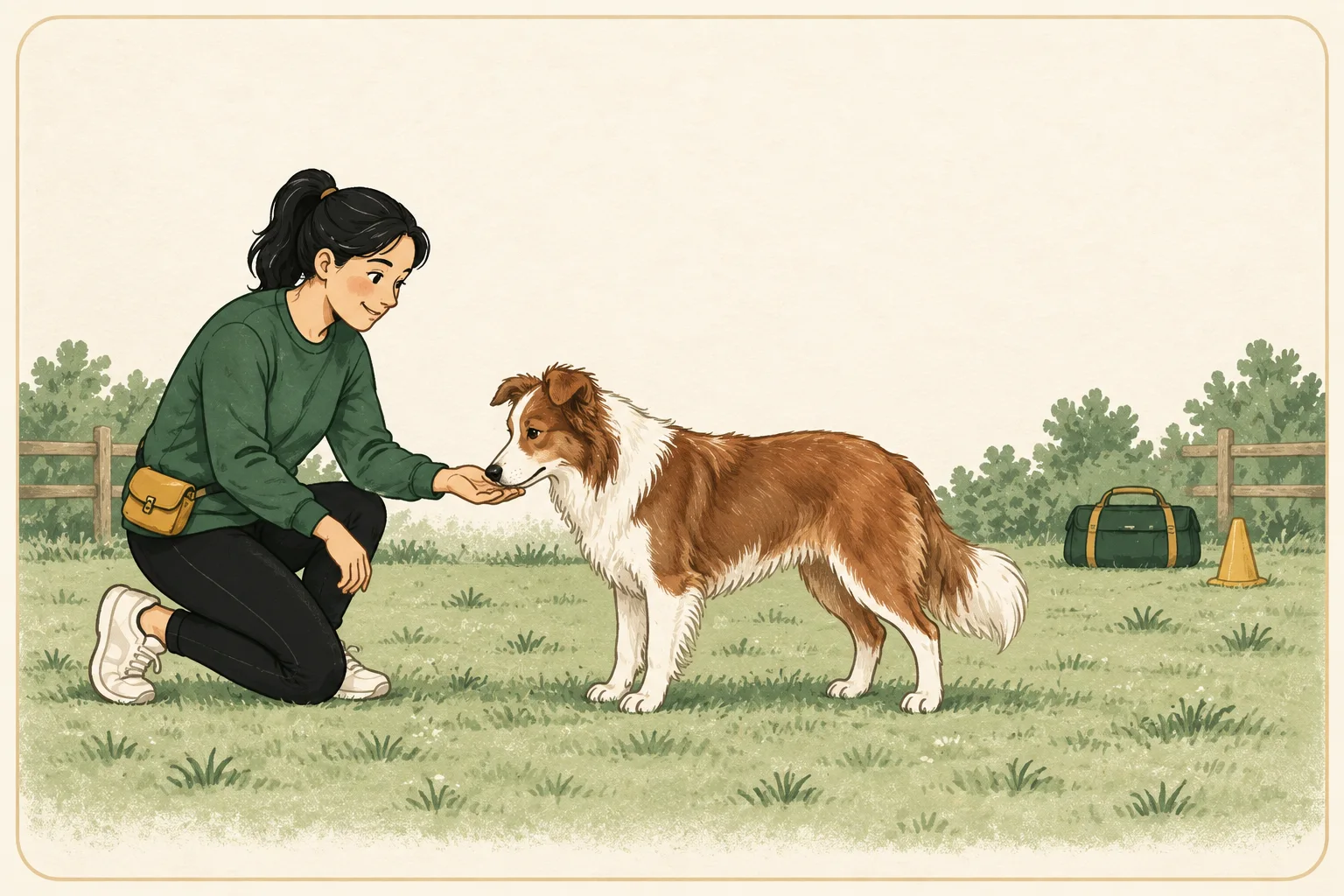
- Start with communication rather than a homemade obstacle course.
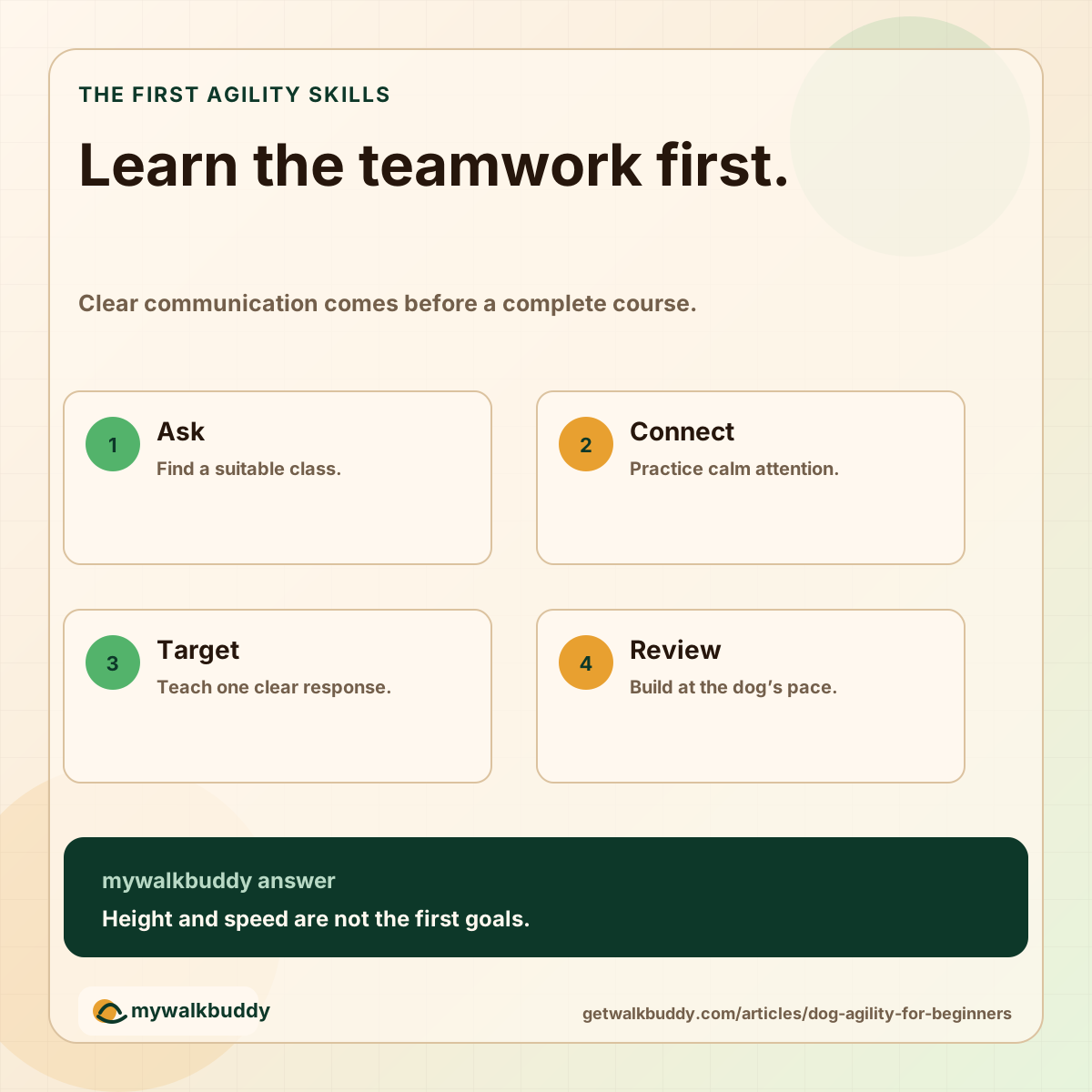
- Ask a beginner instructor how training is adapted to age, health and confidence.
- Practice one clear skill in a safe setting, with an easy stopping point.
Turn this answer into a walk you can actually track.
GetWalkBuddy is a dog walking app for owners who want a simple route tracker, timer, distance view, and daily walk log without turning the walk into a spreadsheet.
What does dog agility involve?
Agility is a sport in which a handler directs a dog around a course using cues and body language. AKC describes obstacles such as tunnels, jumps and weave poles, with the handler’s communication central to the activity.
Watching an experienced team can make the equipment look like the whole sport. For a beginner, learning how to give a clear cue and reward at the right moment is part of the work too.
Decide what you want from a first class: an enjoyable shared activity, better training skills or an introduction to eventual competition. Tell the instructor your aim so the starting plan fits. A hobby session does not need to become a race.
Sources: AKC: getting started in agility
What can you practice before using equipment?
AKC’s home guide includes attention, nose targeting and comfortable handling on either side of the person. These let you work on communication without immediately adding height or speed.
Choose one skill the dog can attempt comfortably on a level, nonslip surface. For a hand target, the task is a voluntary nose touch to your presented palm; it is not pushing the dog’s face into your hand. Ask an instructor to demonstrate if the dog is unsure.
Keep the session small enough that you can notice what your timing does. Reward the intended response, then reset clearly. A muddled repetition is information for the person, not evidence that the dog needs a louder cue.
Use a simple note such as “Comfortable following on my left; ask the instructor how to introduce the other side.” This is an example of planning, not a claim that one pattern is right for every dog.
Sources: AKC: agility foundations at home
How do you choose a useful beginner class?
Look for instruction that starts at your dog’s level and explains how to practice safely. AKC recommends beginning with a class rather than trying to infer the sport from competition footage.
Before booking, ask what “beginner” means. Does the class assume recall and group-class experience, or does it teach foundational skills? Ask whether you can observe a session and how dogs wait between turns.
Discuss age, health restrictions, confidence around dogs and anything the instructor should know about handling. Ask what happens if your dog needs more space or cannot use a particular obstacle comfortably.
A useful instructor should be able to explain the purpose of an exercise and what an easier version looks like. Buying equipment is a poor substitute for understanding the task.
Sources: AKC: getting started in agility
What should home practice look like?
Repeat the specific work your instructor has taught in a suitable space. Avoid improvising raised, unstable or slippery obstacles because they resemble something seen at a trial.
Write the exercise in a sentence before setting up: for example, “Practice the hand target we learned.” If the sentence becomes a sequence of several new skills, make the session simpler.
Check the surface, room to move and where the dog can take a break. Keep other pets out of the working area. Stop if movement looks uncomfortable or the dog no longer wants to engage.
Introduce physical challenges with individual veterinary and training guidance. Being old enough to enter an event does not establish that a particular dog is ready for repeated jumping or tight turns.
Sources: AKC: agility foundations at home
What is a practical first-week plan?
Use the week to find instruction, understand the starting task and try a manageable foundation exercise. There is no need to purchase a complete course first.
This is an organizational example rather than a training dose or deadline:
- Before: tell the instructor your goals and the dog’s relevant history.
- Learn: ask for one foundation exercise and an easier version.
- Practice: use a clear level area and reward the intended response.
- Review: note confusion, comfort and questions for the next lesson.
Questions owners ask when the leash is already in their hand
-
Do I need to buy jumps before starting agility?
No. Communication and foundation skills can come first. Ask your instructor which equipment is appropriate later.
-
Can a mixed-breed dog try agility?
Yes. AKC describes agility as open to mixed breeds as well as purebred dogs, subject to the relevant program requirements.
-
Should a puppy practice a full course?
Use age-appropriate foundations with professional guidance. Do not copy an adult competition course for a growing puppy.
-
How long should beginner practice last?
Keep it short and manageable for the individual dog and task. End before the dog becomes tired, uncomfortable or disengaged.
Keep the everyday walking routine visible.
GetWalkBuddy records walking route, time and distance. Keep agility exercises and instructor guidance separately; walking distance does not measure agility workload.