
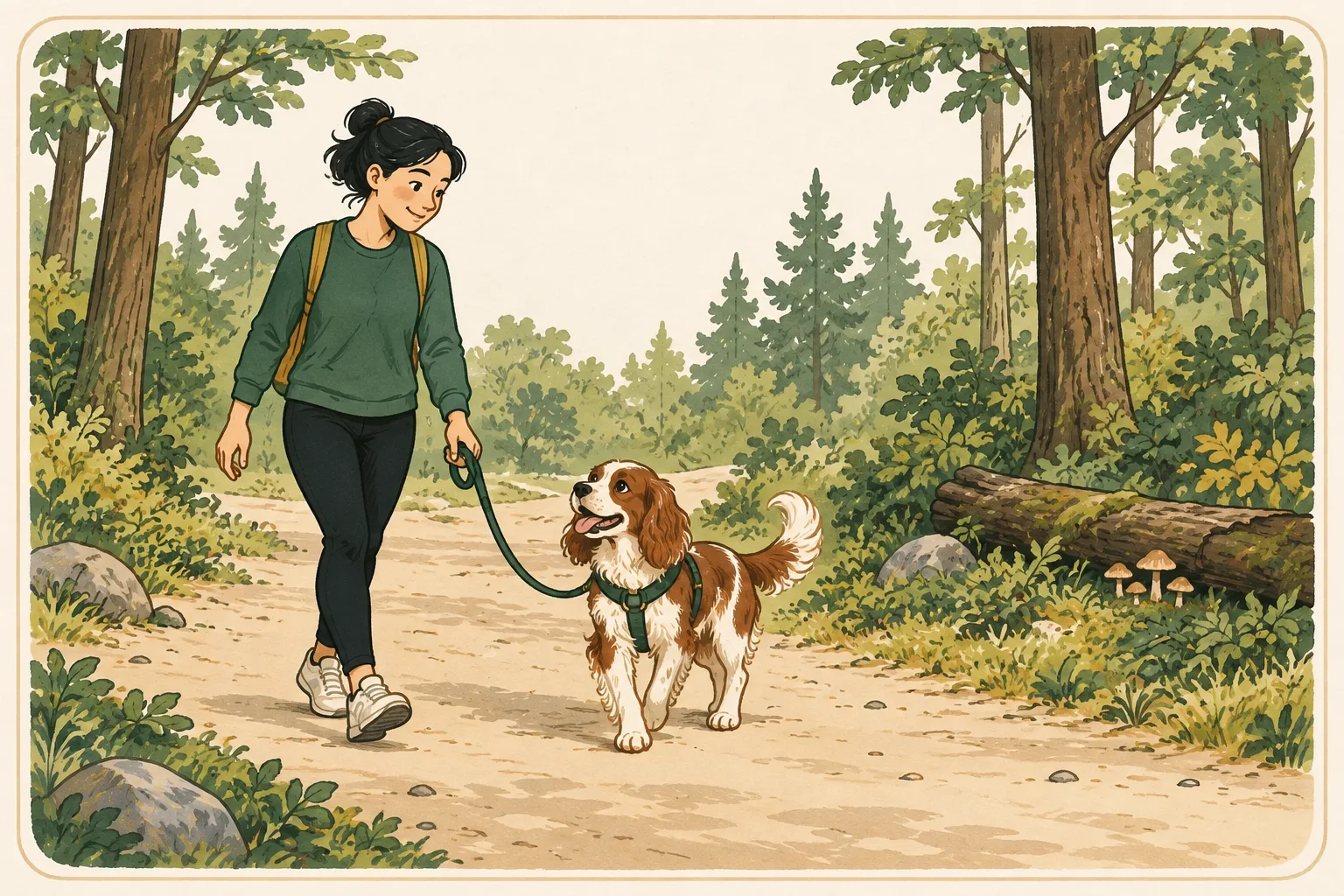
- Suspected ingestion needs prompt professional advice.
- Record time, place and what you actually saw.
- Use supervised yard checks and a clear walking route.
Turn this answer into a walk you can actually track.
GetWalkBuddy is a dog walking app for owners who want a simple route tracker, timer, distance view, and daily walk log without turning the walk into a spreadsheet.
What should you do first?
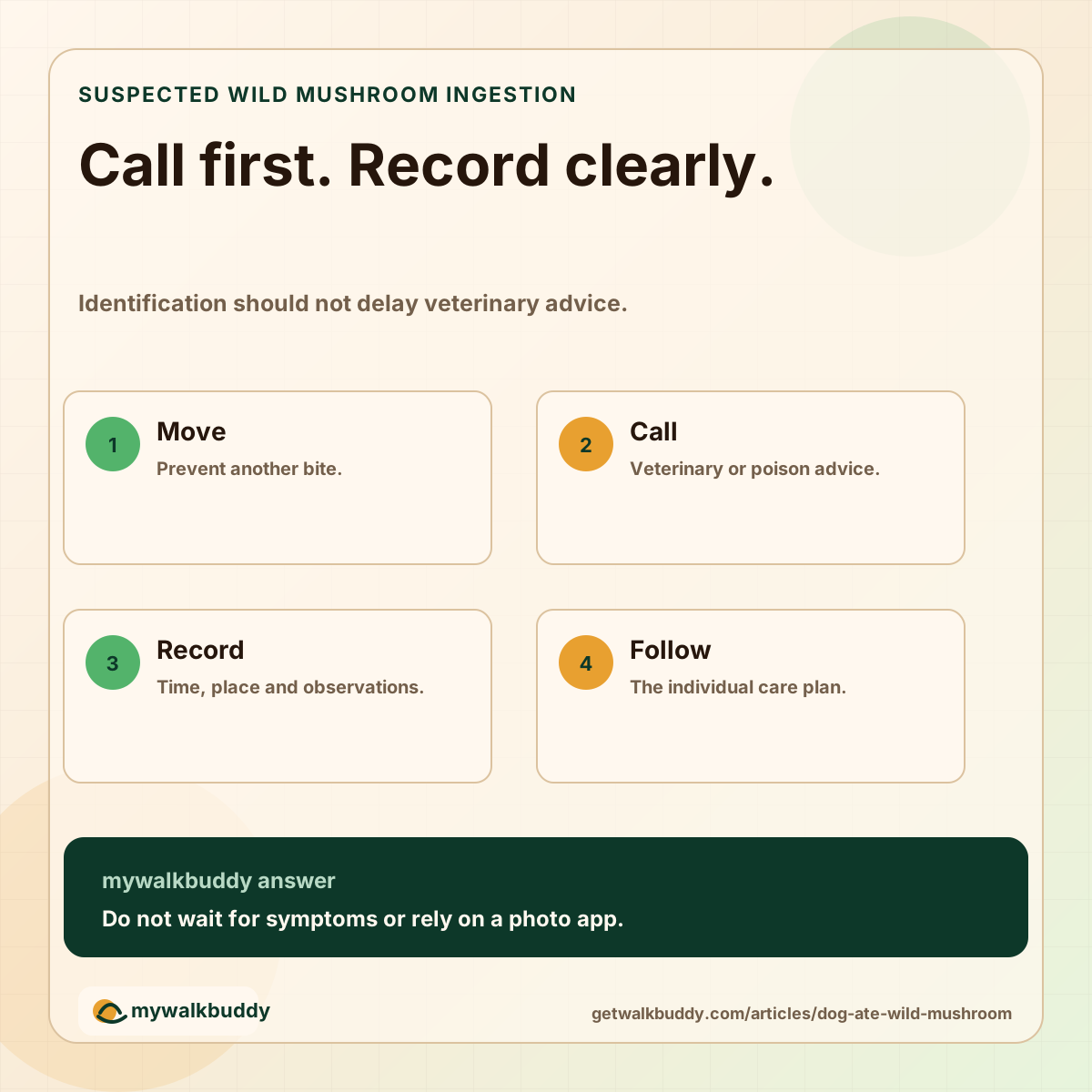
Stop further access and call your veterinarian or an animal poison service. ASPCA advises immediate help for suspected toxic ingestion because delays can be dangerous.
Keep the dog with you while making the call. If another adult is present, one can manage the dog while the other gathers information. Do not leave the dog loose in the same area while investigating.
Say whether you saw a bite, a swallow, chewing with pieces missing, or only sniffing. These observations are different; report uncertainty plainly instead of turning a guess into a fact.
In the United States, ASPCA Poison Control is available at (888) 426-4435; a consultation fee may apply. If the dog is seriously unwell, seek emergency veterinary care immediately.
Sources: ASPCA: Mushroom Toxicosis; UC Davis: Mushroom Toxicity in Dogs
What information helps the veterinary team?
Prepare the time and location, the dog’s details, what was observed and any change in behavior. Keep the call moving even if some details are unknown.
Use a brief note with six fields: dog and approximate weight; location; earliest and latest possible exposure time; observed action; estimated amount if known; current signs. Write “unknown” rather than inventing a precise quantity.
An example of a useful description is “I saw chewing beside the garden bed; one mushroom has a missing edge; I did not see a swallow.” This is an illustrative note, not a reported case.
Ask where to go and what to bring. If a second person can safely take a picture of the location without delaying departure, it may help document the event. Do not spend the next hour comparing photographs online.
Can you identify a safe mushroom by its appearance?
Mushrooms are difficult to identify reliably. ASPCA recommends expert identification; a familiar color, shape or phone-app match should not decide whether your dog needs help.
Keep the question narrow: “What does the veterinary team need from me?” rather than “Can I prove this one is harmless?” Similar-looking mushrooms can have very different risks.
UC Davis suggests retaining a piece in a damp paper towel inside a plastic bag to show the veterinarian. Prevent further exposure and wash your hands afterward. Only collect it if doing so is safe and does not delay care.
Label any sample so another household member will not mistake it for food. Keep it out of reach during transport and follow the clinic’s handling instructions.
Sources: ASPCA: Mushroom Toxicosis; UC Davis: Mushroom Toxicity in Dogs
Should you wait to see whether symptoms develop?
No. Seek advice based on suspected ingestion. UC Davis describes possible gastrointestinal and neurological signs, including vomiting, diarrhea, tremors and seizures, with effects varying by mushroom.
A dog looking normal at the moment does not answer the identification question. Tell the professional how the dog is now, then follow the plan given for that exposure.
Do not induce vomiting or give a home remedy unless a veterinary professional specifically directs you. ASPCA warns that attempts to induce vomiting can cause additional harm.
Write down the advice and who gave it. If the dog’s condition changes while you are following the plan, contact the veterinary team again or seek emergency help as directed.
Sources: UC Davis: Mushroom Toxicity in Dogs; ASPCA: Is It Ever Safe to Induce Vomiting?
How do you reduce mushroom access in the yard?
ASPCA recommends checking lawns for mushrooms and preventing access to areas where they grow. Mushrooms can appear quickly, so an earlier check does not establish that the yard remains clear.
Our yard routine has three zones: the doorway and toilet area, the dog’s usual sniffing route, and the less visible edges near beds or logs. Check the places your dog actually uses first.
Keep the dog supervised while inspecting. Record recurring locations so all household members know which area needs attention; do not assume the person doing the next outing knows what you found.
If you cannot make an area suitable, choose a different supervised toilet or walking route. The practical aim is to remove access, not to teach mushroom identification to everyone in the household.
Sources: ASPCA: Mushroom Toxicosis
What should change on the next walk?
Choose a route where you can see and manage what the dog reaches. Practice general scavenging prevention separately from a suspected poisoning event.
Walk on the clear part of the path and shorten your working distance near hidden ground cover. Avoid turning a leash into a struggle over an unidentified object; seek professional training help if scavenging is persistent.
For a dog that repeatedly eats ground objects, discuss management with your veterinarian and a reward-based trainer. A preventive plan should fit the individual dog and should not substitute for a call after a new exposure.
Keep the emergency contact and exposure-note template in the same place as the dog’s other care information. The useful outcome is a household that knows what to do without searching through old messages.
- Before: inspect the immediate yard or route.
- During: supervise access to ground objects.
- If ingestion is possible: contact professional help promptly.
- After: follow the care plan and restrict the problem area.
Questions owners ask when the leash is already in their hand
-
Are all wild mushrooms poisonous to dogs?
No, but some are highly toxic and identification is difficult. Do not use the fact that many are harmless to dismiss an unknown ingestion.
-
Can a mushroom identification app clear my dog?
Do not rely on an app result to decide that veterinary advice is unnecessary. Ask the veterinary team what evidence they need.
-
Is a store-bought mushroom the same situation?
ASPCA distinguishes grocery-store mushrooms from wild mushrooms. Report the actual product and other ingredients if a prepared food was eaten; this guide concerns unknown outdoor mushrooms.
-
Should I collect the mushroom before calling?
Make the call promptly. A sample may be useful, but gathering it should not delay professional advice or transport.
Keep the next route manageable.
GetWalkBuddy records walking routes, time and distance. Use your route notes to plan a familiar clear path after addressing any immediate veterinary concern.