
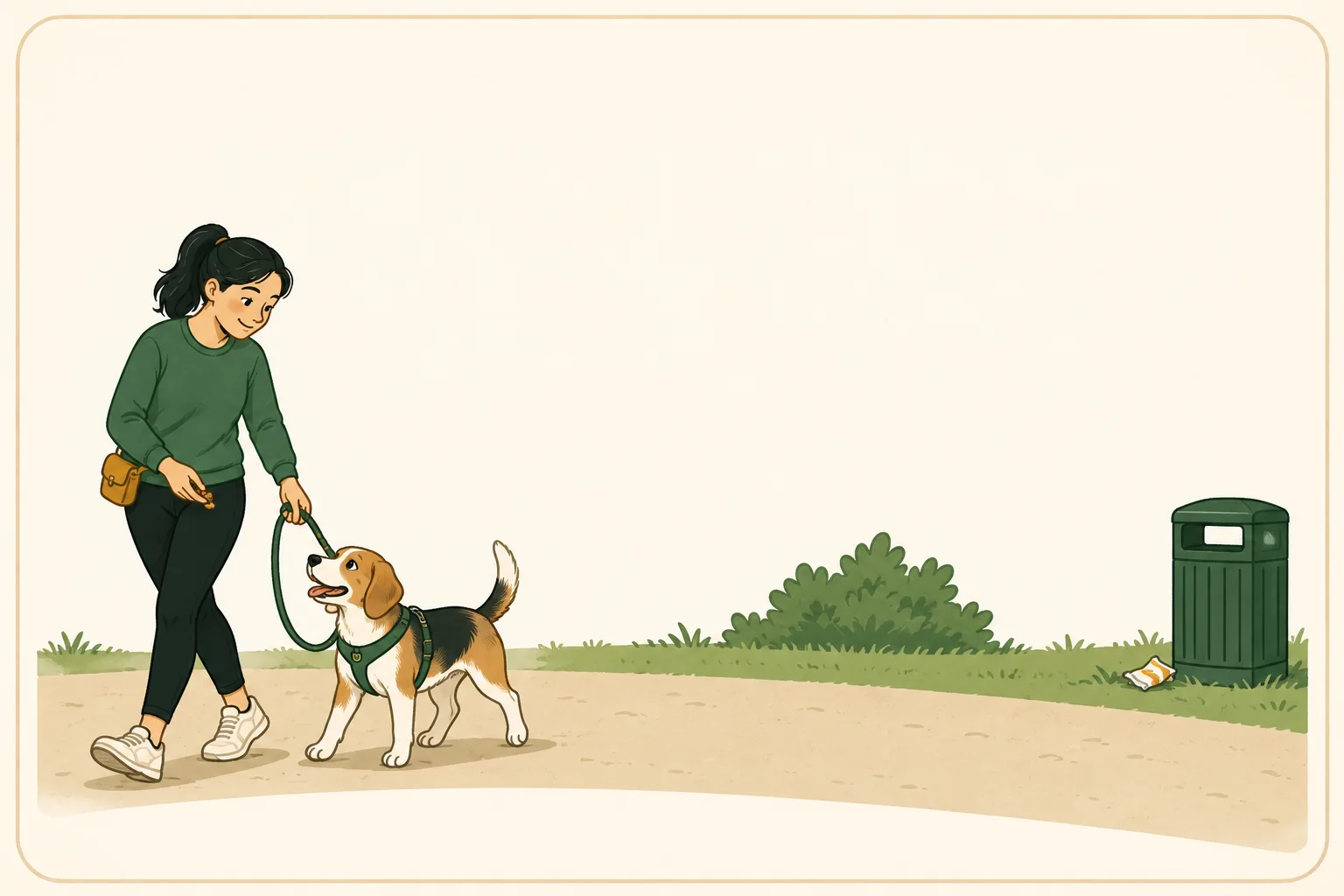
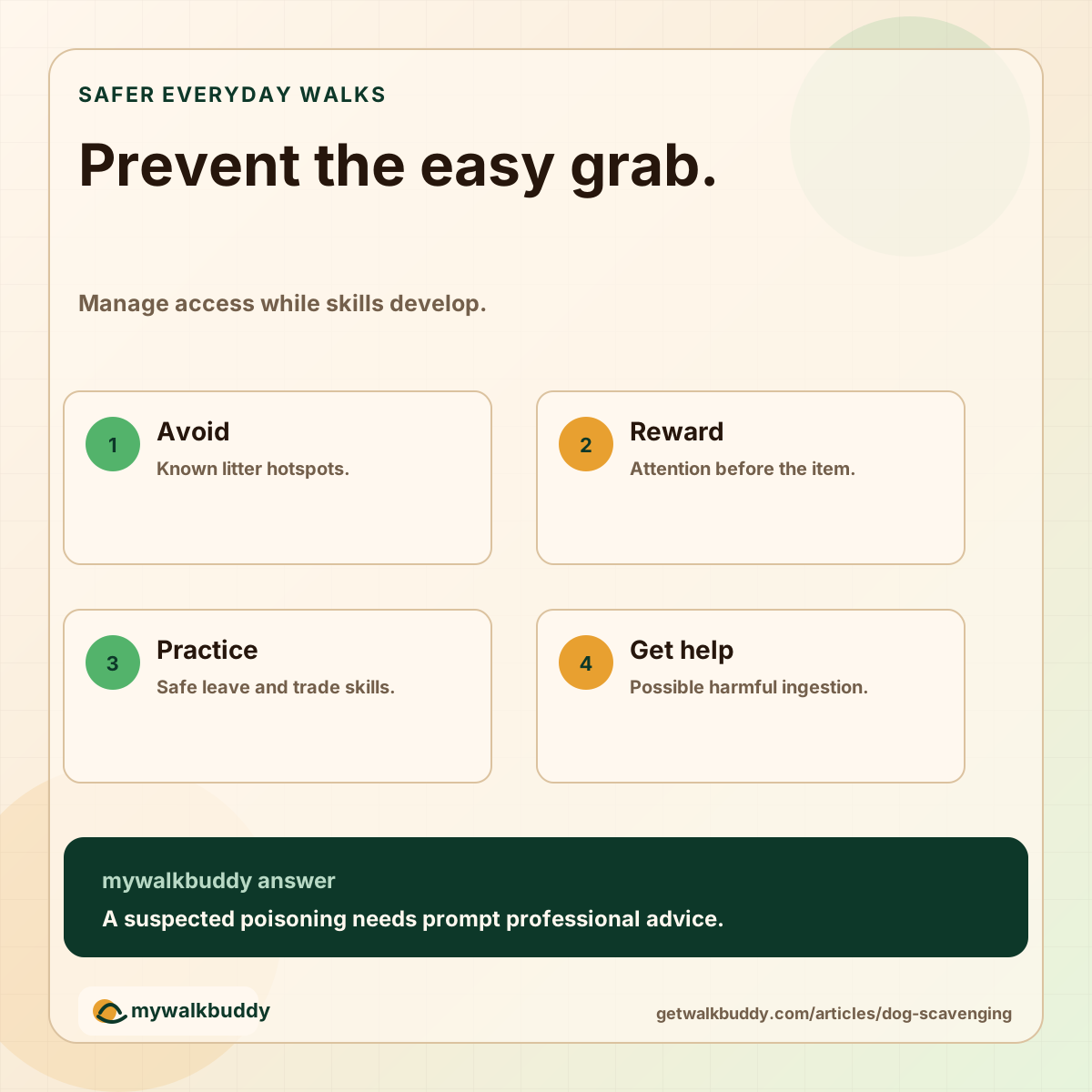
- Manage access to litter before relying on a training cue.
- Practice leaving and trading with safe items, away from real hazards.
- Treat suspected harmful ingestion as a veterinary question, not a training session.
Turn this answer into a walk you can actually track.
GetWalkBuddy is a dog walking app for owners who want a simple route tracker, timer, distance view, and daily walk log without turning the walk into a spreadsheet.
Why does your dog keep scavenging for food?
Dogs Trust describes scavenging as a natural behavior that can have several influences, including food temptation, boredom, uncertainty and health issues. The behavior alone does not tell you which explanation applies to your dog.
Describe the pattern before deciding on the cause. Does it happen around one takeaway area, on every route, or with non-food objects too? Has it changed recently? These details give your vet or trainer something specific to work with.
Keep the record factual: item sought, location, time and what happened. Do not diagnose a nutrient deficiency from a single incident or assume the solution is simply more food. Discuss persistent scavenging with your veterinarian.
Sources: Dogs Trust: scavenging on walks
What can you change on the next walk?
Avoid litter hotspots and use a leash setup that lets you prevent access. Dogs Trust recommends rewarding attention and moving away from temptations, rather than repeatedly walking within reach of an overflowing bin.
Map the predictable problem spots: picnic benches, school gates after lunch, bins on collection day or the path outside a food outlet. Pick one alternative before leaving. If crossing a road would be unsafe, turn back or choose another path.
For example, move the sniffing stop to a clean verge before the busy food area instead of waiting until the dog has found a wrapper. This is an environmental change you can control while training develops.
Prepare rewards where you can reach them without dropping the leash. Notice and reward a check-in before the dog reaches the hazard. Repeatedly shouting a cue at the last second tells you little about whether that cue was learned.
Sources: Dogs Trust: scavenging on walks
How are leave-it and trading different?
Leave-it asks the dog not to take something; trading asks them to give up something already held. Dogs Trust teaches both with rewards, starting in manageable situations and increasing difficulty gradually.
Use safe practice items and a controlled setup. Begin with something the dog can comfortably ignore or exchange, then reward the desired response. A dropped bone beside a busy road is not an appropriate training prop.
In your notes, separate the two skills. “Turned away from safe item in the kitchen” does not mean “will release anything outdoors.” Record the actual setting and difficulty so you know what still needs practice.
If the dog guards items, freezes or threatens when someone approaches, get qualified support. Do not test a trade by putting your hands into a conflict. Handling safety and an appropriate behavior plan come first.
Sources: Dogs Trust: leave it and fair trade
What if your dog has swallowed something suspicious?
Contact your veterinarian or an animal poison service promptly if harmful ingestion is possible. In the United States, ASPCA Poison Control is available at 888-426-4435; a consultation fee may apply. Do not rely on the dog appearing normal to decide the substance was harmless.
Tell the professional what may have been swallowed, when it happened, the estimated amount if known, and the dog’s size and symptoms. Save a package or take a photo if you can do so safely without delaying the call. Say “unknown” when you do not know.
Ask for instructions before attempting a home remedy or making the dog vomit. The appropriate response depends on the material and circumstances; an online scavenging guide cannot determine that from a vague description.
After the immediate issue is handled, note where access occurred and what practical change could prevent a repeat. This review comes after care, not instead of it.
Sources: ASPCA Poison Control
What should your walk observation log contain?
Keep the log short enough to use. Its purpose is to identify repeatable situations and communicate with your veterinary or training team, not to score the dog.
Use these four prompts:
- Before: choose a route with fewer known food and litter hotspots.
- Notice: record what the dog approached and how far away you first saw it.
- Respond: note whether you moved away, used a learned cue or needed help.
- Review: change one practical part of the next outing and seek advice for persistent problems.
Questions owners ask when the leash is already in their hand
-
Will a muzzle stop all scavenging?
Do not assume any basket design blocks every small item. Discuss a suitable fit and design with a qualified professional and introduce it positively. A muzzle is one management option, not a replacement for supervision.
-
Should I practice with real litter?
No. Use safe controlled setups. Do not deliberately expose your dog to sharp, spoiled or potentially poisonous material to test a cue.
-
Does scavenging prove my dog is hungry?
No. Several factors can influence the behavior. A persistent or changed pattern is worth discussing with your veterinarian rather than guessing the cause.
-
Can recall training help?
A practiced recall may help you move the dog away before they reach an item. Continue managing access while the skill develops; a cue is not a guarantee in every situation.
Remember the route that worked better.
Use GetWalkBuddy to record your walking route, time and distance. Keep the item and behavior observations in separate notes for your veterinarian or trainer.