
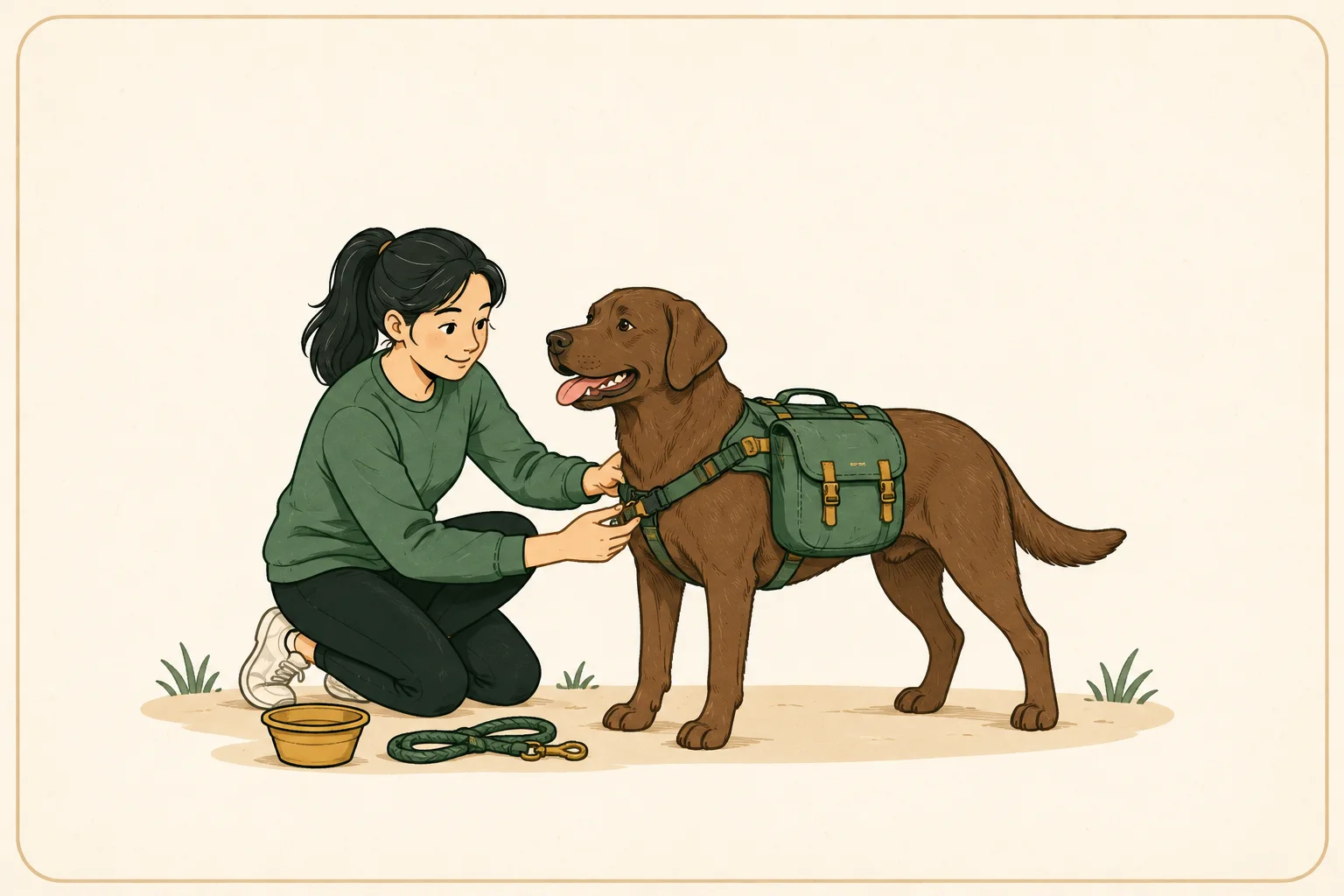
- This guide covers a pack the dog wears, not a carrier you wear.
- Begin with an empty pack on an easy familiar outing.
- Weigh the whole setup and reconsider balance whenever contents change.
Turn this answer into a walk you can actually track.
GetWalkBuddy is a dog walking app for owners who want a simple route tracker, timer, distance view, and daily walk log without turning the walk into a spreadsheet.
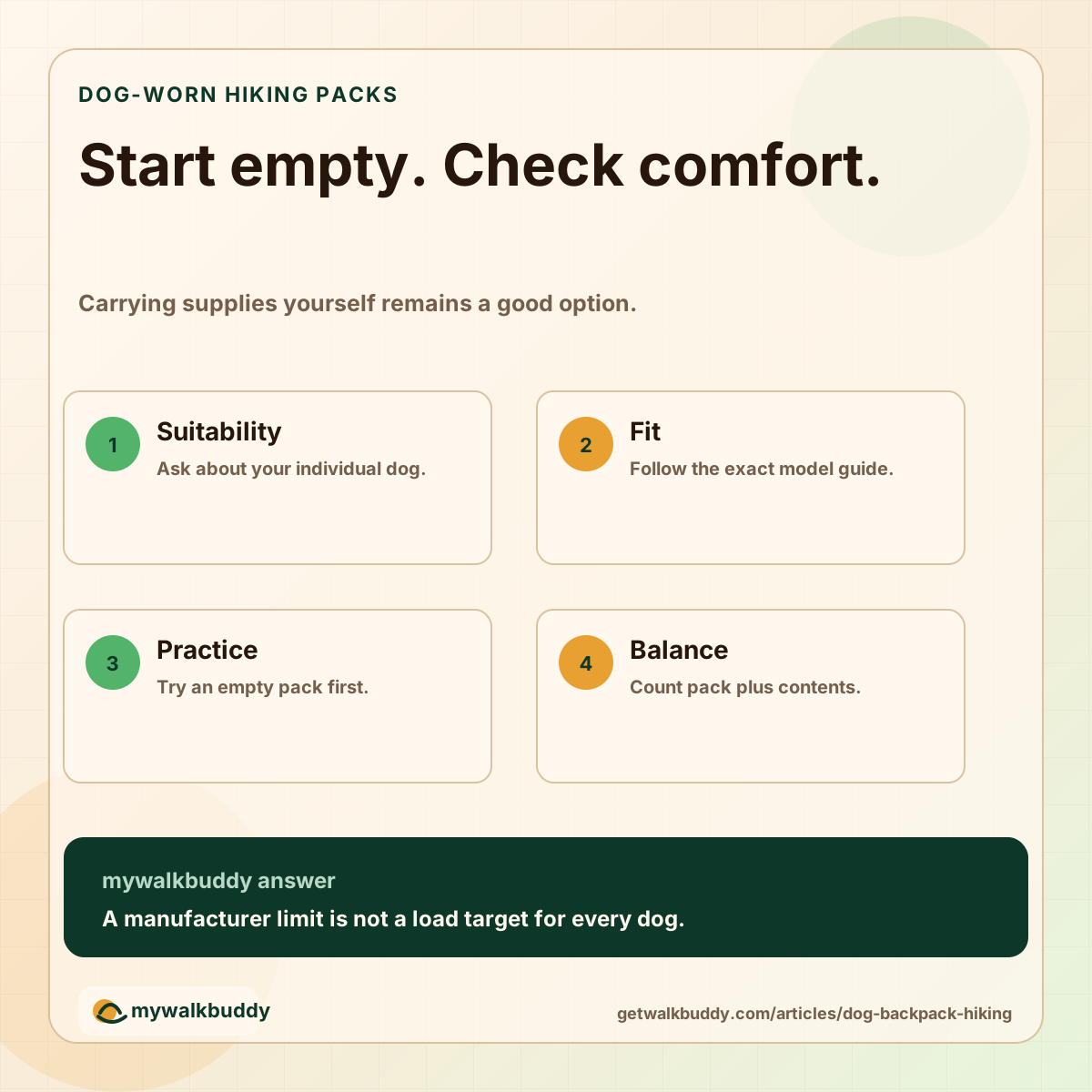
Does your dog need a hiking backpack?
No. You can carry the dog’s supplies yourself. If you want the dog to carry a pack, Ruffwear recommends a pre-trip veterinary check and an introduction on short outings before adding weight.
Write down the problem the pack is supposed to solve. “I want somewhere for spare bags” is a different need from “I want my dog to carry several days of supplies.” An attractive product photograph does not answer either question.
Compare three options before buying: your existing daypack, a dog pack used empty for familiarization, or a dog pack with an individually appropriate load. Keeping the first option available means you can change plans without cutting the walk short just because the dog dislikes equipment.
Ask the veterinarian about your dog’s maturity, health and suitability for carrying gear. Do not choose a load simply by copying another dog of the same breed.
Sources: Ruffwear: introducing a pack and preparing for hiking
How do you choose the size and check the fit?
Use the instructions for the exact model. Ruffwear sizes its packs using chest girth, measured around the widest part of the rib cage behind the front legs. A size label from another harness or brand is not a measurement.
Keep a small fit record: model, chest measurement, selected size and adjustment settings. If someone else will put the pack on, show them the manufacturer’s instructions rather than relying on “tighten it a bit.”
Inspect the empty setup while the dog stands and takes a few easy steps. If the pack shifts, straps rub or movement appears restricted, stop and resolve the fit before adding contents. Take a photo or short clip for the supplier or a qualified fitter if the issue is difficult to describe.
The article illustration shows the idea of a fitting check. It is not a diagram of the correct strap position for every pack.
What should the first pack walk look like?
Start with the pack empty and keep the outing familiar and easy. Ruffwear recommends short practice trips, gradual adjustment and positive experiences while the dog gets used to the equipment.
Separate the new variables. Avoid making the first pack outing also the first long hike, first rocky trail and first group walk. With a familiar route, you can pay attention to the equipment instead of solving several unfamiliar problems at once.
Decide beforehand where you can stop and remove the pack. Bring your own bag with room for it. If the dog is reluctant, uncomfortable or moving differently, stop the trial; completing a planned distance is not the goal. Seek veterinary advice for pain or a persistent change in movement.
A useful first result might be “comfortable standing in the empty pack, not yet ready to walk in it.” That is actionable information, not a failed hike.
Sources: Ruffwear: introducing a pack and preparing for hiking
How should you calculate and balance the load?
Count the pack and everything inside it. Manufacturer percentages are general guidance, not a personalized prescription or a target to reach. Discuss a suitable load with your veterinarian, and distribute it evenly between the saddlebags.
Use a kitchen or luggage scale as appropriate for the equipment. Record three weights in the same units: empty pack, left-side contents and right-side contents. Add them for the total. Capacity in liters tells you volume, not how heavy the packed setup is.
For an arithmetic example only, a 300 g empty pack plus 100 g on each side totals 500 g. That calculation does not establish that 500 g is suitable for your dog. It simply prevents forgetting the weight of the pack itself.
Ruffwear notes that balance changes as food and water are used. Build a check into each unpacking stop: what came out, which side is now lighter and what should move into your own bag? Rebalance by redistributing or removing items, not by adding unnecessary ballast.
Sources: Ruffwear: introducing a pack and preparing for hiking; Ruffwear: organizing a dog pack
What should you check before making the next hike harder?
Review the previous outing before changing the route or the load. Keep the decision tied to observed comfort and professional guidance, not to filling unused pocket space.
Use this short decision card, keeping your dog’s needs ahead of the equipment:
- Before: confirm fit, individual load guidance and room in your own bag for the entire dog pack.
- During: pause if the pack shifts or the dog seems uncomfortable; remove it when needed.
- After: record route, duration, total load and any fit problem in separate notes.
- Next: change one planned element at a time, or keep carrying the supplies yourself.
Questions owners ask when the leash is already in their hand
-
Can a puppy carry a weighted hiking pack?
Ruffwear advises waiting until dogs are fully grown before adding weight. Ask your veterinarian about maturity and suitability rather than using a universal birthday cutoff.
-
Does a large pack need to be filled?
No. Empty space is not a reason to add weight. Choose contents for the outing and the individual dog, and carry the rest yourself.
-
Is a dog backpack the same as a dog carrier?
No. A dog pack holds supplies on the dog. A carrier supports the dog while a person carries them. They have different fit, safety and intended-use requirements.
-
Should I pick a pack by my dog’s breed?
Use current measurements and the specific model’s size chart. Breed examples can help you browse, but they cannot establish the fit of an individual dog.
Compare your practice walks.
Use GetWalkBuddy for the route, duration and distance of each outing. Record pack weight and fit observations separately so you can review what changed.