
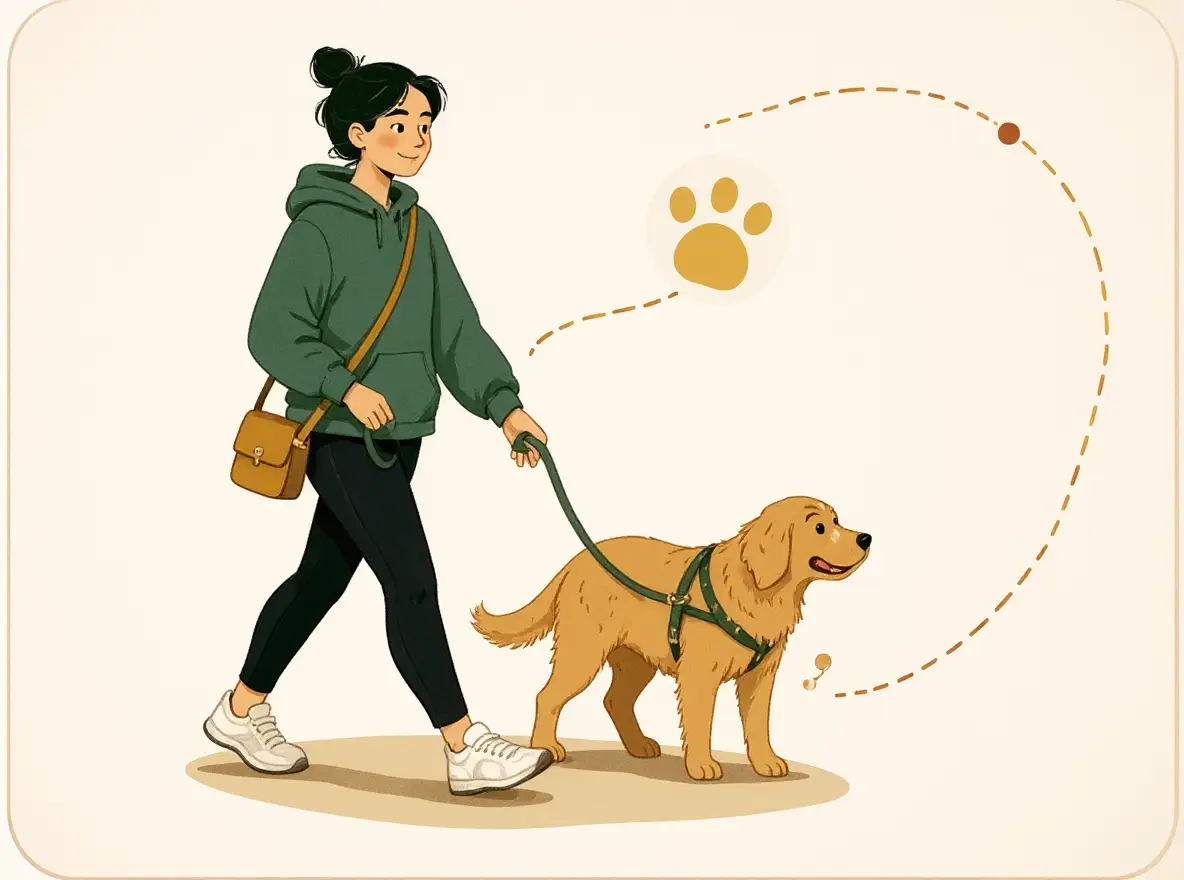
- Plan meals and strenuous activity as separate blocks, with calm time between them.
- Watch for retching, a swollen abdomen, restlessness, drooling or collapse and seek emergency care.
- Use the smallest repeatable change, record the result for a week, and adjust from the dog's comfort and recovery.
Turn this answer into a walk you can actually track.
GetWalkBuddy is a dog walking app for owners who want a simple route tracker, timer, distance view, and daily walk log without turning the walk into a spreadsheet.
What is the practical answer for dog exercise after eating?
Avoid vigorous dog exercise immediately after a meal. Quiet movement and toilet breaks are different from running or hard play; ask your veterinarian for timing suited to the dog's size and risk.
Exercise is useful when the dose fits the individual dog. Age, breed traits, health, weather, surface, intensity and next-day recovery all change what a sensible session looks like.
The safest schedule treats digestion as part of the exercise plan.
Start with this concrete move: Plan meals and strenuous activity as separate blocks, with calm time between them. A useful plan should feel manageable on an ordinary weekday, not only on your most motivated day.
How should you start with dog exercise after eating?
Plan meals and strenuous activity as separate blocks, with calm time between them.
Choose a calm baseline you already know the dog can handle. Change only one variable at a time—duration, pace, difficulty or environment—so the response is easy to read.
Use a short calm toilet outing after food and save running, fetch or hard hiking for veterinary-approved timing.
Log the route or activity, approximate time and how the dog behaved later that day and the next morning. That turns guesswork into a pattern you can discuss with a veterinarian or trainer.
What signs matter most when trying dog exercise after eating?
Watch for retching, a swollen abdomen, restlessness, drooling or collapse and seek emergency care.
Look beyond the activity itself. Willingness to begin, body language during the session, the ability to settle afterward and normal movement the next day are all part of the answer.
Watch for retching, a swollen abdomen, restlessness, drooling or collapse and seek emergency care. One isolated moment may mean little; a repeated pattern or sudden change deserves attention.
Shortening or ending a session is not failure. It is a useful response to the information the dog is giving you.
When should dog exercise after eating involve a veterinarian or professional?
Stop for limping, repeated refusal, pain, weakness, breathing trouble, vomiting, collapse or difficulty recovering. Ask a veterinarian before making a major increase for a puppy, senior, overweight dog or dog with a medical condition.
Stop for limping, repeated refusal, pain, weakness, breathing trouble, vomiting, collapse or difficulty recovering. Ask a veterinarian before making a major increase for a puppy, senior, overweight dog or dog with a medical condition.
This guide is educational and cannot diagnose a medical or behavioral condition. A qualified professional can adapt the plan to health history, medication, body condition, fear and local conditions.
GetWalkBuddy can help make time, routes and consistency visible, but tracking should never delay care or become a reason to push through discomfort.
Questions owners ask when the leash is already in their hand
-
Can I walk my dog after eating?
A brief calm toilet walk may be appropriate, but avoid vigorous activity around meals and ask your veterinarian about the right interval for your dog.
-
How quickly should I change a routine for dog exercise after eating?
Make one small change, keep it consistent for several sessions, and review comfort and recovery. Slow down or ask a professional when the dog is sore, distressed or changing suddenly.
Turn a good idea into a routine you can see.
GetWalkBuddy helps you track the walks, time and small wins that make a dog-care routine easier to repeat.