
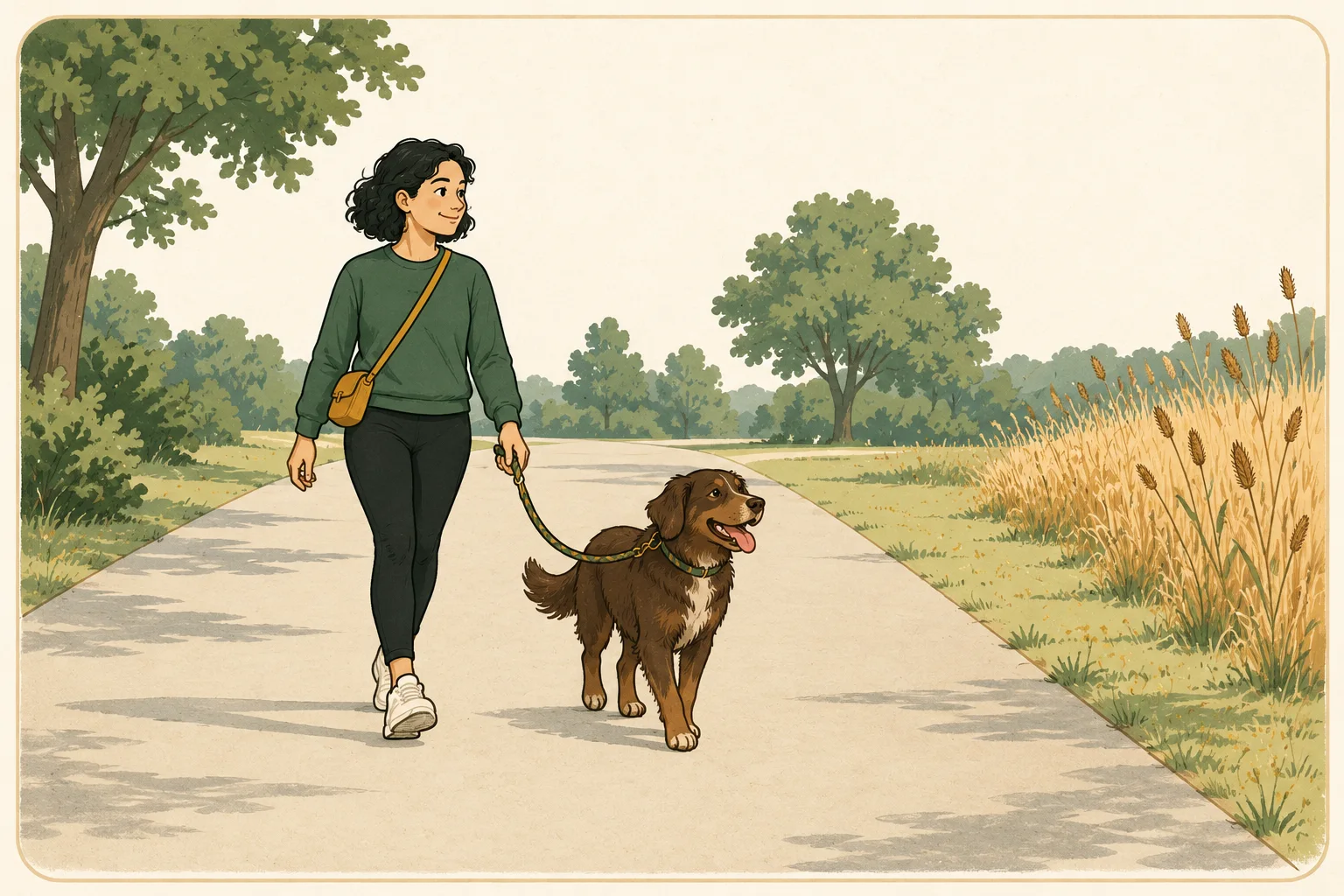
- Choose routes that keep your dog away from hazardous seed-bearing grasses.
- A coat check helps find exposed seeds but cannot rule out an internal foreign body.
- Tell the vet where you walked and when signs began; do not wait for a seed to work itself out.
Turn this answer into a walk you can actually track.
GetWalkBuddy is a dog walking app for owners who want a simple route tracker, timer, distance view, and daily walk log without turning the walk into a spreadsheet.
What are foxtails, and why do they matter on a walk?
UC Davis describes spiked seed clusters from certain grasses and weeds. Their shape allows them to penetrate and travel through tissues, potentially causing infection. A small seed can therefore be more than something tangled in the coat.
The term is not a reliable identification guide for every grassy verge. Use local veterinary or plant guidance for your area rather than relying on the illustration on this page, which shows a route choice rather than a botanical specimen.
UC Davis notes that dry, hardened seed heads are especially troublesome and that cases can occur throughout the year in warm climates. Do not decide a route is clear only because the calendar has changed to fall.
If you are unsure whether a patch is hazardous, choose another path while you obtain local advice. There is no need to let the dog investigate it closely to make the identification.
Sources: UC Davis veterinary guidance: foxtails; UC Davis veterinary hospital: foxtail risks
How can you reduce exposure without guessing at every plant?
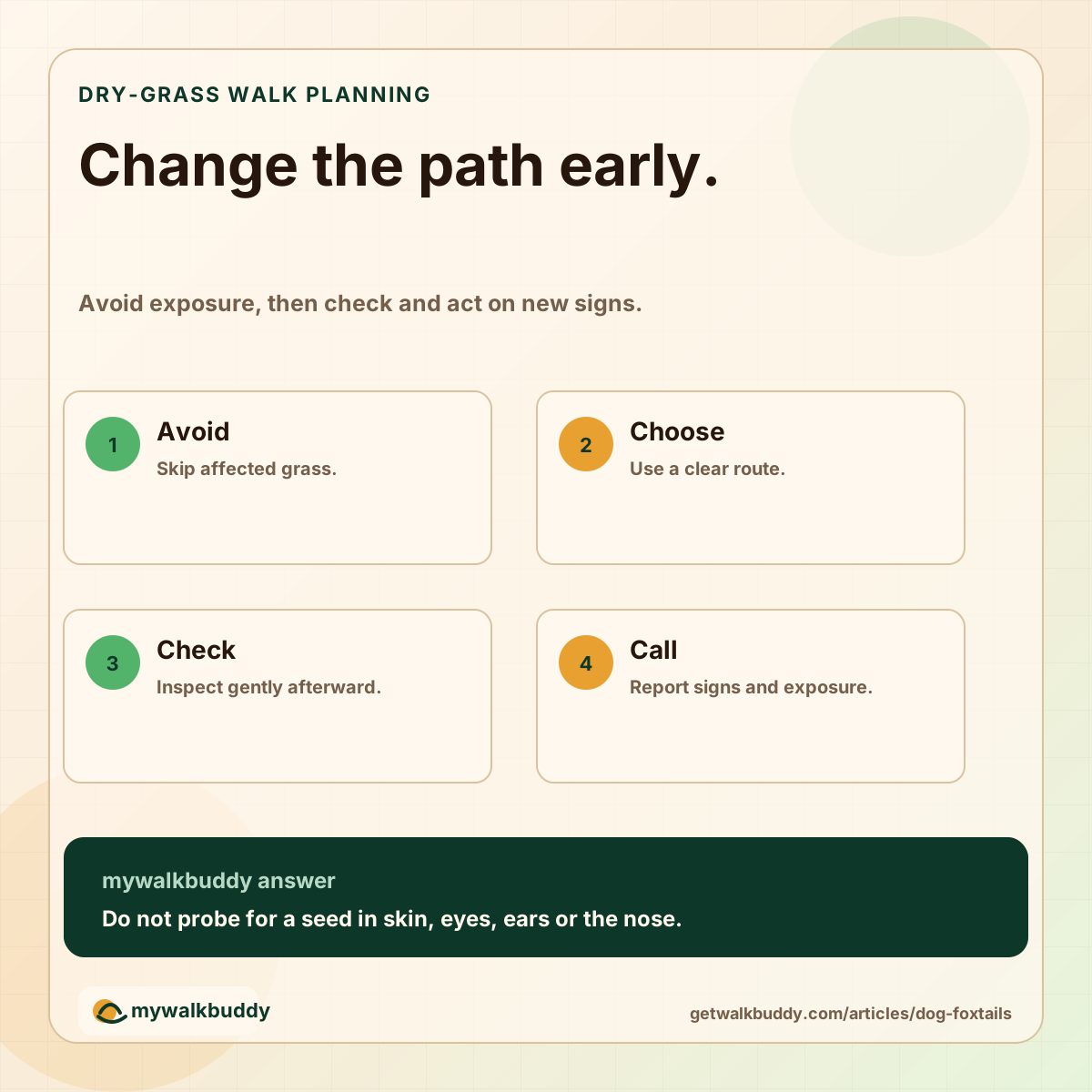
Avoid known foxtail areas and use clear paths where you can supervise the dog’s movement. UC Davis specifically recommends avoiding affected areas and considering paved routes.
Create a usable alternative to the tempting shortcut. For example, if the regular grass path is lined with dry seed heads, use the clear paved loop rather than repeatedly calling the dog away from the verge. The alternative should be convenient enough for every household walker to follow.
Make the route note specific: “skip the dry-grass cut-through beside the field; use the paved loop.” A general warning to be careful is easy to forget at a familiar junction. Recheck conditions on arrival instead of assuming yesterday’s route is unchanged.
Boots or other equipment should not become permission to walk through the hazard. Different body areas remain exposed. If your veterinarian recommends protective equipment, learn its limits and fit separately from the route decision.
What should you check after walking near dry grasses?
In good light, look through the coat and check between toes and around ears, armpits and groin. These are among the areas highlighted by UC Davis. Keep the inspection gentle and stop if the dog is uncomfortable.
Prepare a clear, quiet place before bringing the dog over. If another person helps, agree who watches the dog and who checks one area at a time. Record any area you could not inspect rather than assuming a quick look covered everything.
A visible seed loose on the surface is different from a seed lodged in tissue. If something appears embedded, if the area is sore or swollen, or if you are unsure whether material remains, call your veterinarian. Do not dig, squeeze or explore with tools.
Finding nothing on the coat is not proof that nothing entered the nose, ear or another area. Continue to take new signs seriously and describe the possible exposure when seeking help.
Which changes should prompt a veterinary call?
Persistent sneezing or head shaking after a possible exposure warrants prompt veterinary attention. UC Davis also lists signs such as repeated licking, limping and eye irritation. These signs have other possible causes, so a veterinarian needs to assess them.
Make the call useful with a short timeline: the route and approximate time, whether the dog went into dry grass, the first sign you noticed, and anything you found on the coat. State what you observed without diagnosing where a seed must be.
For example: “We walked beside the field this morning; the dog started repeatedly sneezing on the way back; I have not put anything in the nose.” This is a sample description, not a real case history or a test for foxtails.
Ask where to bring the dog and what to do while arranging care. Do not continue the walk to see if exercise changes the signs. Trouble breathing or severe distress needs emergency veterinary help.
Sources: UC Davis veterinary hospital: foxtail risks; UC Davis veterinary guidance: foxtails
What should you change before the next walk?
Update the route and handover instructions while the location is still clear in your memory. If the dog is receiving veterinary care, follow that team’s activity advice.
Use a short note with actions another walker can carry out:
- Before: choose the clear alternative and check local conditions.
- During: keep the dog out of the identified seed-bearing area.
- After: inspect gently in good light and note any uncertainty.
- Help: contact the vet promptly for concerning signs or suspected embedded material.
Questions owners ask when the leash is already in their hand
-
Can a dog sneeze out a foxtail?
Do not rely on that happening. Persistent sneezing after possible exposure should be assessed promptly by a veterinarian.
-
Do boots protect the whole dog from foxtails?
No. They do not cover the nose, ears, eyes or the rest of the body, and equipment does not replace avoiding affected areas.
-
Are foxtails only a summer problem?
Risk varies by local plants and conditions. UC Davis reports cases throughout the year in warm climates.
-
Should I remove a seed that seems stuck in the skin?
Do not probe into tissue. Ask your veterinarian, particularly if there is redness, swelling, discomfort or uncertainty about remaining material.
Keep track of where you walked.
GetWalkBuddy records your route, time and distance. Keep symptoms and veterinary instructions in separate notes; a route record cannot diagnose a foreign body.