
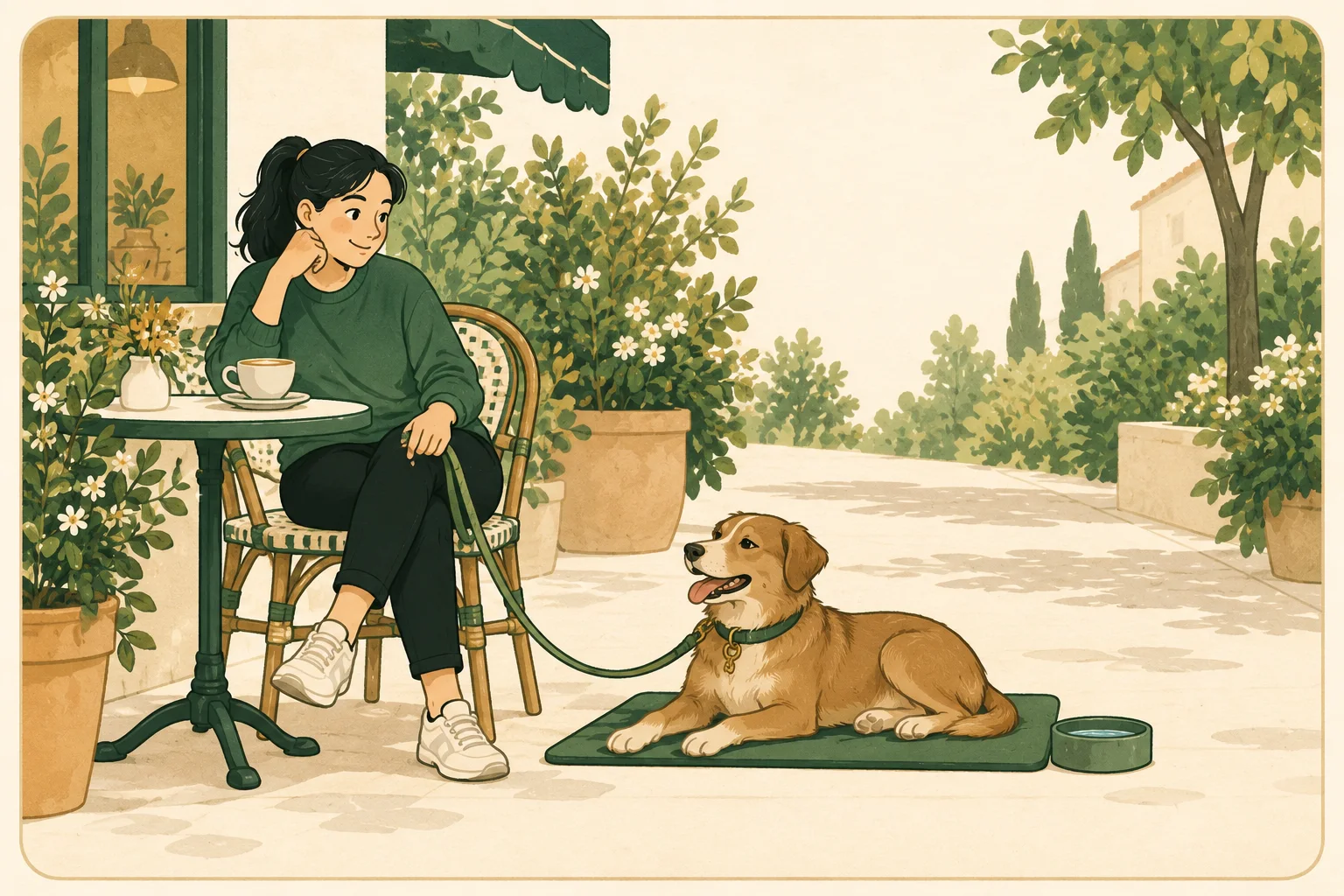
- Confirm the exact seating and access arrangements before going.
- Choose space, a quiet time and a manageable first visit.
- Keep an exit option and respond to the dog’s comfort.
Turn this answer into a walk you can actually track.
GetWalkBuddy is a dog walking app for owners who want a simple route tracker, timer, distance view, and daily walk log without turning the walk into a spreadsheet.
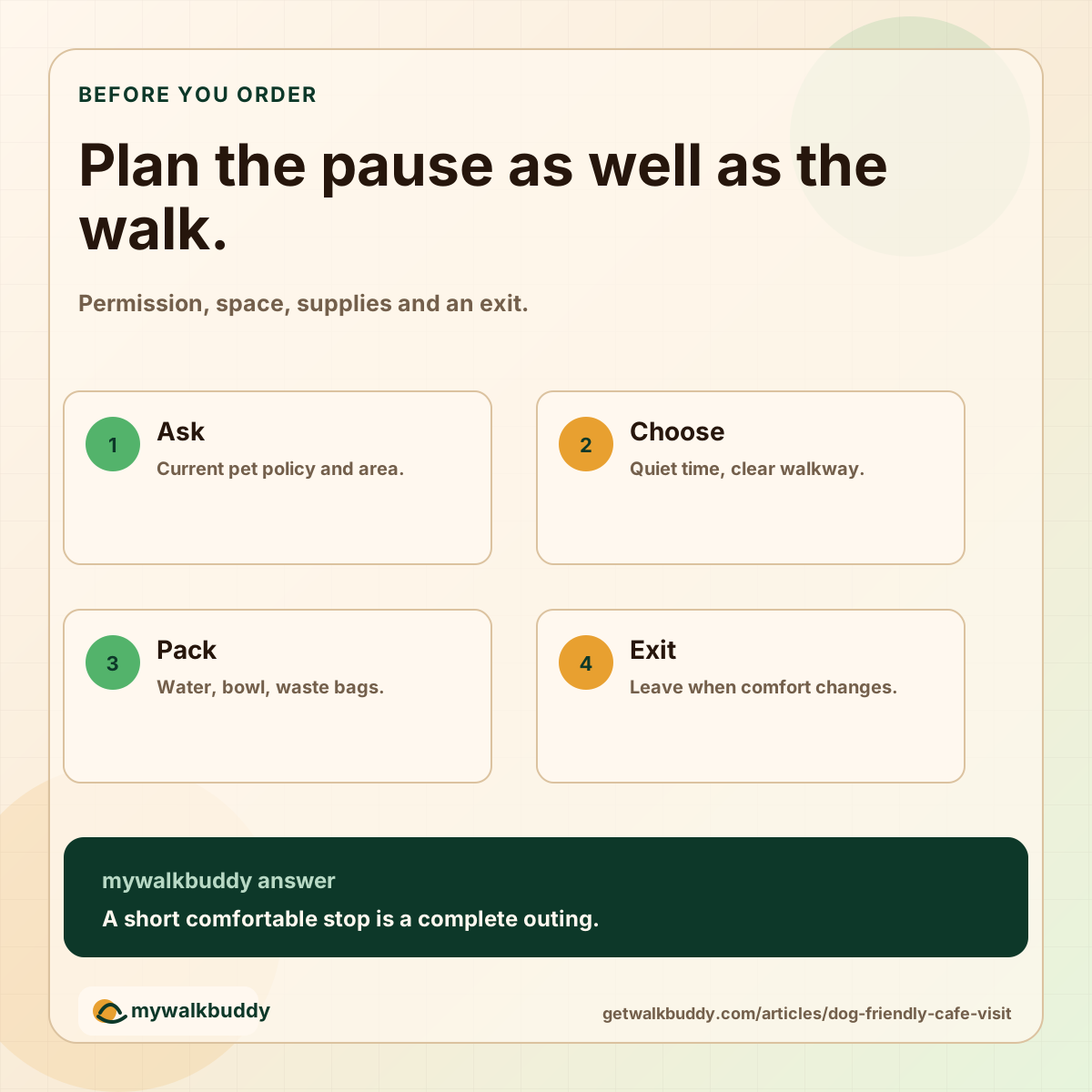
What should you check with the cafe?
The Royal Kennel Club recommends researching the venue and calling ahead. Confirm where pet dogs may sit and how you should enter rather than relying on an old listing.
Our call checklist is specific: Are pet dogs allowed today? Which area? Is a reservation needed? Is there an entrance that avoids a crowded indoor queue? Are there particular house rules?
Write down the answer for the visit you are planning. “Dog friendly” can describe a business generally without telling you whether the available table suits your dog.
This guide concerns pet outings. Assistance-animal access is a separate issue; do not assume a venue’s pet policy explains all access rights.
Sources: Royal Kennel Club: Visiting Dog-Friendly Places to Eat
How do you decide whether this outing suits your dog?
Think about the actual setting: close tables, passing feet, food smells, other dogs and waiting. Permission to enter does not mean the experience will be comfortable.
Consider what happens during ordinary quiet pauses on your walks. If stopping beside a bench is already difficult, a busy cafe adds several challenges at once.
Practice resting in easier environments first. Our separate settle-mat guide covers that skill; this article focuses on choosing and managing the visit, not compressing the whole training process into a meal.
Choose a takeaway stop or a different activity if that better fits the dog today. There is no requirement for every dog to become a cafe companion.
Which table and time make the first visit easier?
The Royal Kennel Club suggests a quieter time and a suitable table location. Look for room beside you and an uncomplicated way to leave.
Our table check has three sightlines: where staff carry hot drinks, where customers queue and where other dogs pass. A corner is not automatically a good choice if all three routes converge there.
Ask staff where your dog can rest without blocking an aisle. Keep the leash under your control; the Royal Kennel Club advises against attaching it to a table or chair.
If the only available seat requires the dog to lie in a busy passage, change the plan before ordering. That is easier than negotiating space after food arrives.
Sources: Royal Kennel Club: Visiting Dog-Friendly Places to Eat
What should you bring?
Bring the dog’s usual fitted walking equipment, waste bags, water and a suitable bowl. A familiar mat can define a resting place if the dog is already comfortable using it.
Pack for the return journey as well as the table. Keep waste supplies accessible so a toilet break does not require emptying the whole bag.
Use familiar dog treats if they suit the dog’s care plan and the venue allows them. Do not depend on a special dog menu or share unknown food from the table.
Keep the bag within reach without occupying the dog’s resting space. The practical goal is to answer small needs without repeatedly stepping over the dog or stretching the leash across an aisle.
When should you shorten the visit?
Shorten the visit if the dog cannot get comfortable or the setting becomes difficult to manage. The first stop should leave room for an easy change of plan.
Our exit plan has two decisions made in advance: how to pay promptly and where to go afterward. If you are with another adult, agree who handles the dog and who handles the bill.
Notice repeated attempts to move away, inability to rest or escalating reactions to passing people and dogs. Create space and leave rather than repeatedly demanding a position the dog cannot maintain.
Afterward, record what mattered: table position, crowd level, neighboring dogs and the point at which the outing became harder. Use that information to choose a simpler next visit, not to set a longer endurance target.
- Before: confirm the policy and seating arrangement.
- Choose: quiet time, clear floor space and easy exit.
- During: keep control of the leash and watch comfort.
- After: note what helped before planning another visit.
Questions owners ask when the leash is already in their hand
-
Can I tie the leash to the table?
Avoid attaching the dog to a table or chair. Furniture can move and create an injury risk; keep the leash under your control.
-
Does dog friendly mean dogs are allowed indoors?
Not necessarily. Ask the venue which areas are available for pet dogs and confirm the current arrangements.
-
How long should the first cafe visit last?
There is no universal duration. Plan an easily shortened stop and finish while the experience remains manageable.
-
What if my dog cannot settle at the cafe?
Make space and leave if needed. Practice resting in easier settings and choose a less demanding outing next time.
Pair a familiar walk with a manageable stop.
Use GetWalkBuddy to record the walking part of your outing. Confirm cafe rules directly with the venue and keep a simple return route available.