
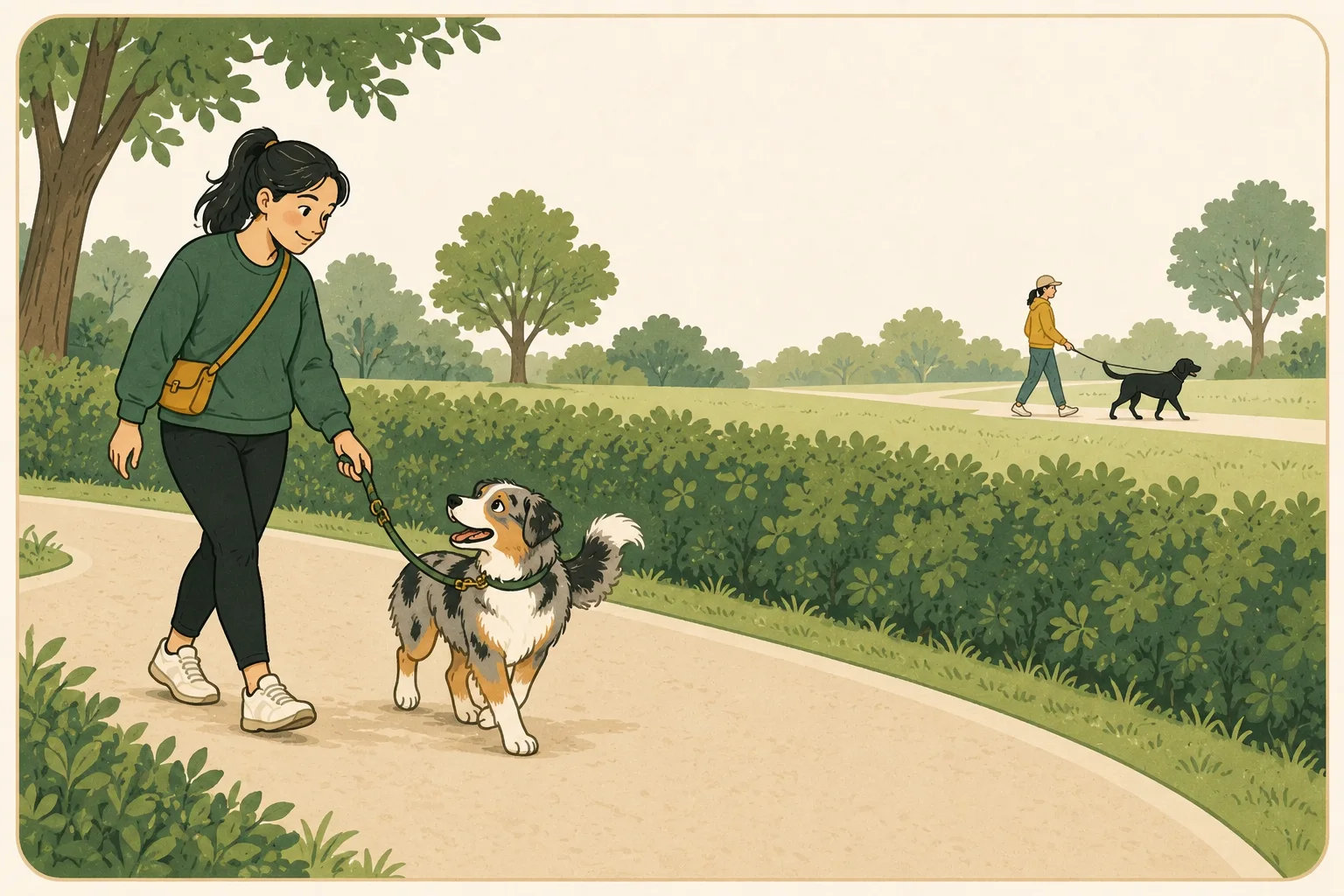
- Plan where you can turn away before approaching a busy or narrow section.
- Describe the trigger and the dog’s response instead of labeling every reaction aggression.
- Keep management for today separate from the gradual training plan.
Turn this answer into a walk you can actually track.
GetWalkBuddy is a dog walking app for owners who want a simple route tracker, timer, distance view, and daily walk log without turning the walk into a spreadsheet.
What does leash reactivity actually describe?
Dogs Trust uses reactivity to describe strong responses such as barking and lunging toward dogs, people or things outside. Several emotions can contribute; the visible reaction alone does not tell you exactly why it happened.
Write down the situation, not a personality verdict. “Barked when a dog appeared at the gate” gives a professional more information than “bad with dogs.” Include whether the other dog was approaching, stationary or behind a barrier if you noticed.
Do not create a test encounter to collect missing details. Use what you can safely observe during ordinary management and say when a detail is unknown. A diary should reduce guesswork, not put the dog into repeated difficult situations.
How can you choose a route with room to respond?
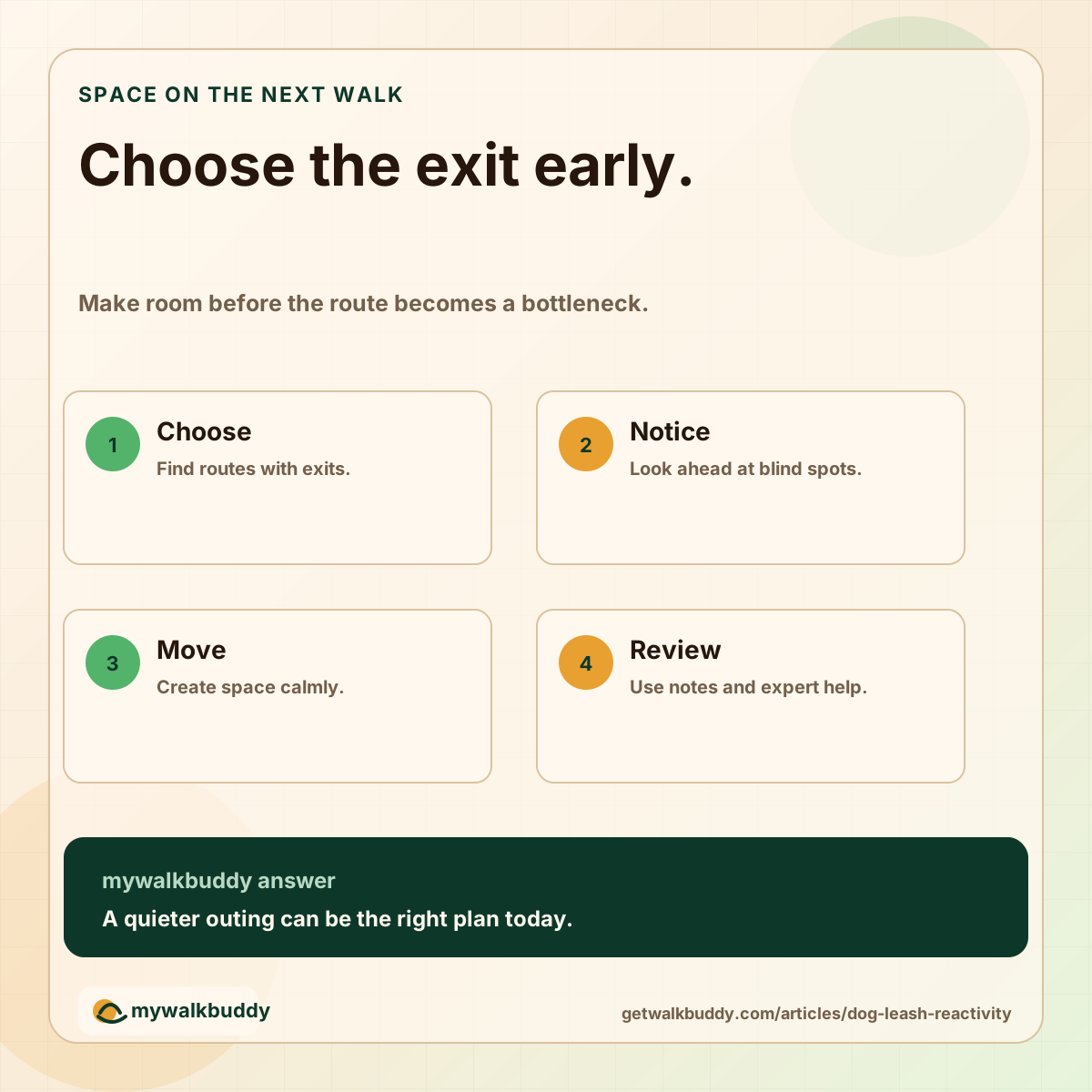
Choose quieter times and places, and identify turns or visual barriers before an encounter. Dogs Trust recommends moving away calmly and creating enough distance for the dog to begin relaxing.
Compare two routes by their decision points. A short lane with blind gates may offer fewer options than a slightly longer open path with several exits. Distance on the map is only one part of the choice.
Mark three practical locations in your own notes: somewhere to assess the next stretch, somewhere to turn back and somewhere to step aside without entering traffic or blocking access. These are route-planning categories, not prescribed training distances.
Give the next walker concrete directions: “At the gate, check the narrow section; if another dog is there, use the open loop.” That avoids making the handler invent a plan while holding an already excited or worried dog.
What should you do when a trigger appears?
Use the available space early and guide the dog away calmly. Avoid scolding, forced greetings or remaining close simply to demand a sit. If you cannot manage the dog safely, seek professional assistance before repeating that setting.
Your immediate task is a manageable exit. A perfect training repetition is not required in an unexpected encounter. If another person approaches, a short request such as “Please give us space” communicates the need without a long explanation.
Keep attention on the dog and surroundings. Do not stop to film while another dog is closing the distance. If you later want to provide video to a professional, discuss a safe way to obtain it that does not provoke an incident.
When the dog is able to relax again, acknowledge and reward the calmer response. Then choose whether the remaining outing is still suitable; completing the original loop is optional.
When does this need a vet or behavior professional?
Arrange veterinary advice for sudden or changing behavior, and qualified behavior support if the situation affects safety or wellbeing. Dogs Trust notes that health problems can influence behavior even without obvious pain.
Bring a short description of the pattern, any health or routine changes and the management you have tried. Include near misses or difficulty holding the dog; these details help the professional plan safely.
If biting or redirected aggression is a concern, skip casual greetings and obtain an individual safety plan. Equipment such as a muzzle may be part of that plan, but it needs appropriate fit and positive introduction; it is not permission to move closer to a trigger.
A useful goal might be passing at a comfortable distance, not becoming friendly with every dog. Agree on realistic outcomes and observable progress with the person supporting you.
What is worth recording after a difficult walk?
Record the decision that would make the next outing easier. Keep the note short enough that you will use it.
For example: “The side gate hid the approaching dog; next time use the open entrance.” This is an illustrative planning note, not a reported case or a promise of improvement.
- Before: choose a route with a usable exit.
- Notice: describe what appeared and where.
- Respond: record which move created space.
- Review: discuss new behavior or safety concerns with the appropriate professional.
Questions owners ask when the leash is already in their hand
-
Is every leash-reactive dog aggressive?
No. Barking and lunging can reflect different emotions, but the behavior still needs safe management and individual assessment.
-
Should I make my dog meet more dogs to fix it?
Do not force close encounters. Work at a level the dog can manage with qualified guidance.
-
How many feet away should we stay?
There is no universal distance. The dog, trigger, setting and day all matter; leave enough space to manage the situation safely.
-
Will more exercise cure leash reactivity?
Do not assume a longer or harder walk will resolve it. A suitable routine and individual behavior support address different needs.
Record the route that gives you options.
GetWalkBuddy records route, time and distance. Keep trigger observations separately for your veterinarian or behavior professional.