
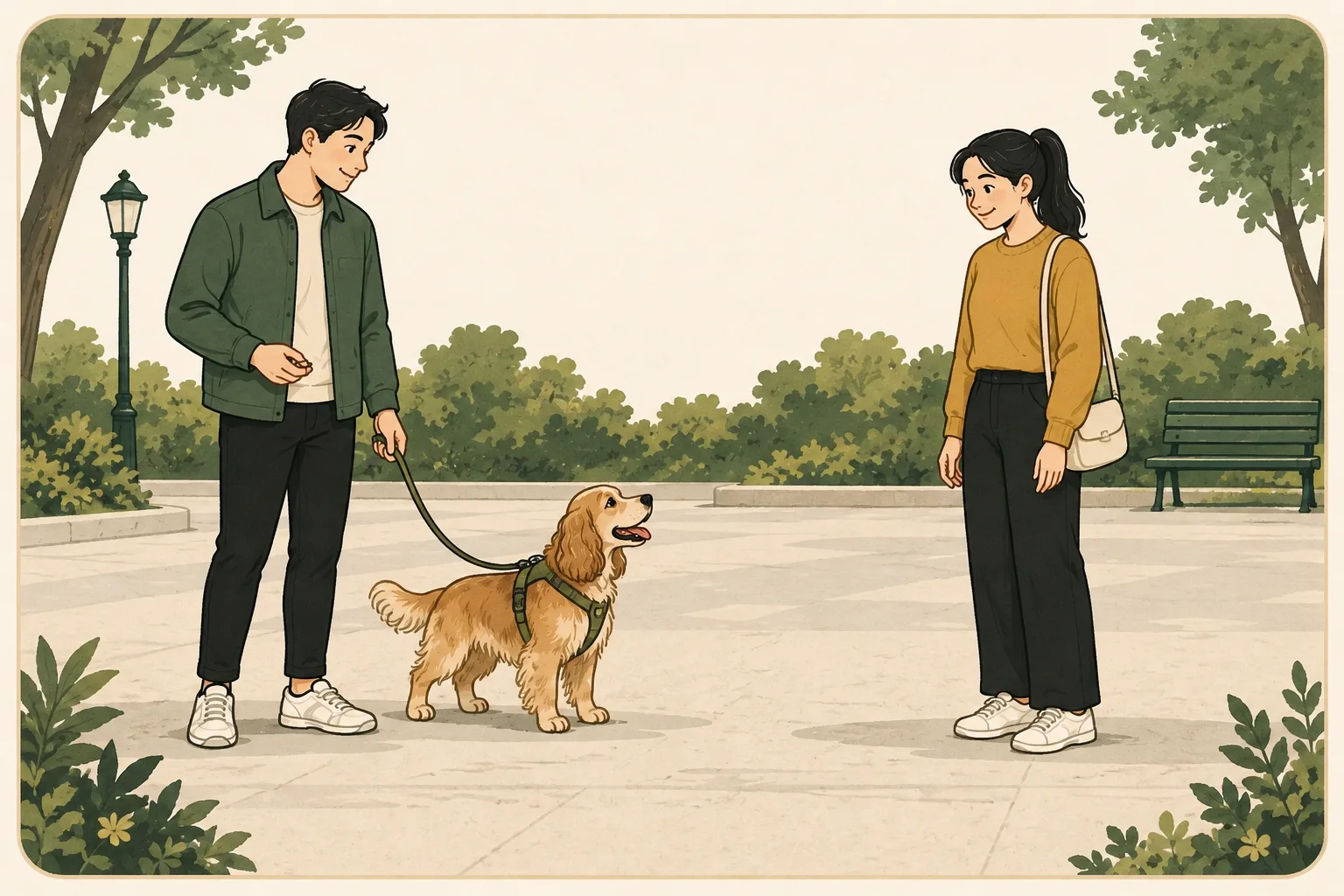
- Agree on one observable greeting rule everyone can follow.
- Use a willing helper and an easy setting instead of recruiting random passersby.
- Stop or create distance when the dog cannot manage the approach.
Turn this answer into a walk you can actually track.
GetWalkBuddy is a dog walking app for owners who want a simple route tracker, timer, distance view, and daily walk log without turning the walk into a spreadsheet.
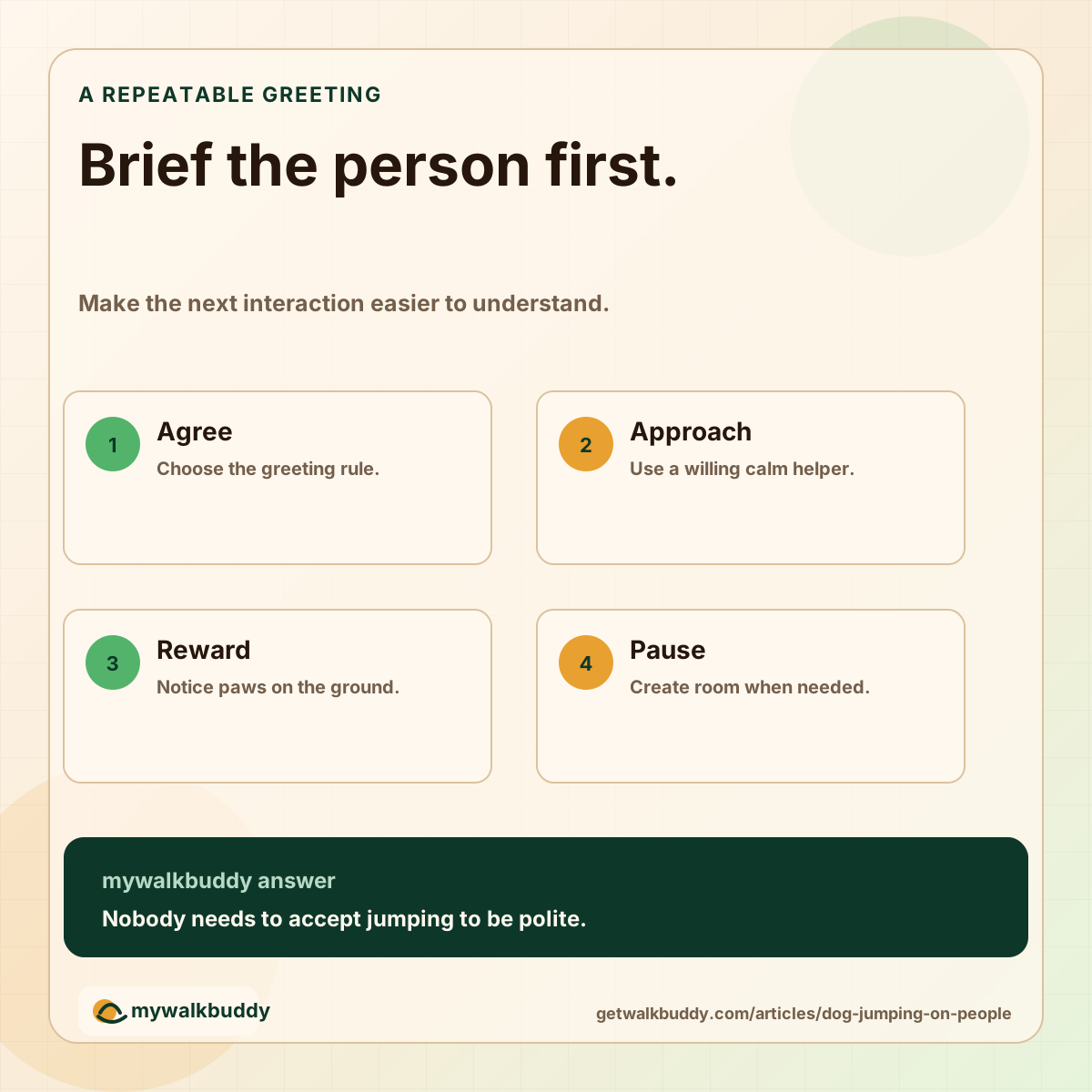
What should your dog do instead of jumping?
Choose a simple, observable alternative, such as keeping all four paws on the ground. AKC recommends rewarding the greeting behavior you want promptly and consistently, rather than giving attention for jumping.
Make the rule easy for the people involved to recognize. “Be good” leaves room for several interpretations; “wait while all paws are down” gives everyone the same thing to watch. A sit can be useful if it is already comfortable and familiar, but it is not the only option.
Agree what counts as attention during practice: talking excitedly, reaching toward the dog and petting may all matter. The helper should know the plan before approaching, not receive rushed instructions while the dog is already bouncing.
Sources: AKC: teaching appropriate greetings
How do you set up a useful practice greeting?
Start with a calm adult the dog is comfortable around and a quiet space. Dogs Trust recommends practicing an alternative behavior before the approaching person is close enough to trigger jumping, with more distance if the dog cannot respond.
Give the helper a short brief: approach only when invited, pause when asked and move away if the dog becomes overwhelmed. Keep children or anyone at risk of being knocked over out of the practice role.
Keep the first attempt deliberately simple. One person approaches; no one simultaneously squeaks a toy, bends over the dog or adds a second greeting. This makes it easier to see which part of the interaction needs adjustment.
Observe an actual outcome: the dog stayed grounded as the helper paused, or the dog became excited before the helper reached you. Use that information to make the next attempt easier. Do not turn the session into repeated failed approaches just to reach a planned number.
Sources: Dogs Trust: jumping up at people
What about strangers who approach during a walk?
Manage access before the stranger reaches the dog. Keep the dog on leash, ask for space when needed and choose to pass without greeting. Every person you meet is not automatically a training helper.
A short phrase works better than a lecture: “We’re practicing; please wait there,” or “We’re skipping greetings today.” You can use it while calmly moving to a clearer part of the path.
If someone says they do not mind jumping, the handler can still decline. The goal is a repeatable rule for future encounters, including people who would mind or could be hurt.
Prepare for the predictable bottlenecks: the building entrance, a narrow shop doorway or a neighbor who always greets enthusiastically. Pick the point where you can pause or change direction before the greeting starts. This is management while the new behavior is being learned.
Sources: Dogs Trust: jumping up at people; AKC: teaching appropriate greetings
What if the dog jumps anyway?
Stay calm and interrupt the interaction safely. Avoid pushing the dog down or using a knee. Re-engage with the appropriate grounded behavior when it is safe, or end the attempt and use an easier setup.
Ignoring is only an option when nobody is at risk. Do not ask a person to endure scratches or a knockdown for the sake of a lesson. Ask the helper to move away or guide the dog out of reach without adding a physical struggle.
Jumping is not always a happy greeting. If the dog appears frightened, grabs clothing or bodies, snaps, or is hard to manage safely, stop the casual exercise and get qualified behavior advice. A sudden change also deserves a veterinary conversation.
Afterward, change a specific part of the plan: more room, a quieter helper or a shorter interaction. “Try harder next time” does not give the dog or the human a clearer task.
Sources: AKC: teaching appropriate greetings; Dogs Trust: jumping up at people
Questions owners ask when the leash is already in their hand
-
Should I push my dog away when they jump?
Avoid pushing, kneeing or grabbing paws. These responses can add attention or risk injury and do not teach the desired greeting.
-
Does the dog have to sit to say hello?
No. Four paws on the ground can be a clear alternative; choose a behavior that is comfortable and practical for your dog.
-
Should I let strangers help with training?
Practice first with cooperative people who understand the plan. You can pass strangers without greeting.
-
How fast will jumping stop?
There is no fixed deadline. Context, emotions, learning history and consistent handling all matter.
Make room for calm practice.
GetWalkBuddy records walking route, time and distance. Keep greeting practice notes separately so the next walker knows the plan.