
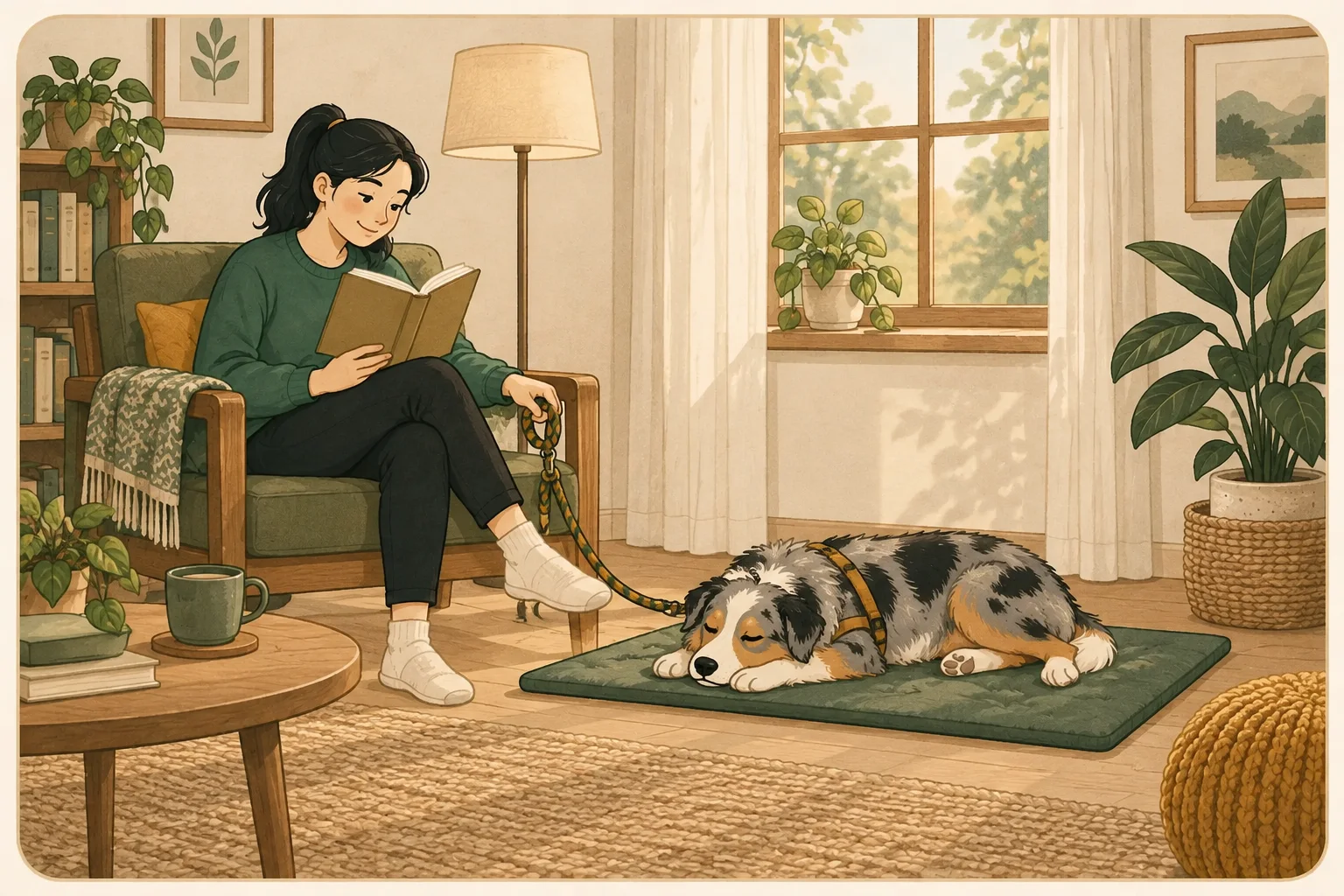
- Choose a comfortable, practical mat and an easy first setting.
- Notice relaxed behavior rather than demanding a perfect pose.
- Change one part of the setup before taking it somewhere busier.
Turn this answer into a walk you can actually track.
GetWalkBuddy is a dog walking app for owners who want a simple route tracker, timer, distance view, and daily walk log without turning the walk into a spreadsheet.
What is a dog settle mat for?
A familiar mat gives you a consistent place to practice quiet time. Dogs Trust uses a blanket in its settling exercise; a specialist product is not required to begin.
Choose something the dog can lie on comfortably and that suits the floor. For future outings, consider whether it is easy to carry and clean, but do not let shopping replace practice.
The mat itself does not calm the dog on contact. Your task is to make the surrounding exercise understandable and comfortable enough for settling to happen.
This guide focuses on learning a portable quiet routine. Sudden restlessness, pain or persistent distress needs appropriate help rather than a longer mat session.
Sources: Dogs Trust: Train Your Dog to Settle; AKC: Teaching Go to Your Place
How do you set up the first session?
Begin in a quiet room with few distractions and sit near the mat. Make the environment easy before asking for more time.
Dogs Trust suggests sitting quietly with the dog on a lead and rewarding settling on a blanket. Keep any lead loose and supervised; it is not a tool for pinning the dog down.
Our setup check has four questions: has the dog had an opportunity to toilet; is the room comfortable; will people leave the practice area quiet; can you stop without rushing?
Choose an ordinary moment, not the instant visitors arrive or dinner is burning. The first session is practice for a future situation, not a demand that the dog solve the difficult situation immediately.
Place rewards where you can reach them calmly. If every reward requires standing up, opening a cupboard and calling the dog, simplify the setup before beginning.
Sources: Dogs Trust: Train Your Dog to Settle
What should you reward?
Look for relaxed behavior appropriate to your dog’s starting point. Dogs Trust describes gradually moving from quiet behavior toward signs such as weight shifting or resting the head.
You do not need to insist on an identical posture for every dog. A comfortable change in position may be more relevant than a rigid down with constant attention fixed on your hand.
Keep an observation note rather than a score: what the dog did; what you rewarded; what happened next. For example, “lay on one hip, took the reward, stayed on the blanket” describes the sequence without claiming to measure an emotion.
If your reward delivery repeatedly starts a lively game, slow down and discuss the setup with a reward-based trainer. More excitement is not necessarily evidence that the dog needs a harder exercise.
Do not force the dog’s body into position. If getting comfortable appears difficult, stop and consider whether fit, surface, the environment or a health concern needs attention.
Sources: Dogs Trust: Train Your Dog to Settle
How do you build time on the mat?
Increase duration gradually once the dog is comfortable. Avoid adding a long wait and a new distraction at the same time.
Dogs Trust recommends small increases in settled time. AKC’s separate place-cue guide also advises changing only one of distance, duration and distraction at a time. Keep those variables separate when planning this exercise.
Our progression note has one blank for the next change. It might be “a slightly longer quiet pause” or “same brief pause with the door open.” This is a planning example, not a fixed training schedule.
If the dog gets up, review the task rather than turning the session into a repeated argument about position. Shorten the next attempt or simplify the surroundings.
End practice while the setup is still workable. There is no need to test the maximum amount of time the dog can remain there.
Sources: Dogs Trust: Train Your Dog to Settle; AKC: Teaching Go to Your Place
How do you move from home to an outing?
Add distractions gradually and make the task easier if the dog cannot settle. A familiar mat does not make a busy setting familiar.
Use a progression of settings you can control: the original room, a slightly different quiet spot and then an appropriate calm outdoor location. The exact sequence should reflect the dog, not a universal calendar.
Before choosing an outdoor place, check permission, space, weather and the route out. Keep the dog supervised and safely managed. Avoid blocking entrances, paths or other people’s space.
A first attempt should be easy to end. Do not make the exercise depend on staying through a full meal, long appointment or crowded event.
Dogs Trust advises increasing distance from a distraction or making it less interesting when settling is difficult. In practice, that may mean moving to a quieter place or leaving and trying an easier setup another day.
Sources: Dogs Trust: Train Your Dog to Settle
What if the dog settles at home but not outside?
Treat the new environment as additional difficulty. Identify what changed and reduce that demand before expecting the same result.
Use this comparison: floor or mat; nearby movement; noise; distance from other dogs; session length; handler activity. Pick the most obvious change rather than assuming the dog has forgotten everything.
An illustrative note might say “quiet indoors, unable to rest beside the busy path; next attempt farther from passing people.” That gives the next session a clear purpose.
If distress persists or you cannot find a comfortable starting point, seek qualified reward-based training help. A mat is a training aid, not a treatment for fear or a requirement to tolerate an unsuitable environment.
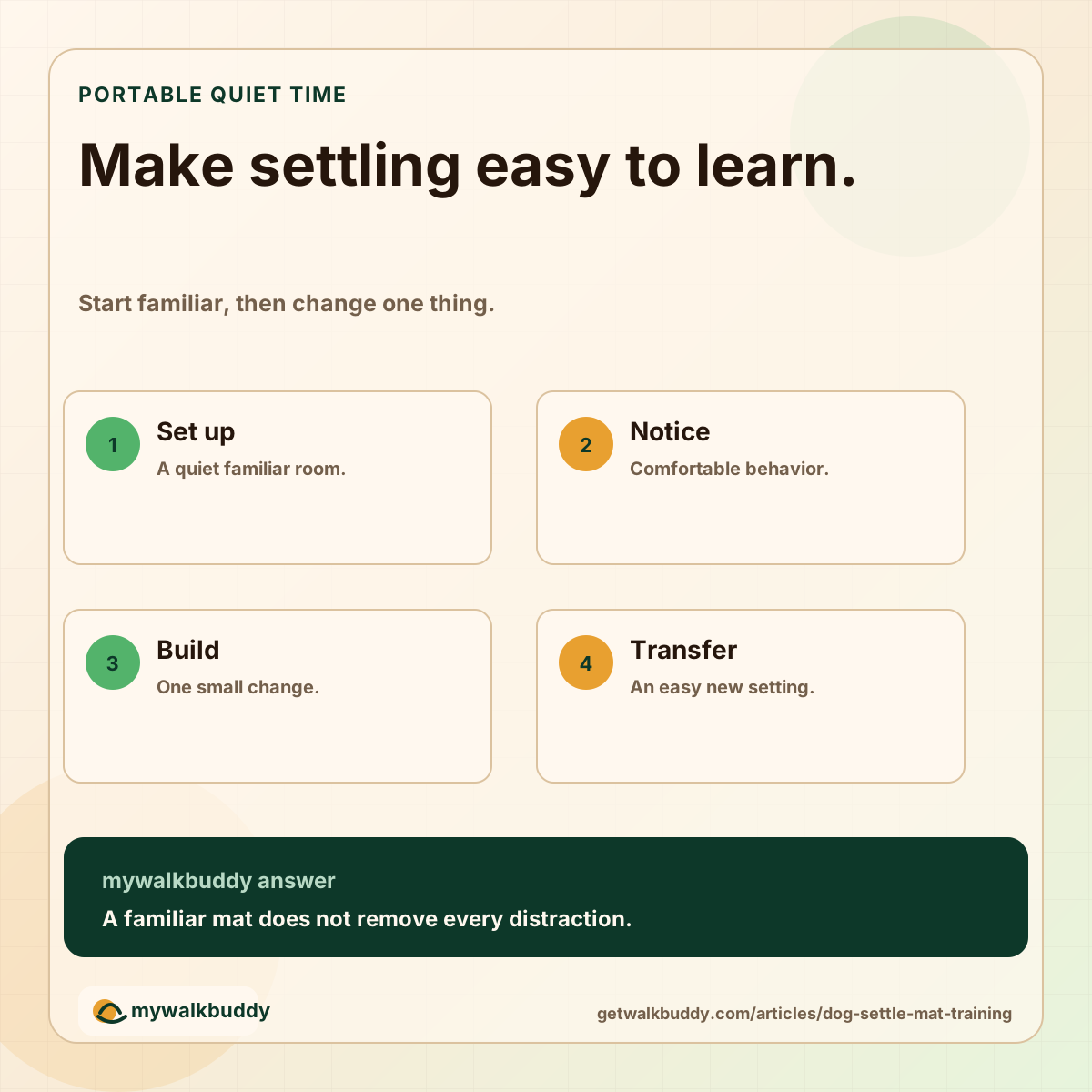
- Before: choose a quiet, comfortable setup.
- Reward: notice relaxed behavior.
- Build: change one manageable element.
- Outside: keep space and an easy exit.
Questions owners ask when the leash is already in their hand
-
Do I need an expensive settle mat?
No. A comfortable practical mat or blanket can be used. Consider fit, stability and cleaning rather than expecting a product to supply the training.
-
Is settling the same as a stay command?
This exercise focuses on relaxed quiet time. Remaining in a precise position and feeling comfortable are not the same observation.
-
Should I hold my dog down on the mat?
No. Make the setup easier and use reward-based practice. Physical restraint does not teach comfortable settling.
-
Can I take the mat straight to a busy café?
Practice in easier settings first. Check the venue’s policy and choose a quiet first outing that you can end readily.
Plan space for a quiet pause.
GetWalkBuddy records the walking portion of your outing. Keep separate notes about settle practice so you can choose a route and stopping place that fit your dog.