
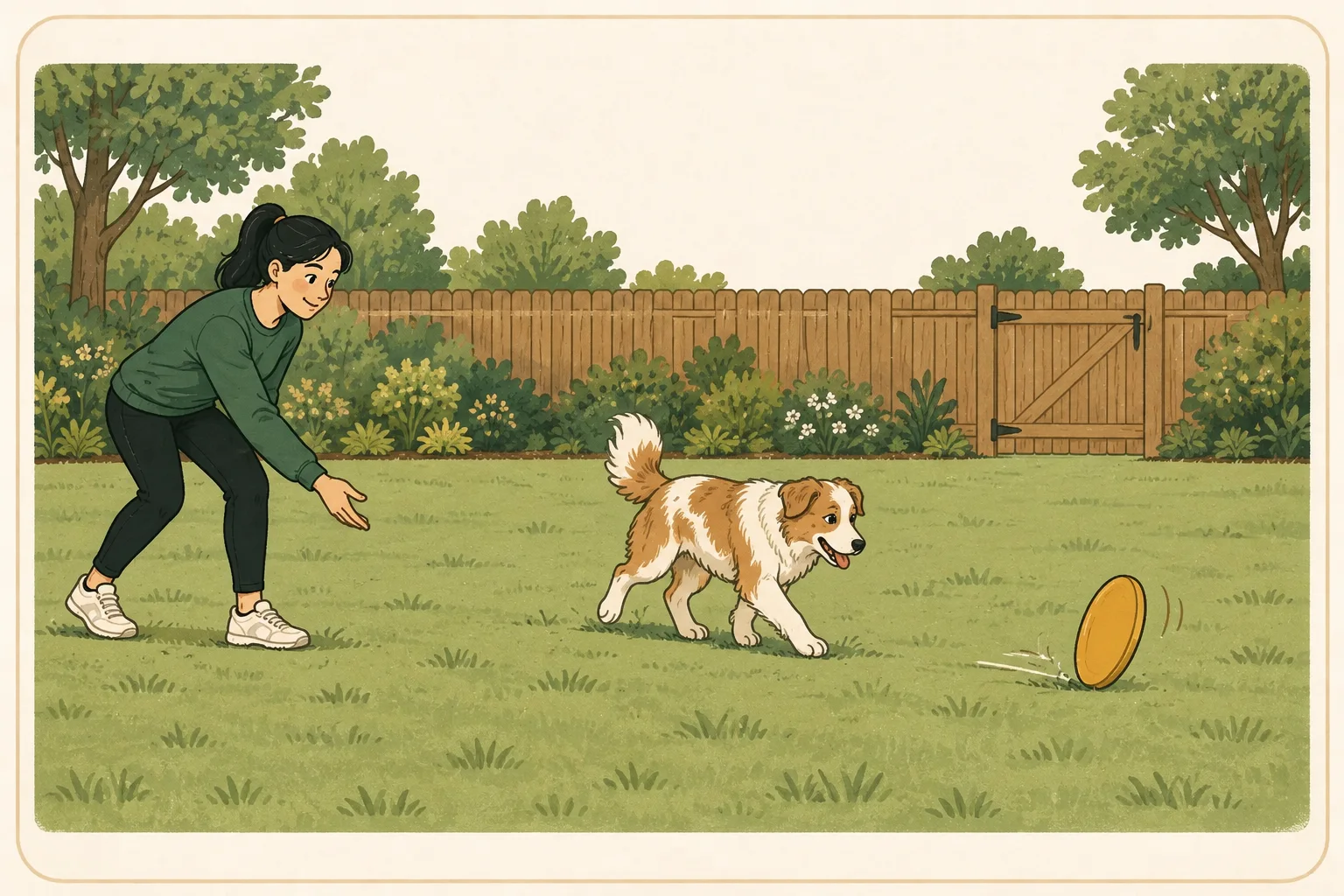
- Use a disc intended for dogs and inspect its condition.
- Treat throwing, chasing, returning and releasing as separate skills.
- Keep early practice on the ground and seek instruction before jumping work.
Turn this answer into a walk you can actually track.
GetWalkBuddy is a dog walking app for owners who want a simple route tracker, timer, distance view, and daily walk log without turning the walk into a spreadsheet.
How is disc training different from ordinary fetch?
Disc work adds a moving object with its own flight or rolling path. The handler’s accuracy becomes part of the exercise, alongside the dog’s interest and return.
If your dog already retrieves a ball, that is useful information, not proof that every disc exercise will be familiar. The new object may feel different to hold, move differently and be harder for you to place accurately.
Use the existing fetch guide for the general return-and-release foundation. Here the focus is the disc: suitable equipment, predictable movement and deciding when the setup is ready for the dog.
AKC describes disc sports as including different games, with some beginner-friendly formats using shorter throws or rollers. You do not need an acrobatic routine to explore the activity.
Sources: AKC: Disc Dog and UpDog Challenge
What kind of disc should you use?
AKC’s beginner guidance starts with a disc designed for dogs. Choose an appropriate size and material for the individual dog rather than assuming a human flying disc is suitable.
Ask a knowledgeable instructor or supplier to explain the options and how to inspect them. Replace damaged equipment according to its instructions rather than continuing because it still flies.
Keep the first comparison simple: intended use; size; flexibility; grip; and condition after use. A product described as indestructible still needs inspection and supervision.
If your dog has mouth discomfort, movement problems or another health concern, get appropriate veterinary advice before adding the activity. Equipment choice cannot settle questions about physical suitability.
Sources: AKC: Disc Dogs Beginner Training
How do you practice a roller without the dog?
A roller travels on its edge along the ground. Practice controlling its direction and distance before adding a dog that wants to chase.
AKC introduces rollers as a foundation exercise. Start by learning the release in a clear area without the dog involved. The point is predictability, not how far you can send it.
Our handler practice card has three checks: did it stay in the intended lane; did it finish inside the clear area; could you repeat that result? If not, work on the release or ask an instructor for help.
Use a visible target area on the ground for your own practice, keeping markers out of any later chase path. Do not involve the dog in repeated attempts to rescue wild throws.
Check the whole travel area, including where the dog would continue after reaching the disc. A clear starting patch is not enough if the finish is near a fence, road or other dogs.
Sources: AKC: Disc Dogs Beginner Training
What is a useful first session with the dog?
Choose one manageable goal, such as interest in the disc or an easy return. Keep the setup simple enough that you can identify what needs practice next.
For an appropriately prepared dog in a secure, suitable area, follow your instructor’s guidance for a controlled ground exercise. Do not make the first attempt a long, fast chase.
Break down what happened: noticed the disc; followed it; picked it up; returned; released. A dog that happily chases but keeps the disc has a different next step from a dog that does not want to pick it up.
Our session note might say “followed the roller, carried the disc away, return needs practice.” This is an illustrative record, not a result from a dog we tested.
Keep sessions brief and stop when movement or engagement changes. Do not throw repeatedly simply because the dog is willing to keep chasing; plan the end before beginning.
When should you add catches or jumps?
Treat aerial work as a separate progression requiring individual readiness, controlled throws and qualified instruction. Do not use a birthday or enthusiasm alone as clearance.
AKC’s introduction distinguishes early foundations from high leaps. This guide deliberately stays with ground skills; it does not prescribe a jumping age, height or repetition count.
Ask an instructor to assess your throws and the dog’s foundation before increasing difficulty. Discuss physical concerns with your veterinarian. A good return routine and an accurate throw are useful milestones even if you never add a jump.
If you want to enter an event, check the current organizer’s rules and beginner options. Different games use different criteria; an older overview is background, not the current rulebook.
Sources: AKC: Disc Dogs Beginner Training; AKC: Disc Dog and UpDog Challenge
What should you record after practice?
Record the exercise and the skill that needs attention, not just catches or distance. That makes the next session easier to plan.
Keep handler errors separate from dog behavior. “My roller curved outside the practice area” suggests throwing practice without the dog. “Returned but did not release” suggests working on that exchange.
Choose one change for the next session. Increasing distance, speed and distraction together makes it harder to understand the result.
If the dog does not enjoy this activity, choose something else. Disc play is one option among many, not a required test of fitness or a way to prove a dog is well exercised.
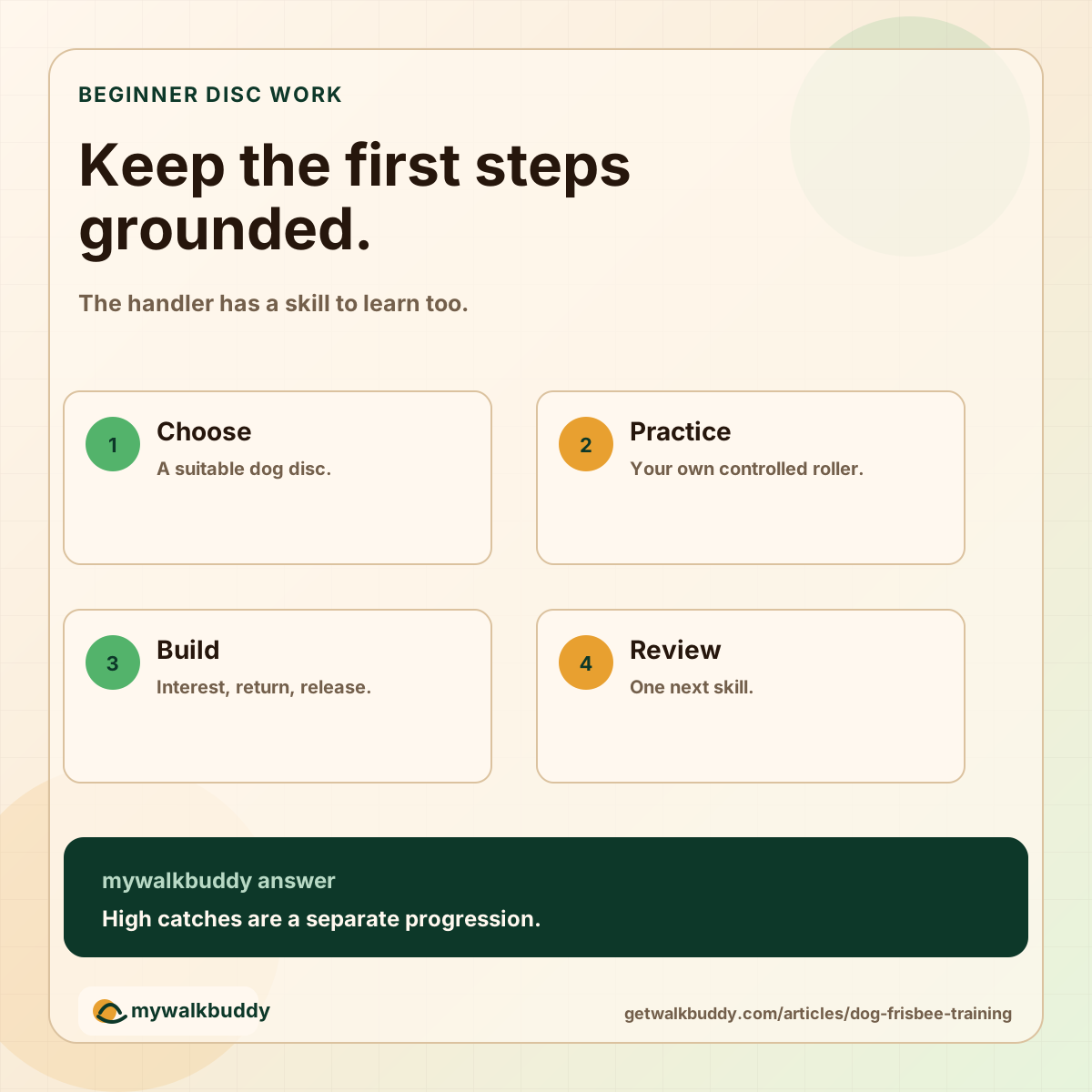
- Before: inspect the disc and the full practice area.
- Practice: make predictable rollers without the dog.
- Together: work on one ground-level skill.
- After: separate handler and dog learning notes.
Questions owners ask when the leash is already in their hand
-
Does my dog need to jump to play with a disc?
No. Ground-level foundations and suitable roller work can be the focus. Aerial catches are a separate progression.
-
Can I use a normal plastic frisbee?
Choose equipment specifically intended for dogs and appropriate to your dog. Ask an instructor about size and material rather than assuming any disc is suitable.
-
What if my dog chases but will not bring it back?
Work on the return foundation separately instead of throwing farther. Record that specific skill as the next training goal.
-
How many throws should a beginner do?
There is no universal count appropriate for every dog and setup. Keep practice brief, plan breaks and seek guidance for the individual dog.
Separate sport practice from walks.
GetWalkBuddy tracks walking routes, time and distance. Keep a separate note for disc practice so throws and training goals do not disappear inside a walking total.