
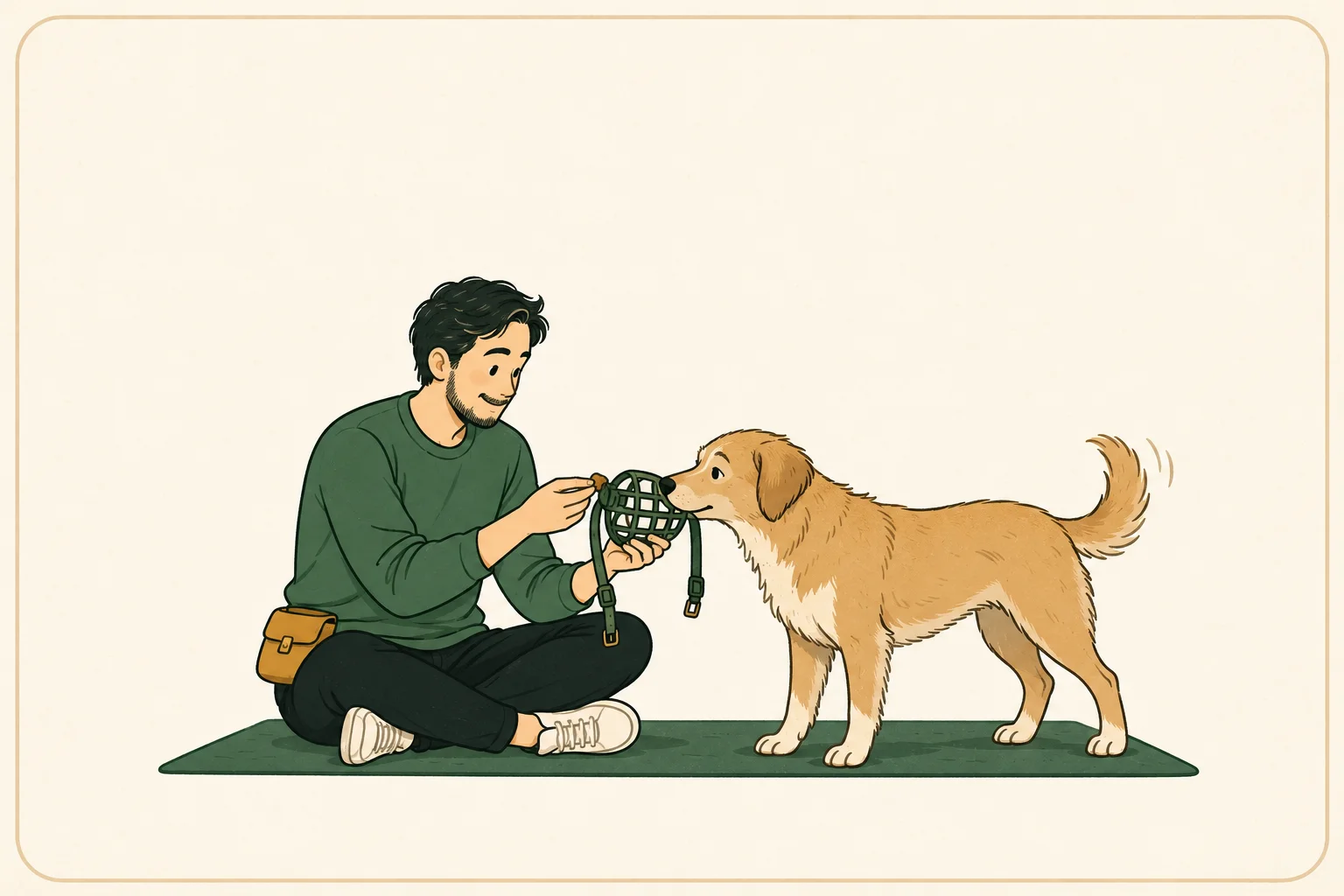
- Separate fit, handling and training progress instead of treating them as one problem.
- Record the last comfortable stage so every person starts in the same place.
- Keep the first outdoor practice quiet and manageable.
Turn this answer into a walk you can actually track.
GetWalkBuddy is a dog walking app for owners who want a simple route tracker, timer, distance view, and daily walk log without turning the walk into a spreadsheet.
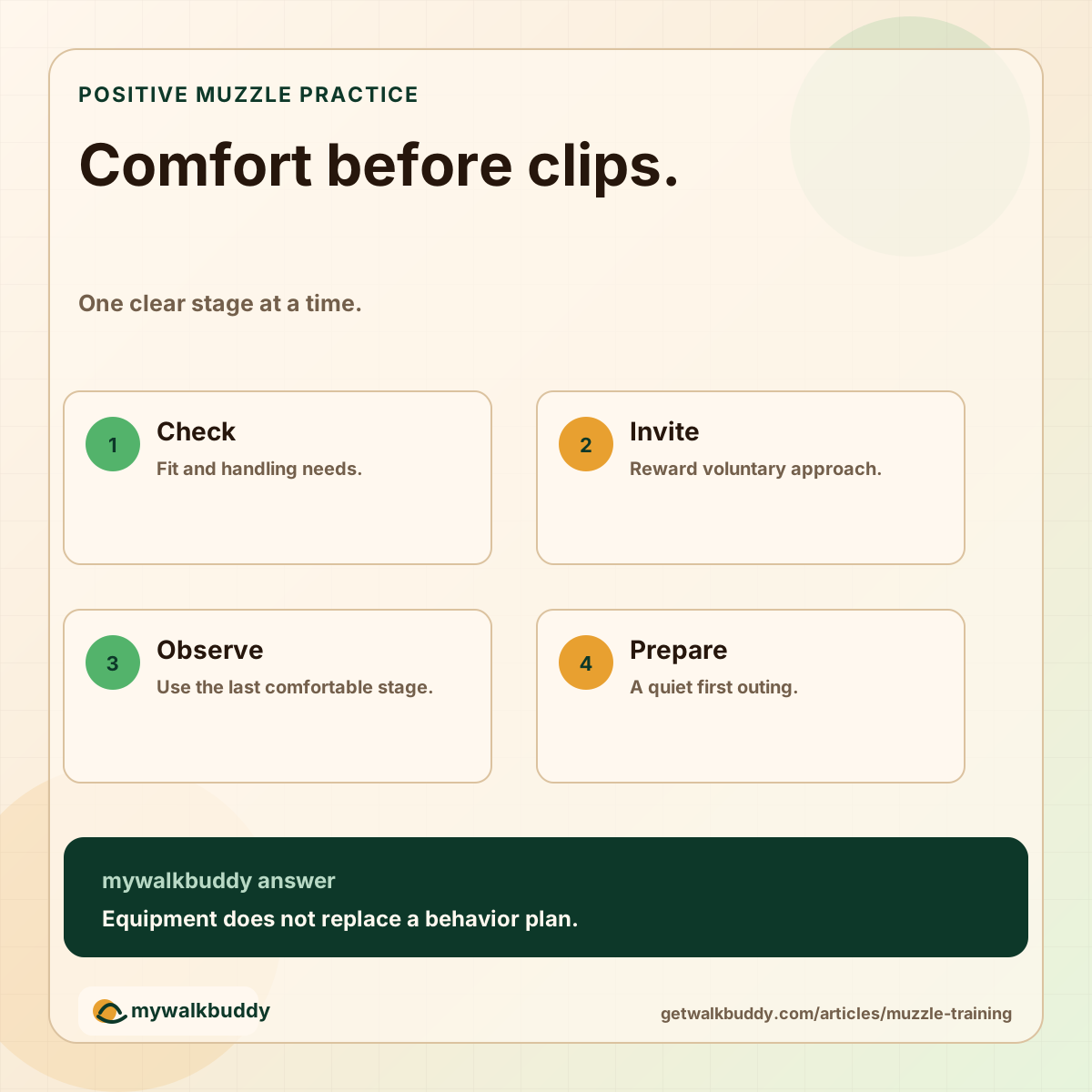
What should you check before starting muzzle training?
Dogs Trust recommends a comfortable, secure design that allows eating, drinking and panting. If your dog guards food or struggles with head handling, get professional support before using a food-based introduction.
Keep the product instructions with the training plan. Record the exact model and size, then ask a knowledgeable professional to help with fit if you are unsure. Training cannot make an unsuitable shape fit correctly.
Make two separate notes: “equipment question” and “handling question.” For example, a strap that cannot adjust enough belongs in the first; moving away when a hand approaches the face belongs in the second. Either can need help, but describing the observation clearly avoids solving the wrong problem.
Sources: Dogs Trust: muzzle training
How do you begin without forcing the muzzle on?
Start in an easy setting and reward a comfortable response to the muzzle’s appearance. The Muzzle Up! Project’s plan progresses to voluntary nose placement, then duration and secured straps. Watch the dog’s response throughout, rather than moving ahead because you have completed a certain number of attempts.
Before practice, write a single goal you can observe: “approaches the muzzle willingly” is clearer than “gets used to it.” Prepare the reward and decide where you will put the equipment away when the session ends.
Do not turn the first nose placement into a surprise fastening. Keep the stage you are practicing clear. If another household member takes over, tell them exactly what has and has not been introduced.
Use one of the linked professional plans consistently, adapting it with qualified help where necessary. Mixing several different progressions from memory can make it difficult to identify which change worried the dog.
Sources: The Muzzle Up! Project: training plan; The Muzzle Up! Project: training resources
How can you track progress without setting a deadline?
Use a short observation log: setup, action offered, dog’s response and next decision. The Muzzle Up! Project emphasizes relaxed responses and stepping back when fear appears. A calendar deadline does not establish readiness.
Here is an example entry: “Quiet living room; muzzle held still; dog approached and briefly put nose inside; no strap practice yet; repeat this setup.” It tells another person what happened without calling the whole process complete.
An entry such as “backed away when strap moved” is also useful. It identifies a change you can discuss with your trainer. Avoid replacing the observation with a label such as stubborn, dramatic or cured.
Leave room for “not practiced.” A missed session is not a reason to combine several stages the next time. The log exists to improve continuity, not to pressure you into catching up.
When can you try the first walk in a muzzle?
Dogs Trust places quiet, short outdoor practice after the dog is comfortable with earlier training, including secured straps and movement. A muzzle does not remove fear of other dogs or people, so continue managing distance and the environment.
Choose an outing that lets you return easily. Know where you will go before putting the muzzle on; avoid spending the first practice searching for keys or deciding on the route.
Ask a helper to keep their role simple if they join: observe, manage the door or carry supplies. Several people adjusting equipment and giving instructions at once makes it harder to see what the dog is responding to.
If an urgent veterinary visit arrives before training is complete, tell the clinic in advance. Do not improvise a rushed training session as a substitute for a professional handling plan.
Sources: Dogs Trust: muzzle training
What belongs on the practice checklist?
Keep the plan specific enough for someone else to follow, and record uncertainty instead of treating silence or stillness as proof of comfort.
Use these four prompts:
- Before: check suitability, fit and whether professional handling support is needed.
- Practice: name one stage and prepare rewards before presenting the equipment.
- Observe: note approach, withdrawal and changes when the task changes.
- Next: repeat, simplify or seek help based on what happened.
Questions owners ask when the leash is already in their hand
-
How many days does muzzle training take?
There is no reliable universal deadline. Previous experiences, handling comfort and the progression you use differ. Base the next step on the dog’s response and professional advice when needed.
-
What if my dog rubs or paws at the muzzle?
Pause and assess both fit and training. Dogs Trust recommends returning to a comfortable stage, and getting fitting advice if there is soreness, irritation or restricted normal use.
-
Will a muzzle fix reactivity?
No. It is a management tool, not proof that the dog is comfortable with a trigger. Continue a suitable behavior plan and avoid overwhelming situations.
-
Can I use a tight fabric muzzle for an exercise walk?
A walking muzzle must allow the dog to pant and drink appropriately. Ask for help selecting a suitable basket design; do not use a device that holds the mouth shut for exercise.
Keep the outing simple once your dog is ready.
Use GetWalkBuddy for the route, time and distance of a suitable walk. Keep the muzzle-training observations in your separate household training plan.