
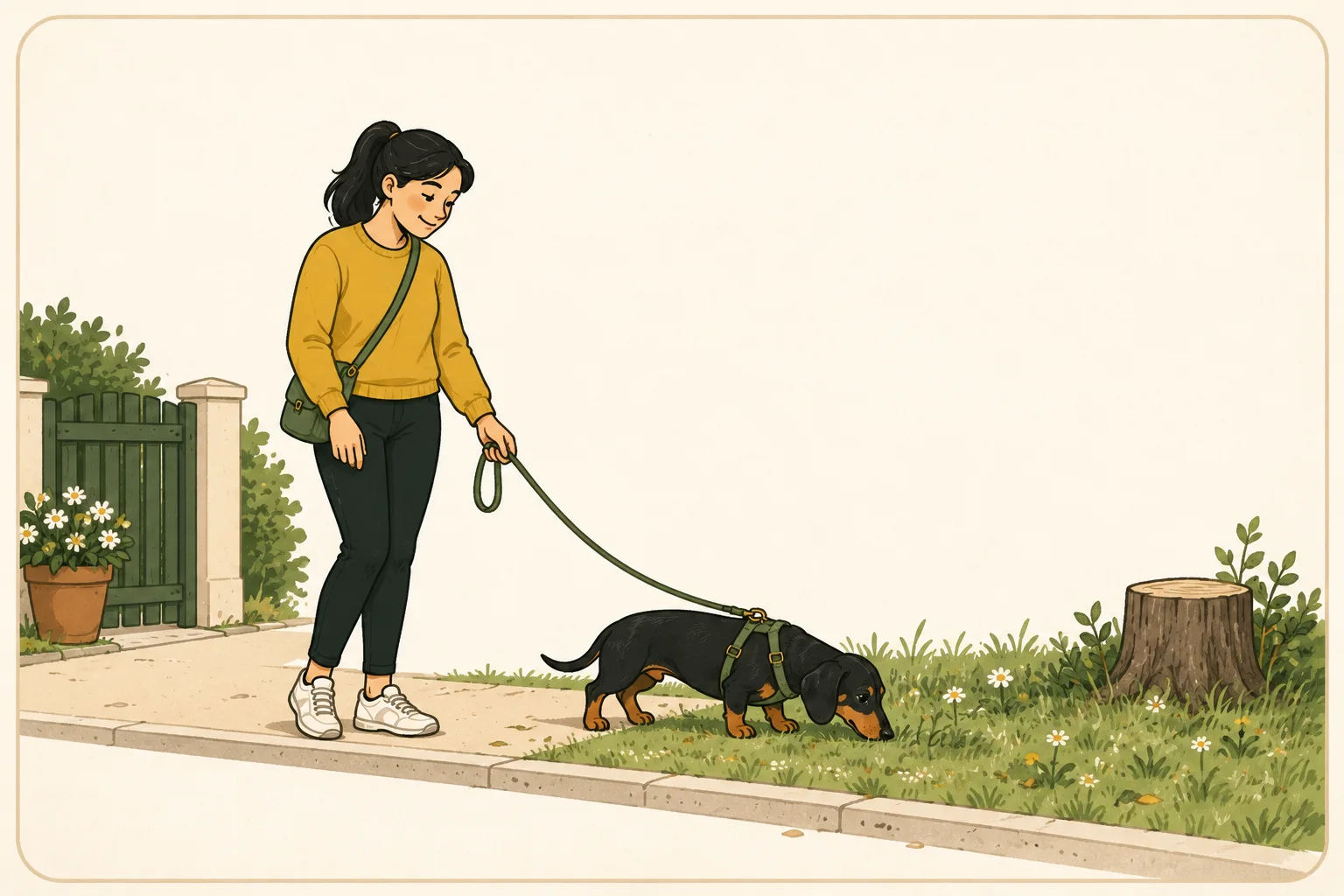
- Plan where to pause and where to keep moving.
- Use observed behavior, not a fixed number of stops, to describe the pattern.
- Treat difficulty urinating as a health concern rather than a training issue.
Turn this answer into a walk you can actually track.
GetWalkBuddy is a dog walking app for owners who want a simple route tracker, timer, distance view, and daily walk log without turning the walk into a spreadsheet.
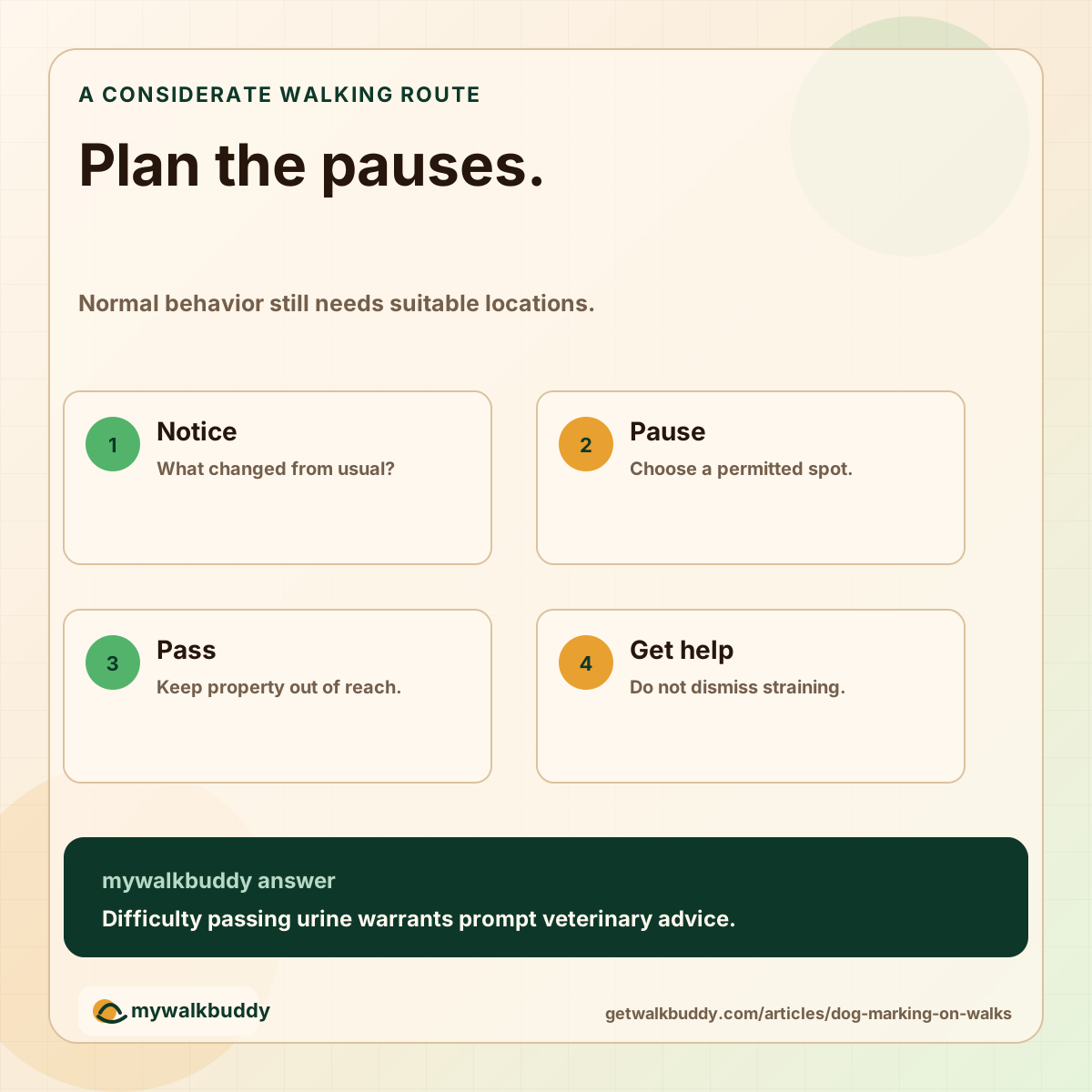
Why does your dog pee on several things during a walk?
VCA describes urine marking as normal communication between dogs. Marks commonly contain less urine than emptying a full bladder. Both sexes can mark, including neutered males and spayed females.
A useful walk plan does not require you to interpret the message at every tree. It requires you to notice the location and decide whether stopping there is appropriate.
Avoid turning “small amount” into a home diagnostic test. Describe what you see and ask your veterinarian about a new or concerning pattern. A behavior label should not replace a health assessment when something has changed.
Sources: VCA: urine marking behavior
When should frequent attempts prompt a veterinary call?
Straining to urinate can be an emergency, according to VCA. Do not delay a veterinary examination because you assume the dog is simply marking. Report difficulty passing urine and changes from the dog’s usual behavior.
For the call, prepare a short factual account: when the dog last passed urine normally, when the change began, whether you saw urine come out and any other signs you noticed. If you are unsure about an amount or timing, say so.
Do not continue the route to collect more examples or wait for the dog to “finish marking” when they appear to be struggling. Ask the veterinary team what to do and how to bring the dog in if needed. This article cannot distinguish a urinary disorder from marking at a distance.
Sources: VCA: urine marking behavior
How can you plan considerate stops?
Divide your route into places to pause, places to pass and places to avoid. This is a practical planning tool for the walker, not a set of categories the dog is expected to understand automatically.
Pause: identify an appropriate permitted area where you can supervise a toilet or sniffing stop without blocking access. Check the actual location rules rather than assuming every verge or tree belongs to a public dog area.
Pass: identify objects that should stay clean, such as outdoor merchandise, someone’s bags, a doorway or a neighbor’s planted pots. Position your route so the dog is not led directly up to the object before you decide to move on.
Avoid: skip a narrow stretch if you cannot pass safely without crowding people, traffic or another dog. For example, choose the wider pavement with a suitable stopping area instead of threading between cafe chairs. The better route may be shorter; that is an acceptable planning choice.
How do you move past an unsuitable marking spot?
VCA recommends close supervision and anticipating interest in objects where marking would be unwelcome. Redirect calmly and keep moving toward an appropriate place. Avoid scolding or startling the dog.
Practice the walking cue in an easy place before relying on it at a tempting doorway. Choose one short phrase everyone uses and reward the dog for coming along with you. Dogs Trust’s recall guidance emphasizes a consistent cue and a positive consequence for returning.
Make the action easy to follow. Turn your body toward the clear path and invite the dog along before they are absorbed in investigating the object. If you only notice after the dog has stopped, calmly manage the situation and adjust the approach next time.
Give another walker a concrete instruction such as “pass the shop display on the outside, then pause at the permitted grass area.” That is more useful than “do not let him mark everything.”
Sources: VCA: urine marking behavior; Dogs Trust: recall training
What if you only have time for a short walk?
Choose a short route with room for toileting and sniffing instead of setting a distance that requires hurrying past every stop. Plan the return point before leaving.
A simple four-line plan keeps the limited time usable:
- Before: choose the short loop and identify an appropriate first toilet stop.
- Pause: allow supervised stops where the location and access make sense.
- Pass: guide the dog around objects and property that should remain clean.
- Review: note any new urinary difficulty for veterinary advice rather than treating it as lost walking time.
Questions owners ask when the leash is already in their hand
-
Do female dogs mark too?
Yes. Marking is not limited to male dogs or dogs that have not been neutered.
-
How many marking stops are normal?
A single stop count cannot determine health or behavior. Compare with your dog’s usual pattern and seek veterinary advice for difficulty or concerning changes.
-
Will neutering definitely stop marking?
No. Discuss the individual medical and behavioral decision with your veterinarian rather than treating surgery as a guaranteed solution.
-
Should I stop all outdoor marking?
The practical goal is considerate locations and safe supervision. If the behavior has become a problem, seek an individual plan instead of trying to eliminate every stop on every walk.
Track the route, not a stop quota.
GetWalkBuddy records your walking route, time and distance. Keep any urinary changes in separate notes for your veterinarian.