
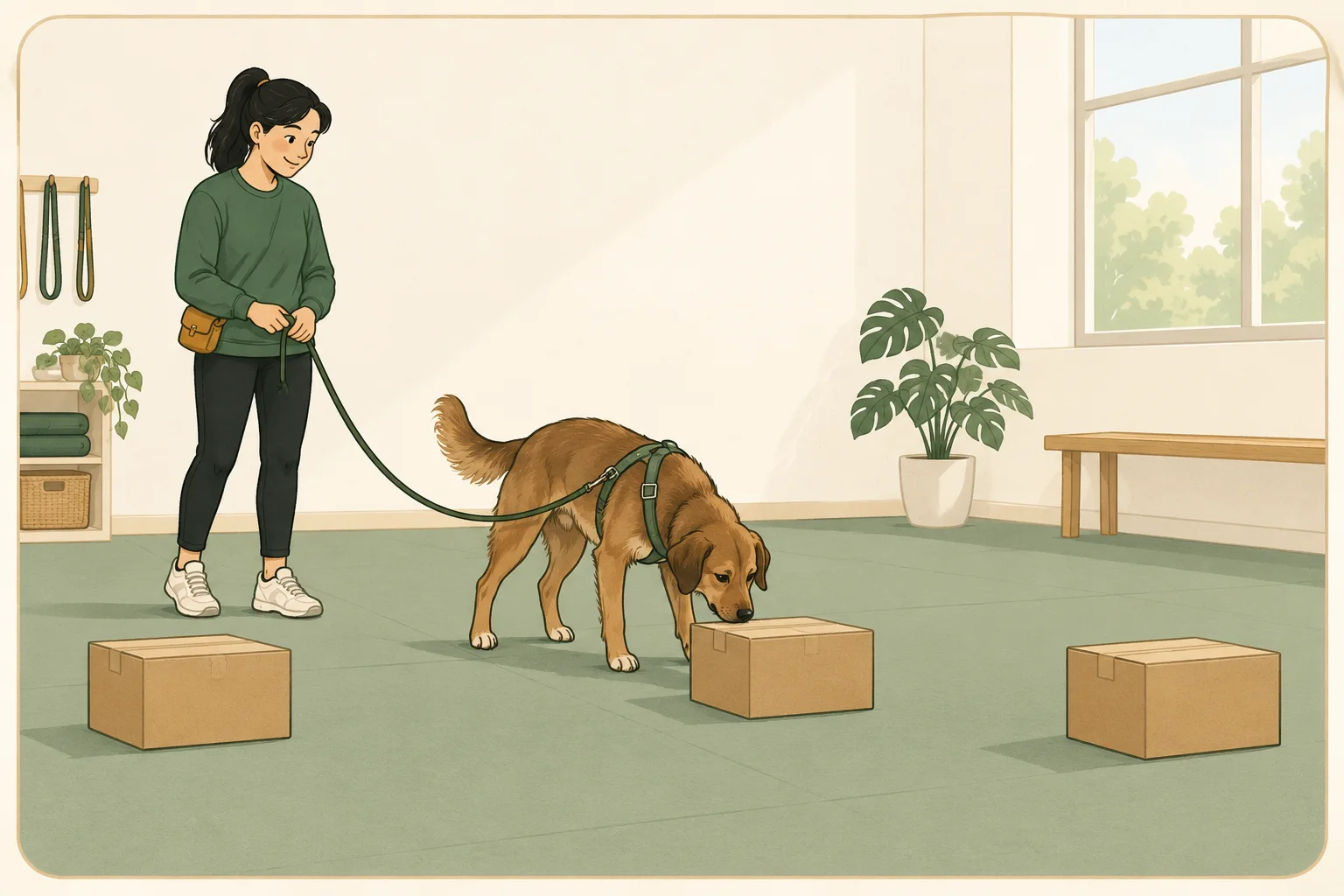
- Separate recreational searches from competition preparation.
- Ask how the class teaches the handler to read the dog.
- Get instruction before introducing concentrated target odors.
Turn this answer into a walk you can actually track.
GetWalkBuddy is a dog walking app for owners who want a simple route tracker, timer, distance view, and daily walk log without turning the walk into a spreadsheet.
What is nose work dog training?
In organized scent work, the dog searches for a target odor and communicates its location. AKC describes both odor searches and searches for the handler’s scent.
The useful distinction is the job you are setting. A casual find-the-toy game can be enrichment; a scent class builds a shared search system that dog and handler can repeat. This guide focuses on choosing that instruction.
Before booking, name your goal: an enjoyable shared activity, learning to read searching behavior, or preparation for a particular sport. None requires you to promise that your dog will earn a title.
Different organizations and instructors use different programs. Ask which approach the class follows, particularly if you eventually want to enter events under a specific rulebook.
Sources: AKC: Getting Started in Scent Work
What should a beginner class teach you?
Look for a clear explanation of how searches begin, how the dog is rewarded and how you will recognize a find. AKC highlights learning to read the dog as an important part of the activity.
Ask the instructor to describe a typical first lesson. Does the dog search for food or a toy first, or begin a target-odor introduction? What will you practice as the handler? What should you leave alone between lessons?
Also ask about the room, flooring, waiting arrangements and distance from other dogs. If your dog finds group settings difficult, describe that before booking and ask whether private instruction or separate turns would work better.
An answer such as “we adapt the setup and explain the next step” gives you something to evaluate. A promise to transform confidence in one session does not tell you how the training is organized.
Use the same questions for an online course. Find out whether feedback on your own practice is included, how equipment is introduced and what support is available if the dog is confused.
Sources: AKC: Scent Work 101
Do you need an essential-oil kit immediately?
No purchase is necessary before you know the class requirements. Concentrated essential oils require careful handling and should not be applied to the dog or left where it can ingest them.
AKC warns that essential oils can harm dogs through exposure, including ingestion or skin contact. Sport odor handling is a specific training procedure, not permission to improvise with household fragrances.
Ask the instructor exactly what to bring and how target material is secured and stored. Discuss health concerns with your veterinarian. Keep concentrated products and prepared materials inaccessible to pets and children.
For the first enquiry, a notebook is more useful than a shopping basket full of supplies. Record the provider’s list, then check what is supplied in class and what is genuinely required for home practice.
Do not substitute perfume, cleaning products or a diffuser for the stated training method. If you only want a simple enrichment game, use the existing find-the-toy guide instead of adding scent chemicals.
Sources: AKC: Essential Oil Safety
What should you watch during a search?
Watch the dog’s behavior and your own handling separately. In AKC scent work, the handler must recognize and report the find; the dog is doing the searching.
Our observation sheet uses four prompts: where the dog searched; what changed near the target; what the handler did; what the instructor suggested. Keep notes descriptive rather than assigning emotions or motives.
For example: “Returned to the same box, paused, then looked toward me; I stepped forward; instructor asked me to wait.” This is a hypothetical note, not an example of a universal indication.
Ask which behavior the instructor wants you to reward and when. Do not decide that every glance, sit or paw movement must mean the same thing for every dog.
When reviewing video, if your class permits it, focus on one agreed question. Trying to judge search speed, leash handling, alert behavior and difficulty at once makes it harder to understand the next useful change.
Sources: AKC: Scent Work 101
How do you choose the next step?
Repeat a clear, manageable exercise before adding a new challenge. Let the instructor help decide what changes, and keep competition requirements separate from casual practice.
AKC organizes searches across different settings, including containers, interiors and exteriors. That variety explains why a successful exercise in one room does not answer every training question.
Keep a simple change log. If you change the room, search area and target placement together, your notes will not show which change mattered. Ask for one specific home assignment you can describe accurately.
For events, read the organizer’s current requirements and event information before entering. A beginner article cannot replace the applicable rules, and classroom participation does not automatically establish competition readiness.
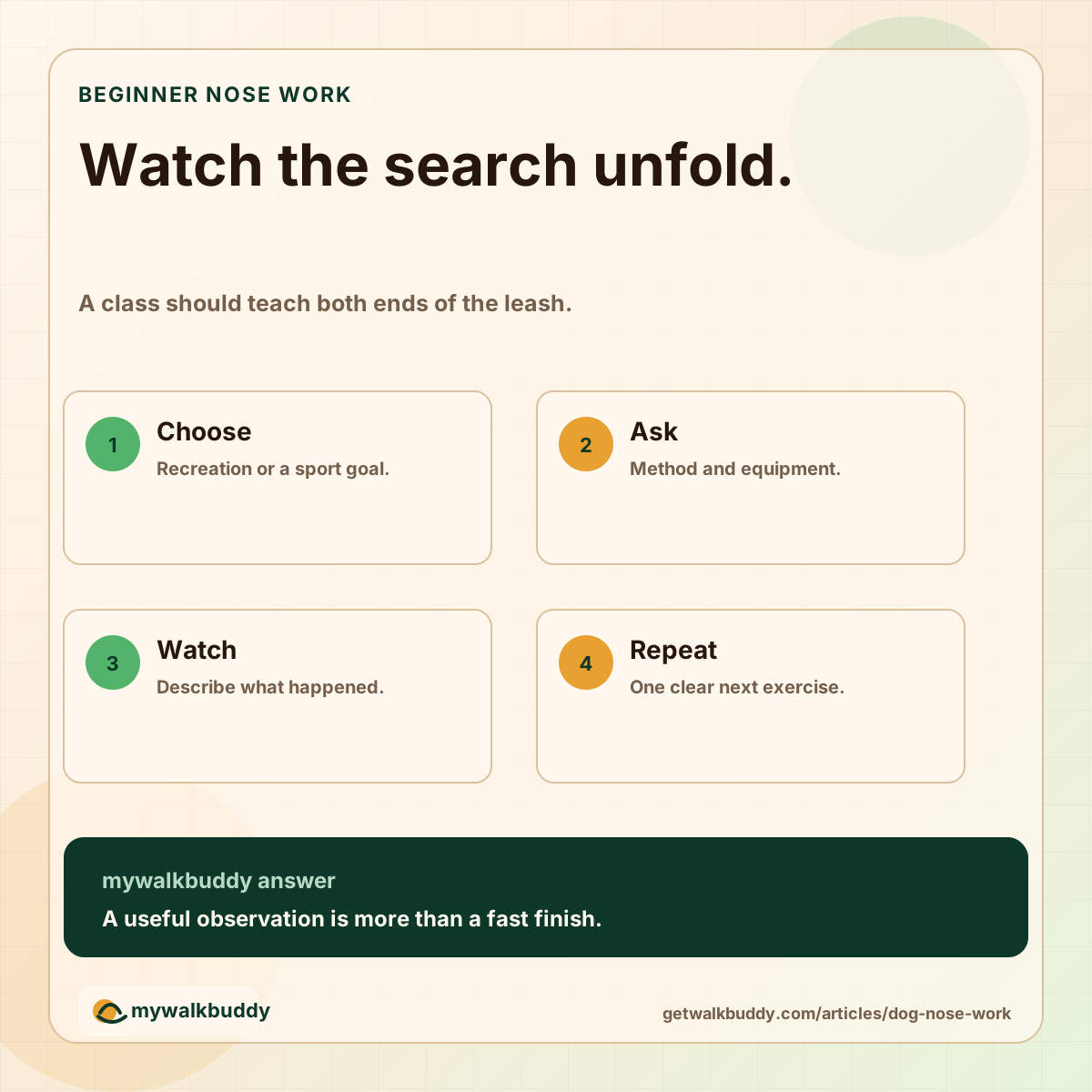
- Before: state your goal and explain your dog’s needs.
- Ask: confirm the method and equipment requirements.
- Observe: write behavior rather than guessing intent.
- Next: follow one clear practice assignment.
Sources: AKC: Getting Started in Scent Work
Questions owners ask when the leash is already in their hand
-
Is nose work the same as tracking?
They are related scent activities but should not be assumed to use the same task or training system. Ask a provider what its course actually teaches.
-
Do I need a particular breed?
AKC presents scent work as an activity for many types of dogs. Choose a setup that fits the individual dog rather than relying on a breed label.
-
Must I enter competitions?
No. You can take lessons for a shared activity and learning. Tell the instructor if recreational participation is your goal.
-
Is a scent class a substitute for walking?
Treat it as a separate activity. Plan physical exercise around your dog’s needs rather than converting a search session into a claimed number of walking minutes.
Keep searches and walks in context.
Use GetWalkBuddy for your ordinary walking route, time and distance. Keep separate class notes for the search task and the instructor’s next step.