
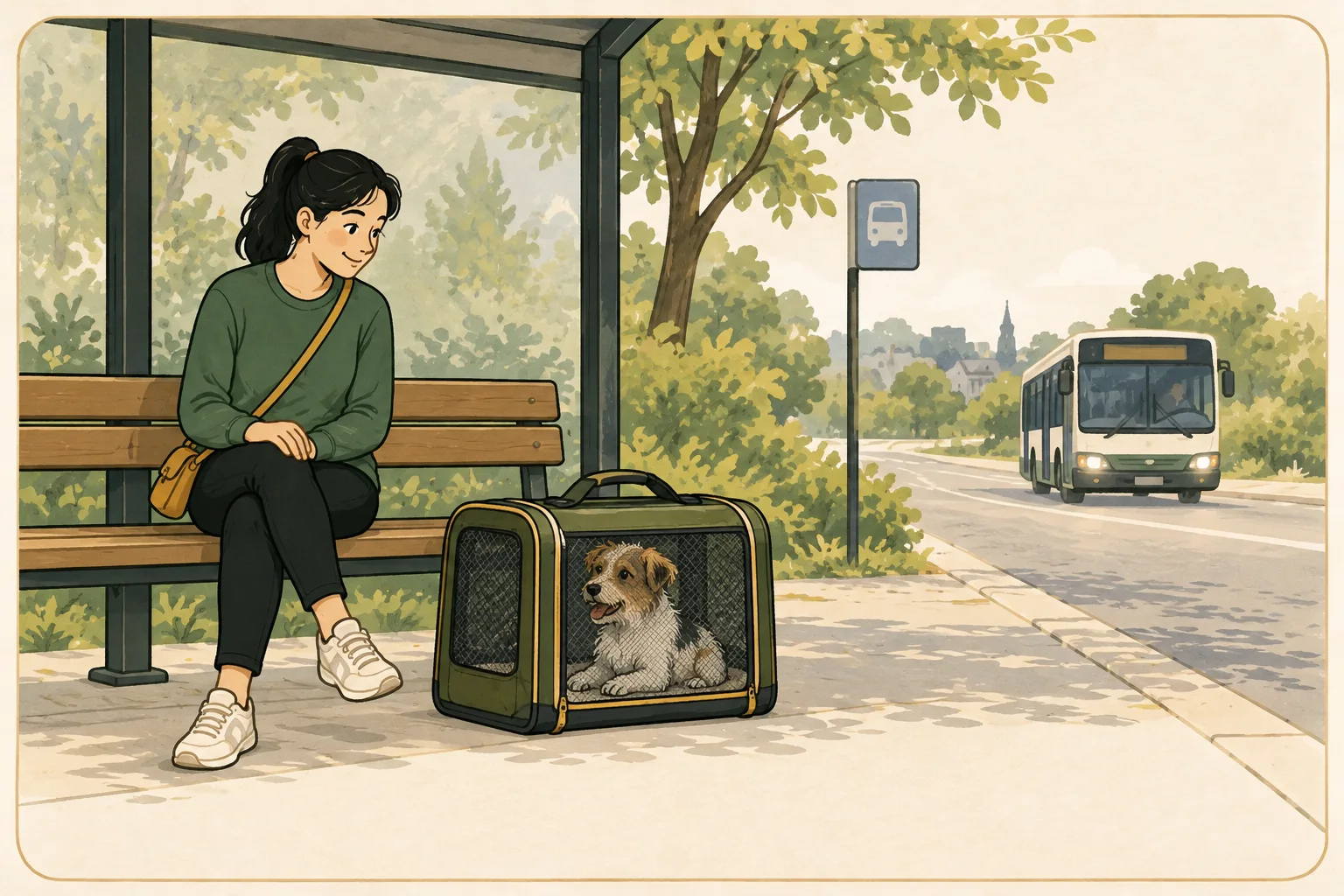
- Check the specific operator and service for every leg.
- Prepare the required carrier or handling arrangement in advance.
- Keep the first journey simple and plan the return.
Turn this answer into a walk you can actually track.
GetWalkBuddy is a dog walking app for owners who want a simple route tracker, timer, distance view, and daily walk log without turning the walk into a spreadsheet.
Are pet dogs allowed on all buses?
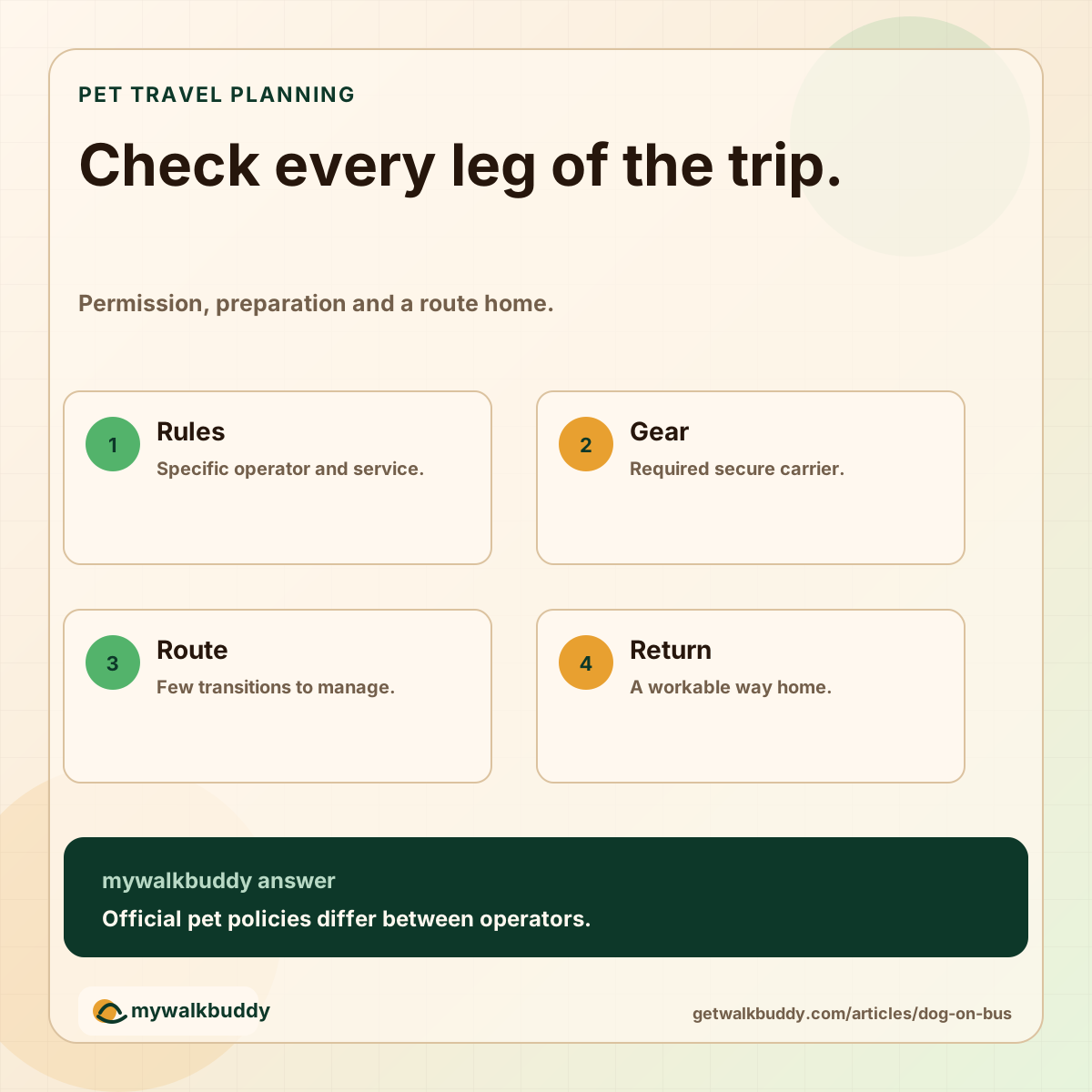
No single rule covers every bus system. Official policies differ, and a rule for one operator or type of service should not be transferred to another.
Treat permission as the first planning step. An otherwise comfortable dog may still be ineligible for a particular service or setup. A social-media video of a dog riding does not establish the current rule.
List the operating company for the outward journey, any transfer and the return. Regional branding can cover different services, so check the actual route you intend to use.
If the wording is unclear, contact the operator before the day of travel. Ask about an ordinary pet dog, the dog’s size and the equipment you intend to bring.
Sources: MTA: Taking Your Pet on Transit; King County Metro: Service Animals and Pets
How do official bus policies differ?
As checked October 4, 2026, MTA requires pets on its subway or bus to be in a bag or other container and carried without annoying riders. King County Metro describes different pet and fare arrangements.
King County Metro says small dogs staying on their owner’s lap ride free, while fares apply to other dogs. It also states that unsafe or disruptive animal behavior can lead to denied boarding or being asked to leave.
These are examples, not a nationwide permission guide. Follow the linked current operator page before making a trip; policies and fares can change.
The MTA page also distinguishes buses from its railroads. That difference is a reminder to check a transfer separately even when both parts belong to a familiar transport network.
Sources: MTA: Taking Your Pet on Transit; King County Metro: Service Animals and Pets
What belongs on a bus-trip planning card?
Write the operator, pet rule, required equipment, fare arrangements, boarding stop, destination and return option in one place.
Add the source URL and the date checked. This makes the plan usable by someone else without turning an old screenshot into permanent permission.
An illustrative card could read: “Route and operator confirmed; carrier required; payment ready; short direct trip; return stop checked; alternate ride arranged.” Replace each field with the real details for your journey.
Check the walking sections too. The destination stop may leave you beside a busy road rather than at the park entrance. Plan that short connection with the same care as the bus ride.
How can you make a first journey manageable?
Choose a simple outing with few transitions, and prepare the dog for the equipment before relying on it for travel. Avoid making an essential appointment the first test of a new arrangement.
If a carrier is required, the dog should already be comfortable entering and remaining in the correctly sized, ventilated carrier. Do not discover at the stop that the dog cannot fit or that the fastening is damaged.
Practice the parts you can control in a familiar setting: carrying the packed equipment, keeping your hands available and accessing payment without opening the carrier.
Use a short direct route and a quieter time where practical. If your dog is fearful of traffic or confinement, work with a qualified reward-based trainer on preparation rather than forcing the whole journey.
What should you manage at the stop and onboard?
Keep the dog securely managed, leave room for other passengers and follow the operator’s instructions. Readiness includes handling the dog while you pay, board and exit.
Wait away from the curb and boarding flow. Organize tickets and bags before the vehicle arrives so you do not have to juggle everything at the door.
Keep the carrier stable and avoid obstructing movement. Follow staff instructions about where it belongs rather than assuming an empty seat is available for pet equipment.
Be prepared to change plans if the bus is crowded or the dog cannot cope. Arguing at the door will not improve the dog’s experience or the journey for other riders.
What if you cannot board or need to leave early?
Have a return option that works for you and the dog. A first trip is easier to manage when stopping early does not strand you.
Choose an initial destination within a manageable area and check how you would get home without completing the original plan. Consider the dog’s walking ability, weather and any carrier you must carry.
After the outing, record the difficult transition rather than a broad label such as “bad at buses.” Was the problem the stop, lifting the carrier, movement or crowded exits? That observation makes future preparation more specific.
Keep pet travel separate from service-animal access. If you need service-animal information, use the operator’s dedicated policy; do not label a pet as a service animal to avoid pet rules.
- Before: check each operator and the current pet policy.
- Prepare: carrier, payment and walking connections.
- During: keep equipment stable and passages clear.
- After: record the difficult transition and revise the plan.
Sources: MTA: Taking Your Pet on Transit
Questions owners ask when the leash is already in their hand
-
Can a large dog ride a bus?
It depends on the operator’s rules and the specific service. Check size, carrier, restraint and fare requirements directly.
-
Does a pet dog always ride free?
No. King County Metro, for example, distinguishes small lap dogs from other dogs for fares. Verify the current policy for your journey.
-
Does a rule for a train also cover the bus?
Do not assume so. Even one transport network may publish different rules for different services.
-
Should the first trip be a long outing?
A short direct journey with an easy return plan gives you fewer transitions to manage and clearer information about how the dog copes.
Plan the walking connections.
GetWalkBuddy records your walking route, time and distance. Use familiar walks to plan the sections before and after transit; check transport rules with the operator.