
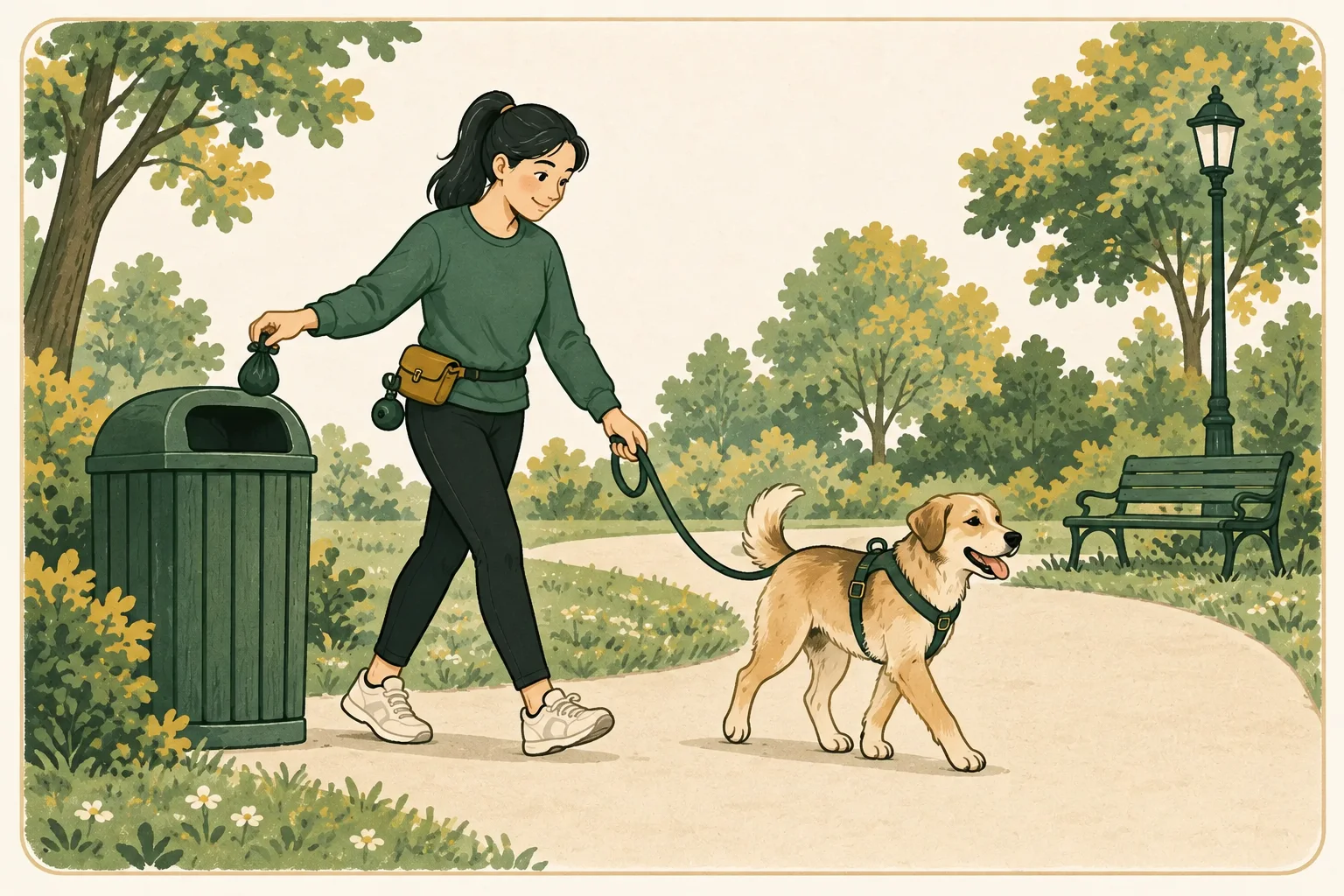
- Bring enough bags and a backup carrying method.
- Keep used bags with you until an appropriate disposal point.
- Check local rules before composting, flushing or other alternatives.
Turn this answer into a walk you can actually track.
GetWalkBuddy is a dog walking app for owners who want a simple route tracker, timer, distance view, and daily walk log without turning the walk into a spreadsheet.
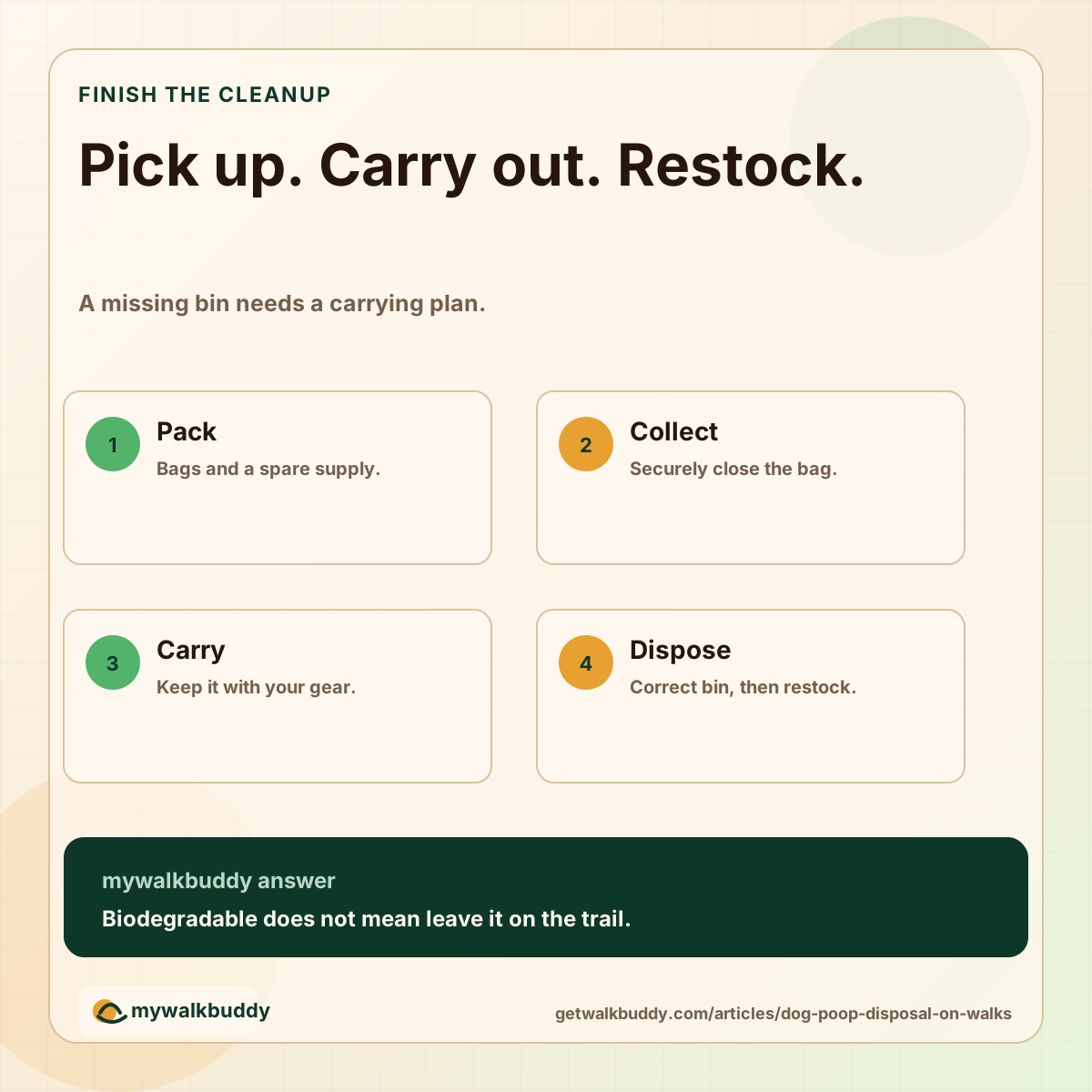
What should you do when there is no bin?
Carry the bag with you until an appropriate disposal point. Leave No Trace recommends keeping used bags rather than leaving them on the ground for the return journey.
Plan for the walk you actually take. A loop may not pass the same spot twice, and a route change can make a “temporary” bag stay behind.
Use a dedicated secondary holder or container that keeps the tied bag secure and separate from food and drinking equipment. Choose something you can clean and manage while holding the leash.
Before setting out on a longer route, decide where full bags will go. Discovering that every pocket contains snacks or a phone is an avoidable problem.
Sources: Leave No Trace: Dog Poop Bags
What belongs in a practical waste kit?
Carry spare bags, a secure way to carry used bags and a hand-cleaning plan. Test the arrangement with the other equipment you normally bring.
Keep a reserve separate from the main dispenser. A dispenser can look full while holding only one remaining bag, so check the actual supply.
Our kit check has three questions: can I open a bag with the dog safely managed; can I seal and carry it without contaminating other items; can I replenish the kit immediately after the walk?
If several people walk the dog, agree who refills the dispenser. A shared routine is more dependable than assuming the previous walker replaced what they used.
Can you leave biodegradable or compostable bags outdoors?
No. Leave No Trace warns that bags marketed as biodegradable can remain for years. A label does not remove the need to carry the bag to an appropriate disposal point.
Do not hide bags behind a tree, under a stone or beside a trail marker. Moving them out of sight does not complete disposal.
For composting, first check whether a local program explicitly accepts both pet waste and that bag material. “Compostable” on packaging does not tell you what a particular collection service accepts.
If the program does not accept the item, use the local waste instructions instead of placing it in the nearest green bin and hoping it qualifies.
Sources: Leave No Trace: Dog Poop Bags
Why pick up waste away from the paved path?
Dog waste can affect shared spaces and water quality. Leave No Trace explains that pet waste reaching waterways can harm animals and people.
The useful boundary is the place you are visiting, not just the pavement. A dog stepping a short distance into grass does not make the waste disappear from the public environment.
Keep the dog safely managed while you collect it. If a location is hazardous to reach, do not risk injury; tell the responsible land manager and choose a better toilet opportunity on future outings.
For group walks, name who checks the area before the group moves on. This avoids the common assumption that another person saw and handled the same event.
Sources: Leave No Trace: Pack Out Dog Waste
Can you bury or flush dog waste?
Follow the land manager’s and local utility’s instructions. Leave No Trace describes burial only where land managers recommend the relevant method, and warns that bags should not be flushed.
For ordinary neighborhood walks, carrying bagged waste to an appropriate bin is a straightforward plan. Do not turn a general outdoor tip into permission to dig in a park or bury a plastic bag.
If considering a home disposal system, check local waste and wastewater guidance first. This article does not establish that a particular composting, septic or flushing arrangement is suitable for your property.
Do not put filled waste bags into recycling. Check bin signs rather than using a container simply because it is nearby or has room.
Sources: Leave No Trace: Dog Poop Bags
How do you make the habit easy to maintain?
Use the same sequence every time: prepare, collect, carry, dispose and restock. The carrying step should not depend on remembering a bag left somewhere else.
At the end of the walk, check the dedicated holder before putting the gear away. Empty and clean it as appropriate, then replace the bags used.
A simple route note might say “no disposal bin on the loop; carry to the designated bin at the exit.” This is more useful than relying on a bin that was present during one earlier visit.
When handing the dog to another walker, include the waste arrangement alongside the leash and water. Small practical details make shared care easier to repeat.
- Before: check bags and the used-bag holder.
- During: collect and carry the bag with you.
- At disposal: use a bin that accepts the waste.
- After: empty the holder and restock supplies.
Questions owners ask when the leash is already in their hand
-
Can I leave the bag and collect it on the way back?
Carry it with you instead. Routes change and bags are easy to forget; leaving one behind is not a completed cleanup.
-
Does a compostable bag belong in every food-waste bin?
No. The collection program must accept both pet waste and the particular bag material. Check its instructions.
-
What if the dispenser is empty?
Use your backup supply and make restocking part of the return routine. Do not assume public dispensers will have bags.
-
Can dog waste bags go in recycling?
No. Use the appropriate waste stream specified locally; a bag being plastic does not make a filled waste bag recyclable.
Know the practical parts of your route.
GetWalkBuddy records routes, walking time and distance. Keep your own gear and disposal plan ready so a missing bin does not interrupt a good outing.