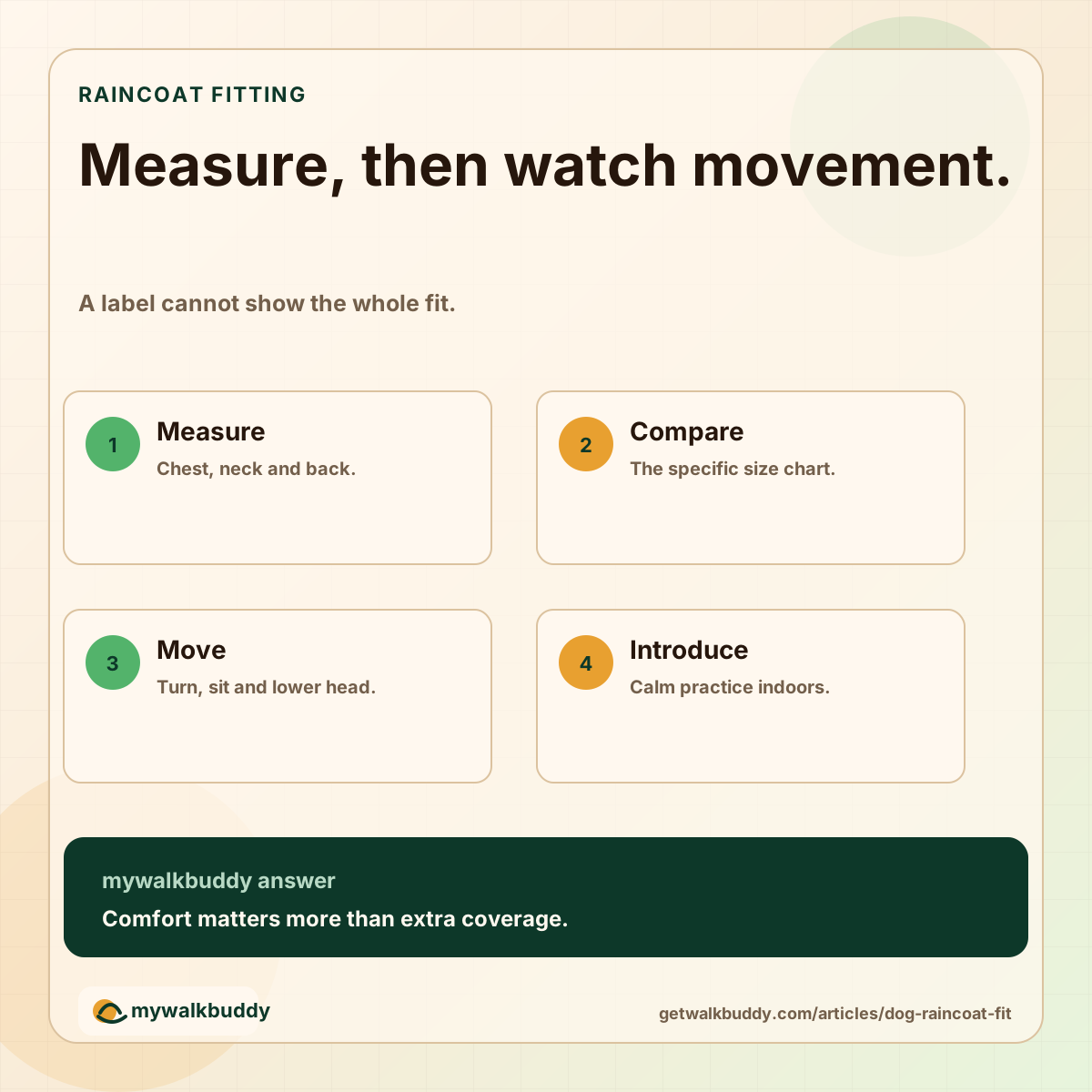
- Measure the dog instead of relying on breed or weight labels.
- Check movement, toilet clearance and harness access together.
- Separate getting used to clothing from the first wet walk.
Turn this answer into a walk you can actually track.
GetWalkBuddy is a dog walking app for owners who want a simple route tracker, timer, distance view, and daily walk log without turning the walk into a spreadsheet.
What should a raincoat do for your dog?
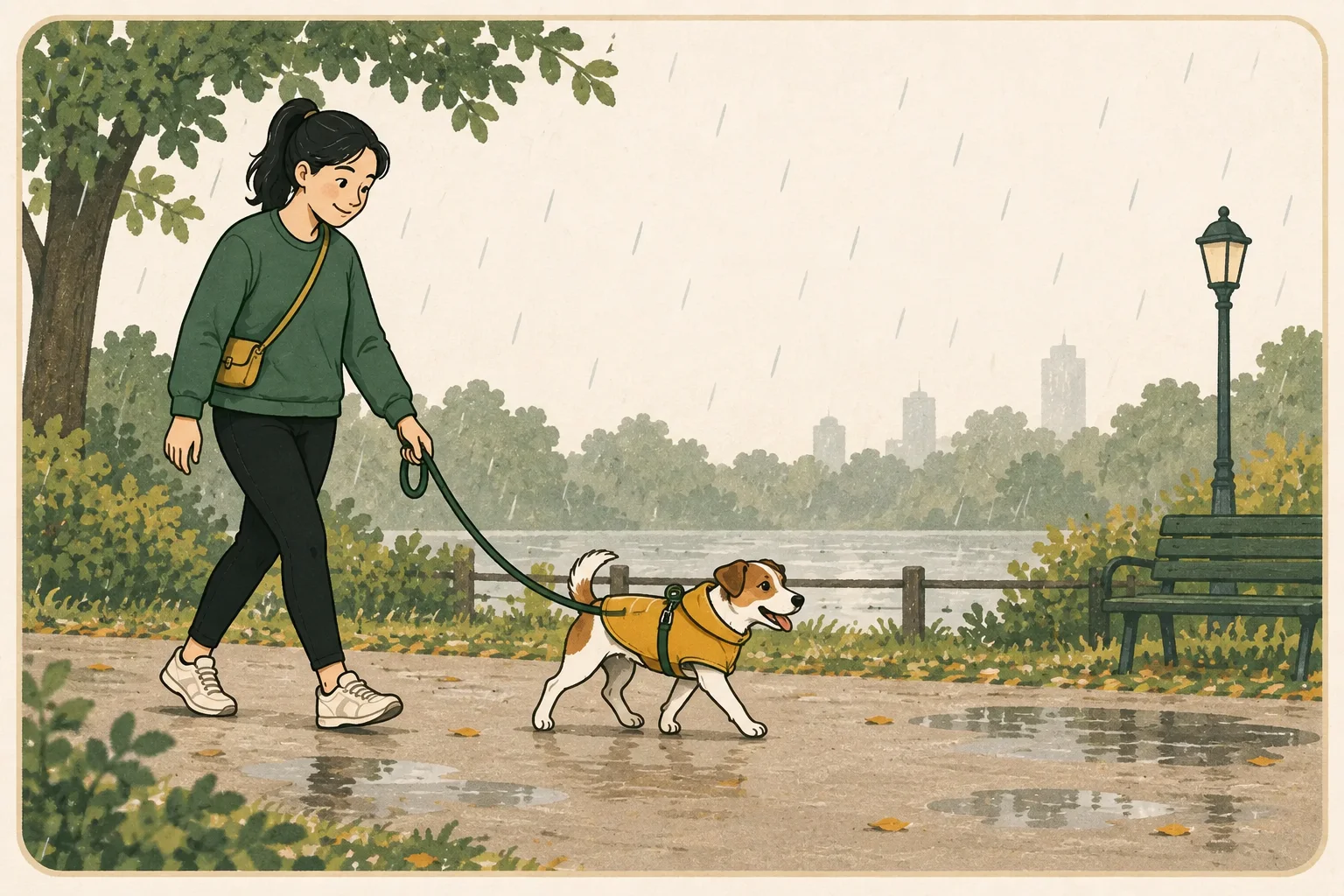
A raincoat is a practical layer for wet weather. Evaluate whether it helps your dog stay comfortable and whether the dog accepts wearing it.
Begin with the actual problem: wet fur after a short outing, a coat that catches the front legs, or a dog that dislikes the current garment. Each problem leads to a different selection question.
Do not choose by appearance alone. A photograph shows color and shape; it does not show how the garment fits your dog when turning, sitting or lowering its head.
This guide covers selecting and introducing the garment. For the outing itself, use the rainy-walk guide and adjust the route to conditions. Buying a coat does not make every weather situation appropriate for a walk.
Sources: AKC: Does Your Dog Need a Raincoat?
How do you measure a dog for a raincoat?
AKC identifies back length, chest girth and neck girth as the main clothing measurements. Measure while the dog stands naturally, then use the specific product’s instructions.
Back length runs from the base of the neck to the base of the tail. Chest girth is measured around the widest part of the rib cage, usually behind the front legs. Neck girth is taken around the base of the neck.
Write the numbers and units down before opening size charts. Keep centimeters and inches clearly labeled; do not rely on remembering which number came from which measurement.
Use a soft tape and avoid pulling it tight. If the manufacturer specifies a particular measuring method or allowance, follow that method when comparing its chart.
If measurements fall into different sizes, ask the manufacturer about that body shape or choose an adjustable design with suitable proportions. Simply selecting a larger label may leave another part too loose.
Sources: AKC: Measuring Your Dog for Clothes
How should the raincoat fit when worn?
The garment should allow normal movement without tight straps, dragging fabric or coverage that interferes with toileting. Test the fit in motion, not just in a standing photograph.
Our fitting check has four ordinary actions: walk a few steps; turn both ways; sit if comfortable; lower the head. Observe the coat during each action. Stop if the dog freezes, struggles or appears uncomfortable.
Check the front-leg area for fabric catching, the underside for toilet clearance and the rear for unwanted bunching. These are practical observations to discuss with the seller, not reasons to keep adjusting a clearly unsuitable garment.
AKC notes that both overly tight and overly loose raincoats create problems. Keep the dog’s movement as the deciding evidence rather than forcing a fit because the chart appeared correct.
Sources: AKC: Does Your Dog Need a Raincoat?; AKC: Measuring Your Dog for Clothes
What about a hood or harness opening?
Check the complete walking setup. Clothing must not block the dog’s view or prevent correct attachment of the leash to suitable walking equipment.
Compare the raincoat opening with the actual attachment point on your harness. A hole in the wrong place can make a garment impractical even if the body measurements fit.
Do not assume a decorative ring or coat fastening is designed to restrain the dog. Confirm the intended attachment in the manufacturer’s instructions; keep using appropriate walking equipment.
A hood is optional. Evaluate it while the dog turns its head rather than pulling it forward for a photograph. If it interferes or the dog dislikes it, choose a design that works without it.
For comparison shopping, use five columns: fit range; movement; leash access; coverage; care requirements. Leave brand names until after you have written what the dog actually needs.
How do you help a dog accept a raincoat?
AKC recommends a gradual, positive introduction in a familiar setting before outdoor use. Separate seeing the garment, putting it on and moving in it.
Let the dog investigate first. Reward comfortable participation and keep the initial steps easy. Do not wait for heavy rain and then rush an unfamiliar garment over the dog’s head.
If fastening noises or handling seem to be the difficulty, identify that specific step. An illustrative note could say “comfortable beside the coat, steps away when the strap opens”; that is more actionable than “hates clothes.”
When the dog is comfortable wearing it briefly indoors, check ordinary movement and then try an easy outing. If the fit is wrong, change the garment rather than treating restriction as something to train through.
Sources: AKC: Does Your Dog Need a Raincoat?
What should you check after the walk?
Inspect how the garment performed and follow its care label. Use the result to improve fit or choose a more suitable coat.
Was fabric rubbing or twisting? Did the harness opening stay usable? Was the underside easy to keep clear? Record the specific issue while it is fresh.
Follow the manufacturer’s cleaning and drying instructions instead of assuming every waterproof material can be washed the same way. Have a suitable place to dry the coat before the next outing.
A successful purchase is a garment the dog can wear comfortably on an appropriate route. There is no need to keep an impractical hood, oversized panel or awkward fastening for the sake of a feature list.
- Before: record measurements and check the chart.
- Fit: watch ordinary movement and toilet clearance.
- Introduce: practice calmly indoors.
- After: inspect fit and follow the care label.
Sources: AKC: Does Your Dog Need a Raincoat?
Questions owners ask when the leash is already in their hand
-
Can I choose a raincoat by my dog’s weight?
Weight alone does not describe body proportions. Use the product’s measurements and confirm the fit in motion.
-
Should I automatically size up?
Check the brand’s instructions and all relevant measurements. A larger coat can be too loose even when one smaller measurement was tight.
-
Does my dog need a hood?
A hood is optional. It should not interfere with vision or movement, and the dog must be comfortable with it.
-
What if my dog refuses to move in the coat?
Stop and check fit and comfort. Return to easier introduction steps or choose different equipment rather than pulling the dog along.
Keep rainy walks practical.
Use GetWalkBuddy to record the route, time and distance of your walks. Compare your usual routes while choosing an outing suited to the conditions.