
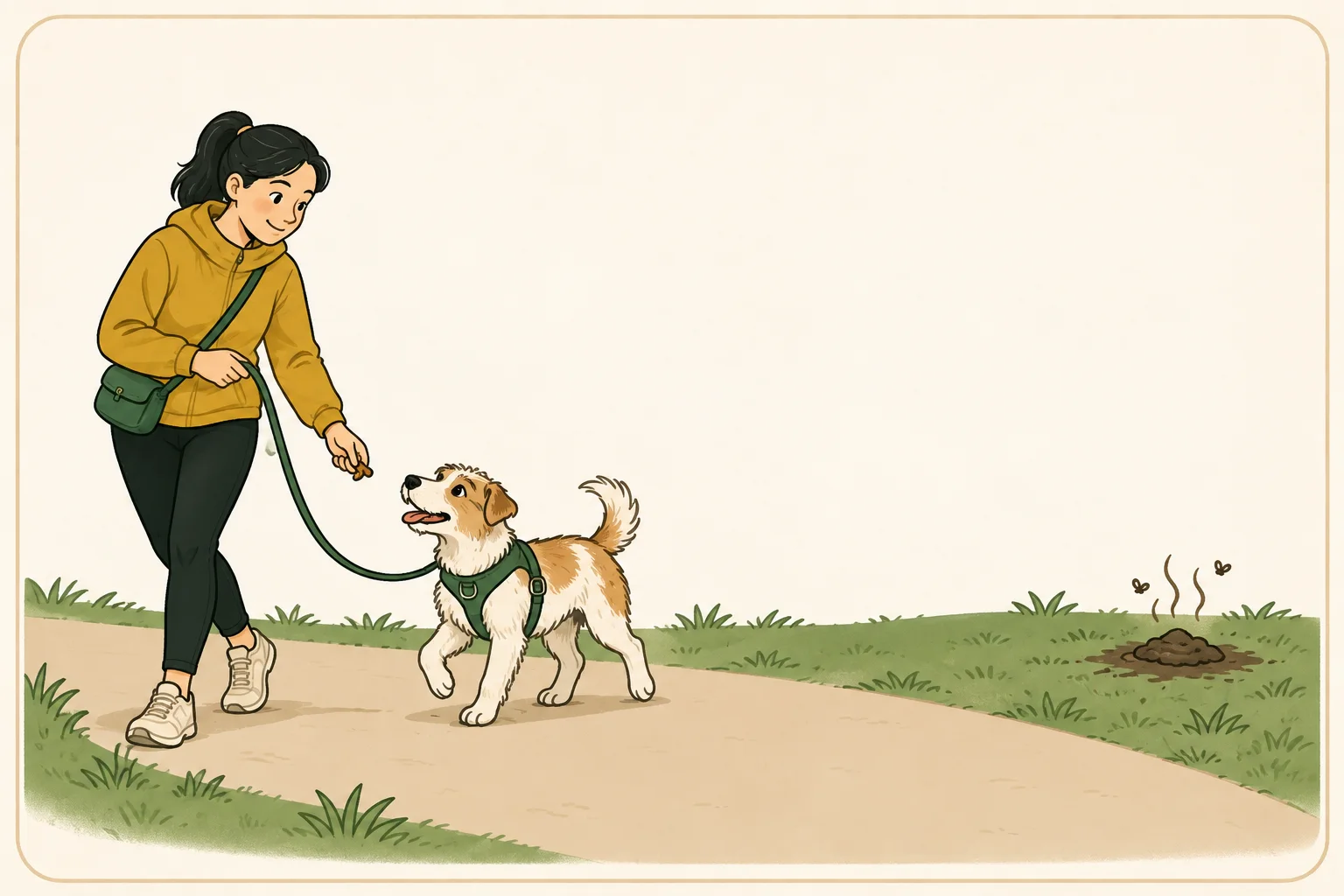
- Keep explanations about scent camouflage or communication tentative.
- Separate ordinary dirty fur from possible chemical exposure or ingestion.
- Plan the next approach to the problem spot before your dog reaches it.
Turn this answer into a walk you can actually track.
GetWalkBuddy is a dog walking app for owners who want a simple route tracker, timer, distance view, and daily walk log without turning the walk into a spreadsheet.
Why does your dog roll in poop?
The AKC reports several theories, including interest in novel odors, communication and disguising scent, but no definitive explanation. Your dog’s choice of smell does not establish which theory is correct.
An explanation is not a prevention plan. Even if you knew exactly why this particular patch appealed to your dog, you would still need to decide how to pass it safely on tomorrow’s walk.
Use a precise description instead of a label such as naughty: “Stopped at the field entrance, lowered a shoulder and rolled.” That description identifies a location and a moment you can work with. It is more useful than trying to infer the dog’s intentions.
What should you do if your dog has already rolled?
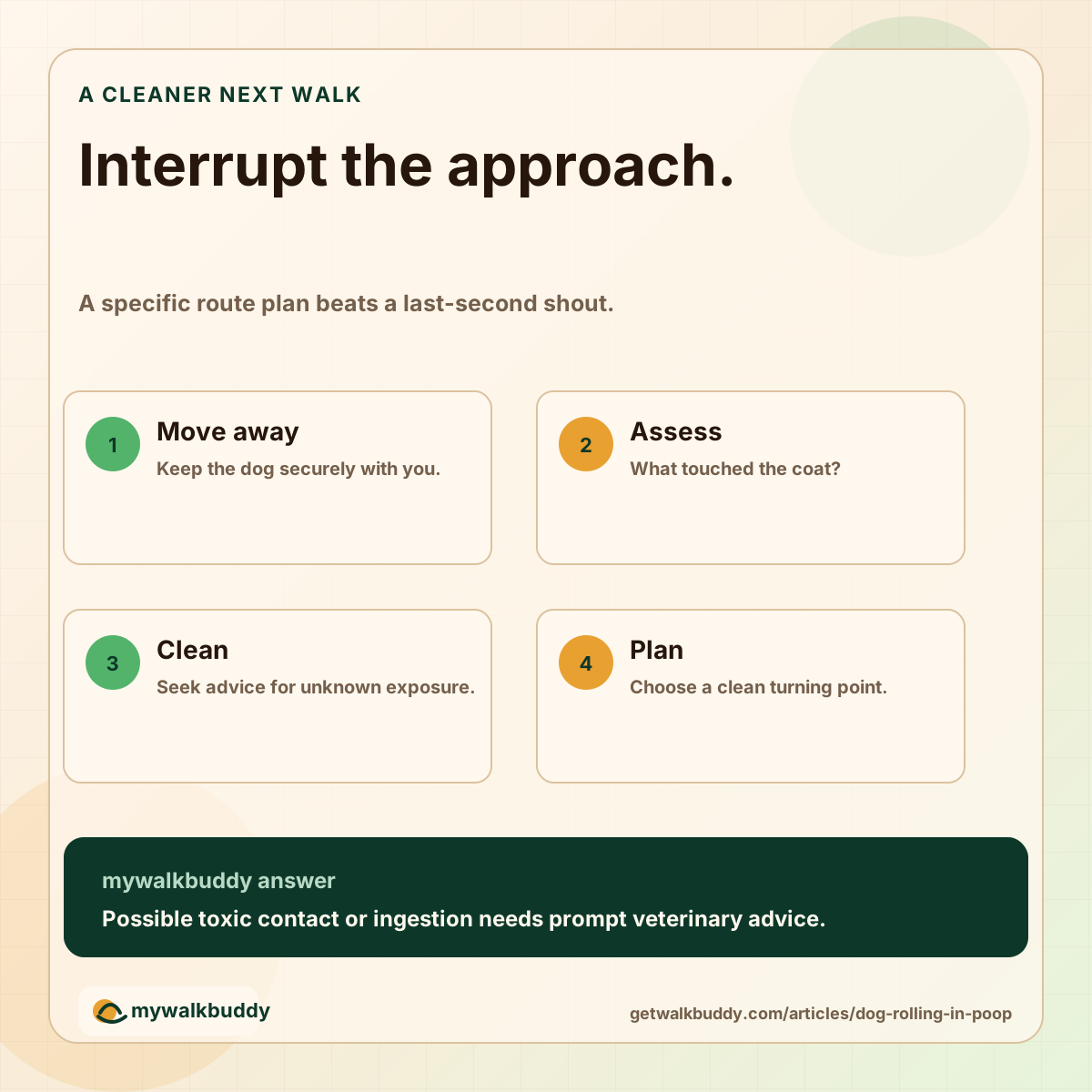
Calmly move away and inspect the contamination. The AKC advises bathing after contact with feces or questionable material. If you suspect a toxic substance or ingestion, ASPCA recommends immediate veterinary guidance because the appropriate response depends on the exposure.
Before opening the car or going indoors, decide where cleaning can happen without spreading the material over seats, bedding or other people. Keep the leash secure while arranging supplies; a cleanup problem should not become an escape problem.
For an unknown substance, make a short handover note: where it was found, what it looked like, which body areas touched it and whether licking or swallowing was seen. A photo may help, provided taking it does not delay care. “I do not know” is better information than guessing that every brown patch is mud.
ASPCA advises protecting yourself with gloves when handling contaminated fur. Its chemical-exposure guidance is not a universal shampoo recipe for every dirty dog. Ask a veterinarian for the appropriate cleaning method if the substance, skin condition or eye exposure is uncertain.
Sources: AKC: why dogs roll in smelly substances; ASPCA: responding to skin and fur exposure
How can you prevent the next roll on a familiar route?
Combine access management with an already learned cue. The AKC recommends supervision, leash management and cues such as leave-it or recall to interrupt an approach before rolling begins.
Draw a tiny route plan with three points: the place where you first notice the dog’s interest, the contaminated patch and a clean place to move toward. Choose your turning point at the first location, not directly on top of the patch.
For example, if the field gate is the repeated trouble spot, stay on the clear path and invite the dog to check in with you before entering. Reward the response away from the waste. This is a planning example, not evidence that a particular distance works for every dog.
Keep one practical fallback: turn back if the clear route is blocked. A plan that depends on finding a gap in traffic or squeezing past another dog is too complicated for that moment.
Should you train leave-it beside real poop?
Practice in safe, controlled situations first. Dogs Trust introduces leave-it by rewarding a dog for moving attention away from an item, then adding the cue when the response is reliable and increasing difficulty gradually.
Write two separate notes: “skill practiced” and “hazard managed.” A successful indoor exercise belongs in the first column. Passing the contaminated verge with enough space belongs in the second. Keeping them separate stops you treating one easy success as proof that the cue will work everywhere.
Do not collect waste as a training prop. Choose safe practice material and get qualified help if you cannot set up a manageable exercise. On the actual walk, your immediate job is to avoid contact; the learning session can happen elsewhere.
What should your next-walk plan say?
Make the plan concrete enough that another person walking your dog could follow it. Name a place, an action and a fallback rather than simply writing “watch more closely.”
Here is a four-line example to adapt to your own route:
- Before: use the paved entrance instead of the field gate where waste was found.
- At the turn: keep the dog with you and reward a familiar attention cue on the clean path.
- If blocked: turn back rather than pass within reach of the patch.
- After: note whether access was prevented and which part of the route needs changing.
Questions owners ask when the leash is already in their hand
-
Does rolling in poop mean my dog is eating it?
No. Rolling and swallowing are different observations. Tell your veterinarian what you actually saw if ingestion is a concern; do not infer it from dirty fur alone.
-
Can I remove the smell with household chemicals?
Do not improvise a chemical mixture. The cleaning method depends on what is on the coat. Ask for veterinary guidance for uncertain or potentially toxic contamination.
-
What if the behavior starts suddenly?
Record the setting and any other changes. Repeated unexplained rubbing, skin discomfort or other signs of illness deserve veterinary advice rather than assuming every episode is scent rolling.
-
Should I stop every sniff on a walk?
Focus your management on the problem locations. You can plan clean sniffing stops separately, while keeping your dog away from waste and unknown substances.
Keep track of your cleaner route.
Record route, time and distance with GetWalkBuddy. Keep the location of problem patches and your prevention plan in separate notes.