
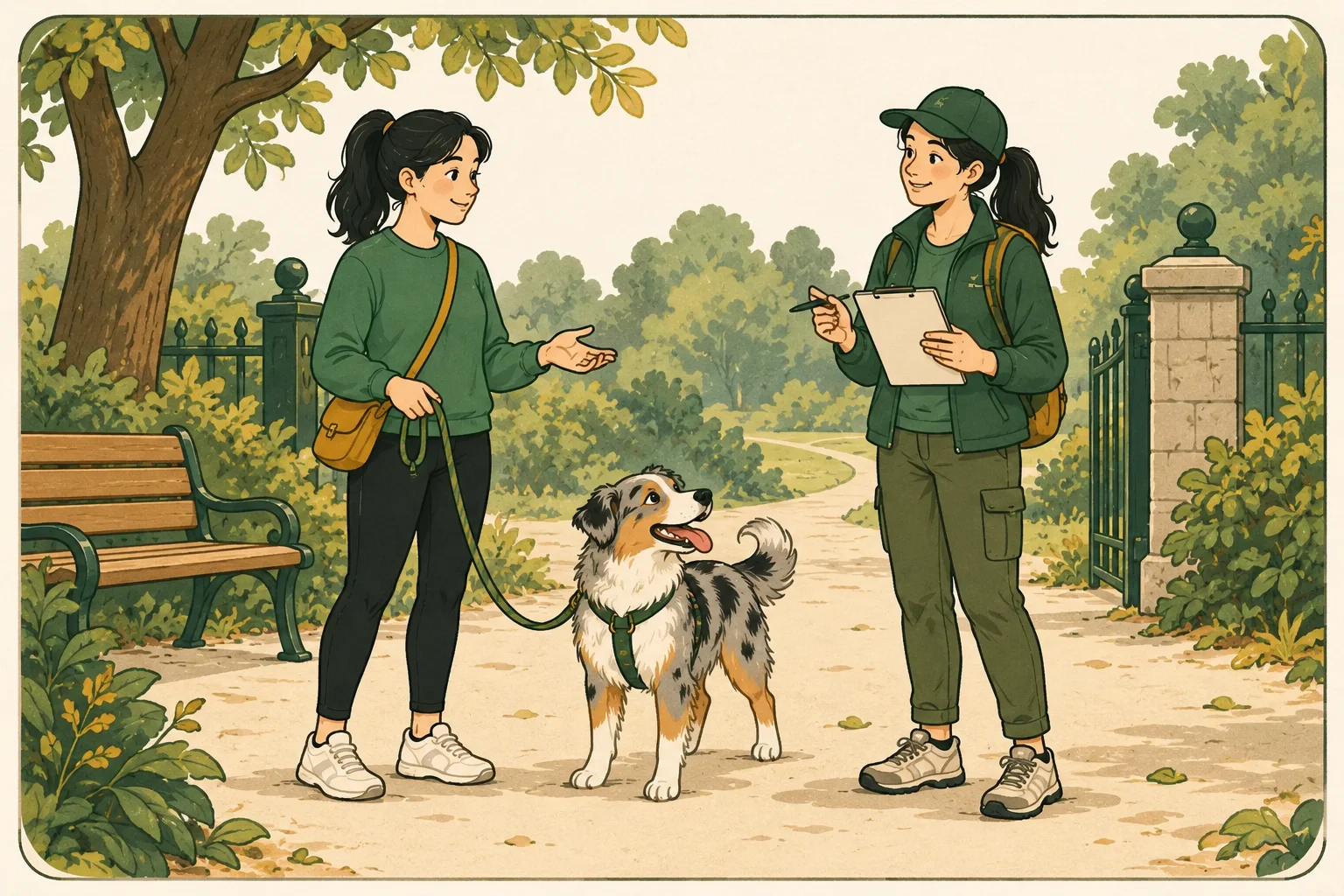
- Ask for concrete examples of handling and emergency decisions.
- Confirm who has access to the dog and how changes are agreed.
- Start with a clear handover and review the first outing.
Turn this answer into a walk you can actually track.
GetWalkBuddy is a dog walking app for owners who want a simple route tracker, timer, distance view, and daily walk log without turning the walk into a spreadsheet.
Which questions reveal whether the service fits your dog?
Ask about the actual walk your dog would receive: the handler, route, companions, transport and time outside. A service label does not answer those questions.
Use this opening question: “What would a normal visit look like for my dog, from arrival to leaving the house?” Listen for the sequence, not just an advertised duration.
Ask whether the same person usually walks the dog, who substitutes and how you will learn about a change. If group walks are offered, ask how dogs are matched and what happens when a pairing does not work.
Clarify whether the booked time includes pickup or travel. Write down the arrangement so a short walk and a long vehicle journey are not mistaken for the same service.
How do you assess handling and training methods?
Describe a situation your dog actually finds difficult and ask the walker to explain their response step by step.
For example: “My dog barks when another dog appears around a corner. What would you do?” A useful answer describes space, handling and an alternative route rather than promising to fix the dog during a walk.
Ask which equipment will be used and whether any change needs your agreement. Explain cues the dog knows, handling sensitivities and situations to avoid. Do not hide bite history or escape attempts; the walker needs an accurate account to assess whether they can help.
Agree explicitly on leash use and permitted locations. If off-leash outings are proposed, discuss them separately instead of letting them be an assumed feature of the booking.
What should you verify before giving access?
RSPCA recommends meeting a prospective pet carer, checking references and checking insurance. Ask to see relevant evidence and understand what the proposed service includes.
Our reference questions are practical: Was the person reliable? Did they report problems promptly? Did they follow the agreed instructions? A glowing general review does not answer every fit question.
Ask how keys or access codes are stored, who can use them and how access ends when the arrangement finishes. Share access information through an agreed private channel, not a public care note.
Agree that unexpected assistants or substitute handlers require communication. RSPCA also advises choosing a reputable company and checking references when someone else cares for a pet.
Sources: RSPCA: Choosing a Pet Carer; RSPCA: Protecting Pets from Theft
Which emergency questions belong in the interview?
Ask what the walker would do if the dog were injured, escaped, became unwell or could not finish the route. Agree on the contact and decision process before a problem occurs.
Use scenarios: “If you cannot reach me, who do you call?” and “How would you get my dog to veterinary care?” Ask where the contact details will be available during the walk.
RSPCA advises leaving clear care instructions, veterinary details and an emergency contact. Include current medical restrictions and any instructions supplied by your veterinary team.
Also discuss ordinary disruptions: extreme weather, a closed route, a delayed visit or a locked door. Specify how the walker should communicate a shortened, changed or missed walk.
Sources: RSPCA: Choosing a Pet Carer
What belongs on the first-walk handover card?
Keep the card short enough to use: dog, routine, equipment, boundaries, contacts and the agreed update. Separate confidential home-access details from everyday care notes.
Our example headings are: usual route; comfortable activity; avoid today; fitted equipment; contact order; report afterward. Fill them with the dog’s actual needs instead of generic breed advice.
Arrange an introductory meeting and, when appropriate, a short accompanied outing. Observe whether the person listens, handles the equipment confidently and notices when the dog needs space.
After the first independent walk, compare the agreed plan with the update. Ask about toileting, movement, difficult encounters and changes made. Adjust the arrangement together before it becomes a routine.
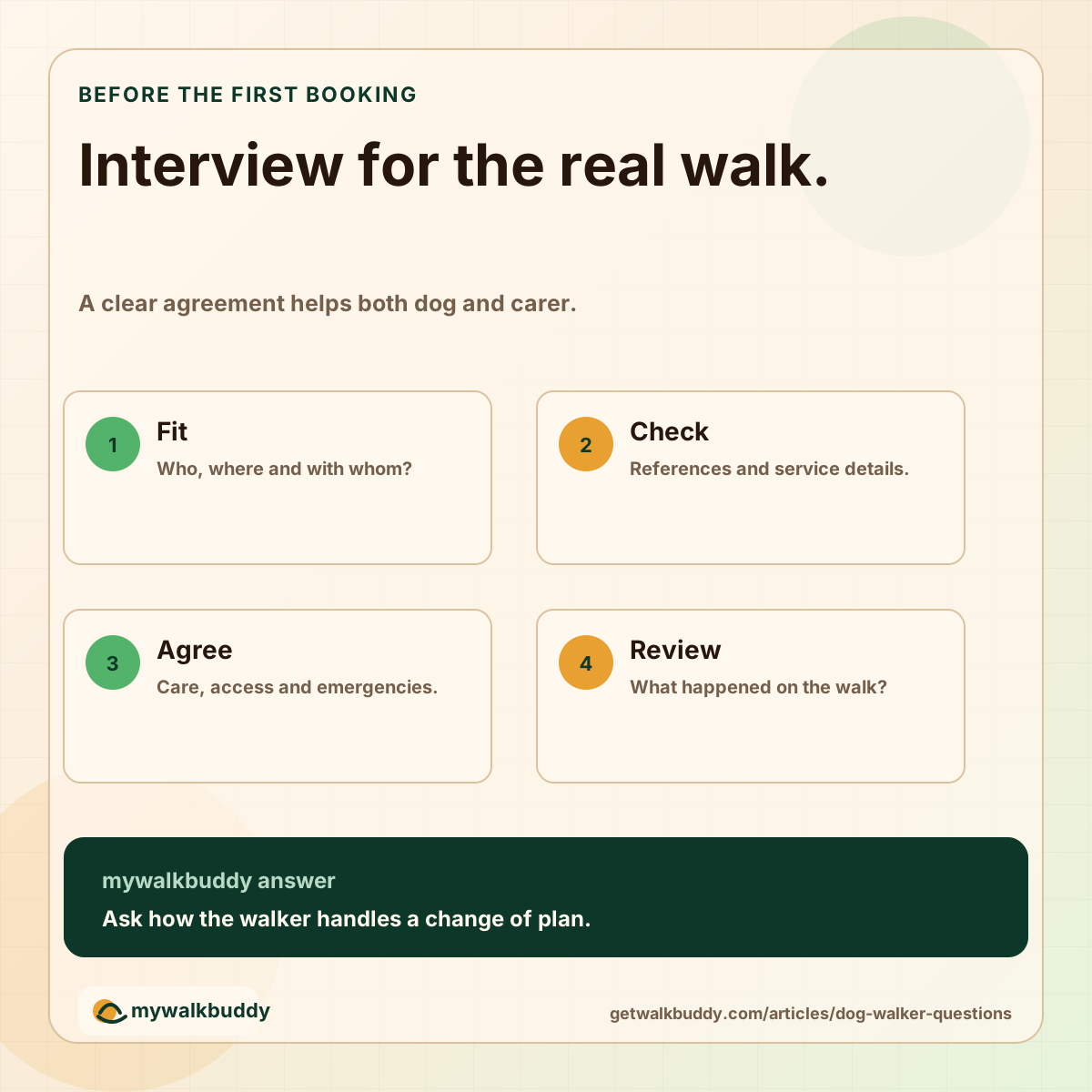
- Before: check fit, references and the service details.
- Agree: handling, access, boundaries and emergencies.
- Introduce: meet the walker with your dog.
- Review: compare the first outing with the plan.
Questions owners ask when the leash is already in their hand
-
What is the most useful interview question?
Ask the walker to describe a complete visit for your particular dog, then ask what changes if an encounter or the weather makes the plan unsuitable.
-
Should I meet the walker first?
Yes. Meet before the first independent outing and discuss the dog’s needs, equipment and handling.
-
Are group walks suitable for every dog?
No. Ask how the group is selected and managed, and discuss whether an individual outing better matches your dog.
-
What update should I ask for?
Agree on the information that helps you care for the dog: actual outing, toileting, comfort, unusual behavior and any changes or incidents.
Bring a useful picture of the routine.
Use your GetWalkBuddy route, time and distance records when explaining familiar outings. Agree separately on the walker’s reporting and emergency arrangements.