
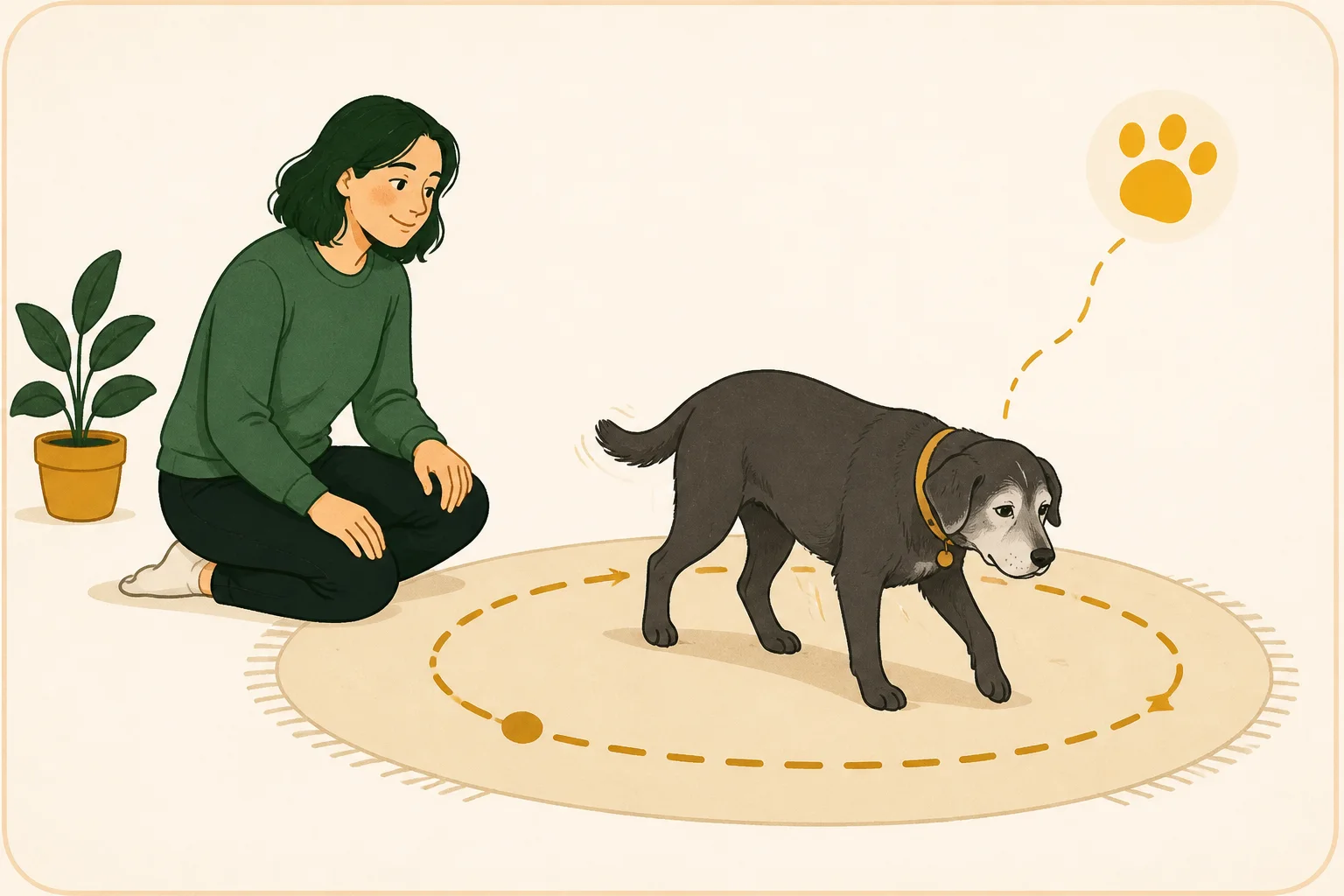
- Call the veterinarian for new, repeated, or worsening circling instead of assuming normal aging.
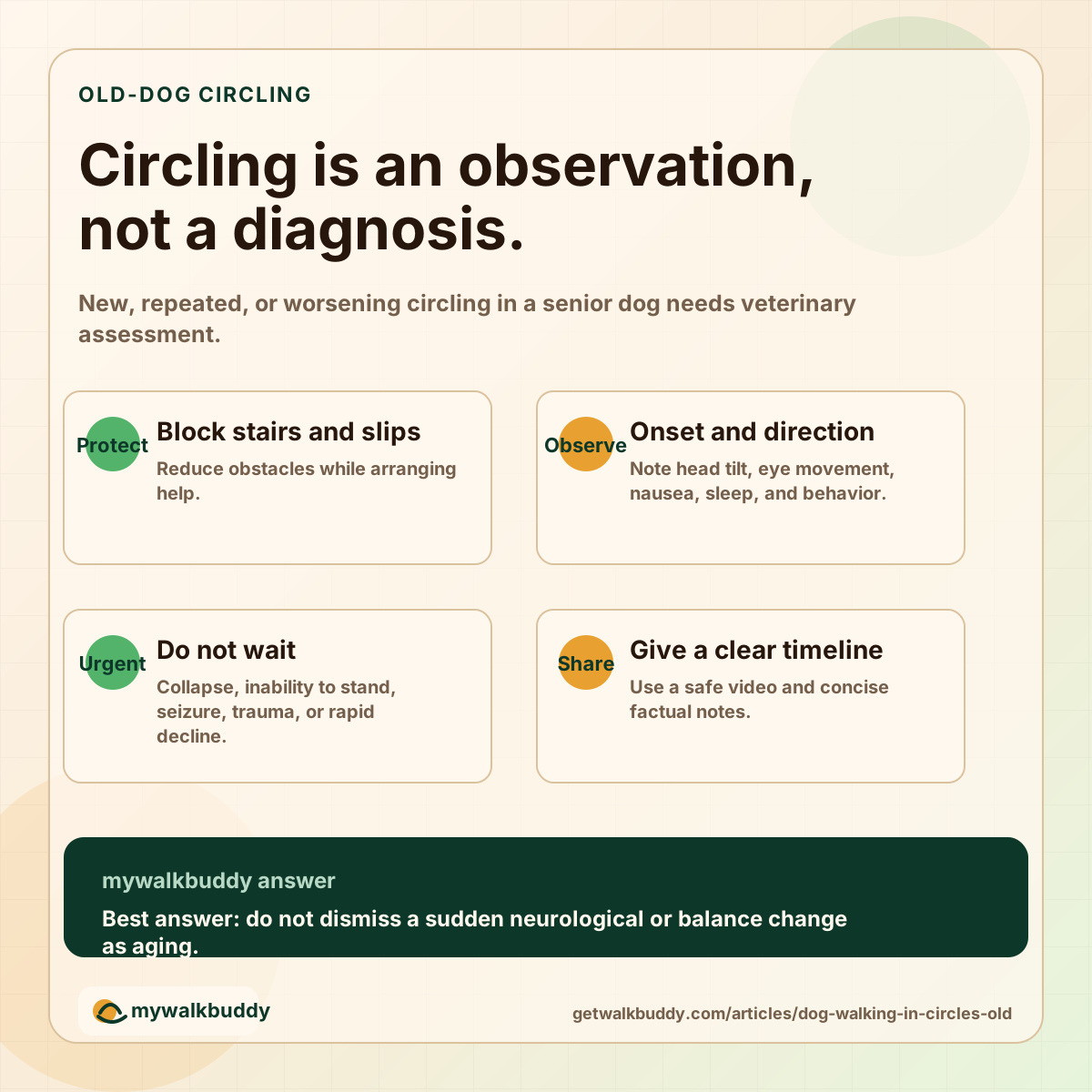
- Protect the dog from stairs, slippery floors, and obstacles while you arrange assessment.
- Record onset, direction, balance, head tilt, eye movement, appetite, sleep, and recovery when safe.
Turn this answer into a walk you can actually track.
GetWalkBuddy is a dog walking app for owners who want a simple route tracker, timer, distance view, and daily walk log without turning the walk into a spreadsheet.
Why might an old dog walk in circles?
Circling can occur with sudden vestibular balance problems, cognitive dysfunction, vision or hearing loss, pain, anxiety, brain disease, toxins, or other medical conditions. The direction and timing alone cannot diagnose the cause. Sudden circling with head tilt, falling, nausea, or rapid eye movements makes a balance disorder possible and requires veterinary assessment.
Cornell notes that vestibular syndrome can appear without warning and may cause circling, head tilt, inability to stand, nausea, and nystagmus.
Cognitive dysfunction often produces a broader pattern involving sleep, orientation, interaction, house soiling, activity, and anxiety changes.
When is an old dog's circling an emergency?
Seek urgent veterinary help when circling begins suddenly with collapse, inability to stand, severe weakness, breathing trouble, seizures, repeated vomiting, marked disorientation, suspected toxin exposure, trauma, or rapid deterioration. Do not make the dog complete a walk or use stairs to test balance. Support safely, reduce obstacles, and arrange transport as directed by the clinic.
Even when the dog can still walk, a new neurological or balance change should be assessed promptly.
Avoid giving human medication or leftover pet medication unless a veterinarian specifically directs it.
What should you note before the veterinary visit?
Note when circling began, whether it is constant, the usual direction, head tilt, eye movement, falling, appetite, drinking, vomiting, sleep changes, toileting, medication, recent injury, and behavior between episodes. A short video can help when safe. The goal is a clear timeline, not delaying care until every field is complete.
Place rugs on slippery floors and block stairs while waiting for professional guidance.
A route log can show whether the first episode followed unusual activity, heat, or distance, but it cannot identify the cause.
Questions owners ask when the leash is already in their hand
-
Does circling mean my old dog has dementia?
Not necessarily. Cognitive dysfunction is one possibility, but vestibular, sensory, painful, neurological, toxic, and other medical causes can also produce circling. A veterinarian must assess it.
-
Can old-dog vestibular disease improve?
Many idiopathic peripheral vestibular cases improve over days to weeks, but similar signs can have other causes. Veterinary assessment and supportive care remain important.
Turn the answer into a routine you can see.
Use GetWalkBuddy to log the walk, route, duration, and recovery note that make this guidance useful for your individual dog.