
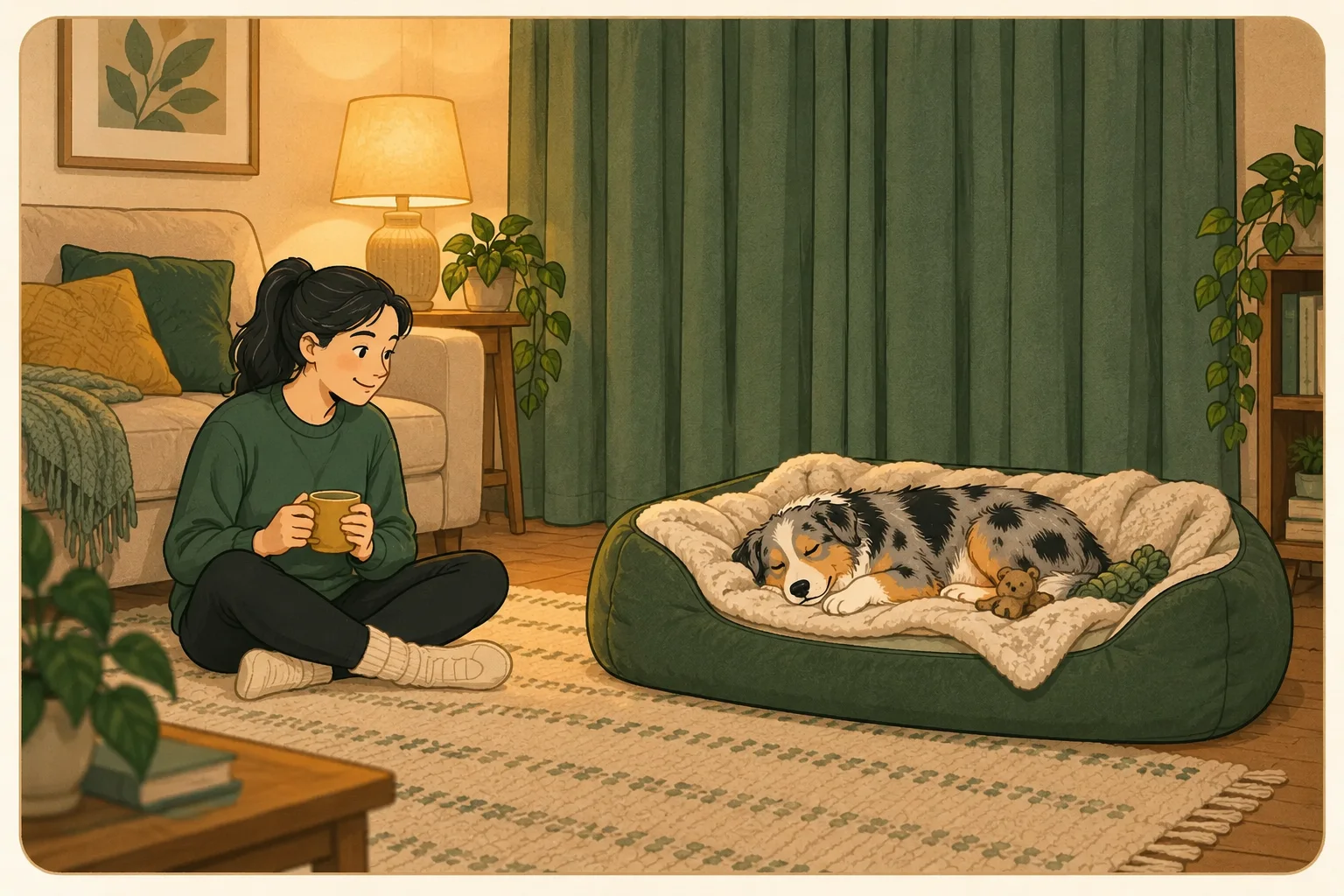
- Check likely local timings and bring the routine forward.
- Prepare the home and decide who stays with the dog.
- Arrange veterinary support ahead of known fear.
Turn this answer into a walk you can actually track.
GetWalkBuddy is a dog walking app for owners who want a simple route tracker, timer, distance view, and daily walk log without turning the walk into a spreadsheet.
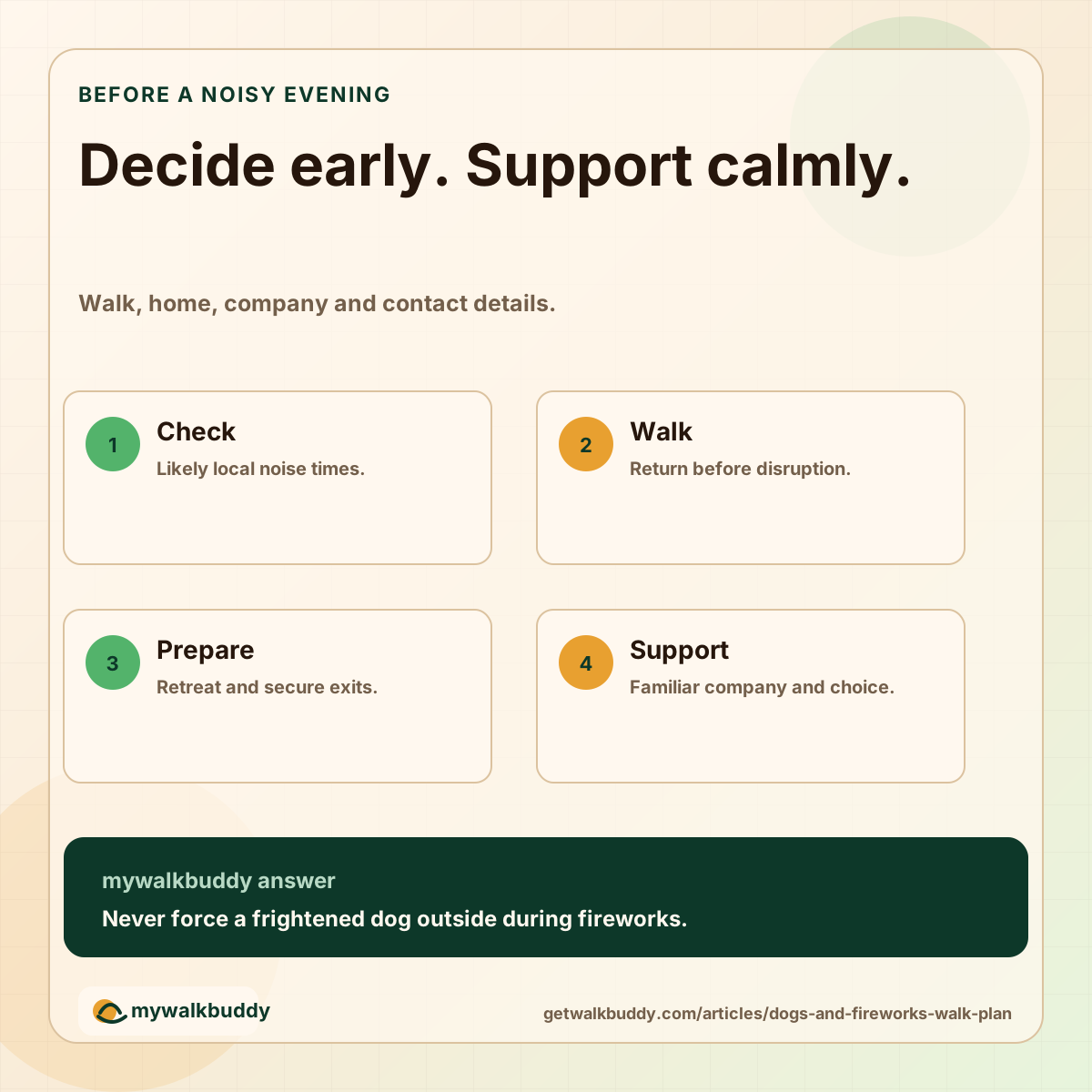
When should you walk a dog on a fireworks day?
Dogs Trust advises arranging walks so the dog is indoors before dark when fireworks are likely. Check local event timing rather than assuming one fixed hour applies everywhere.
Write down the earliest likely noise period, the walk departure and the planned return. Leave room for an ordinary delay so the plan does not depend on reaching home at the last minute.
Use local organizer announcements as planning information, while remembering that private fireworks may happen outside official display times. A published start time is not a promise that the neighborhood will be quiet beforehand.
Choose a familiar, manageable outing. The purpose is to meet the dog’s needs before the disruption, not to add an unusually demanding walk in the hope of guaranteeing sleep.
Sources: Dogs Trust: Preparing for Fireworks
How do you plan toilet opportunities?
Build toilet opportunities into the earlier routine and discuss any difficulty with your veterinarian or behavior professional. Do not force a frightened dog outside during fireworks.
Ask who will handle the dog’s last planned outing and who is available later if the routine becomes difficult. Make the arrangement explicit in households where different people usually take turns.
If you have a garden, check gates and access points before the evening. A familiar outdoor space still needs supervision and an appropriate safety plan when unexpected noise is possible.
If the dog refuses to go outside, do not turn the doorway into a struggle. Get advice for the individual dog, especially when this has caused repeated problems in previous years.
Keep the next morning in the plan too. Check the immediate route for leftover debris before returning to the usual routine.
What should be ready at home?
Prepare a familiar comfortable retreat, reduce flashes and noise where practical, and secure doors, windows and fences. Dogs Trust also recommends checking identification details.
Do a household walk-through in daylight. Which door do deliveries use? Can someone accidentally open the dog’s retreat? Does the planned room have the dog’s usual water and comfortable resting option?
Assign responsibility for the entry door and for staying with the dog. Those are different jobs if visitors or deliveries are expected.
Introduce a new resting arrangement before the event. A newly assembled hiding place on a noisy night may not feel familiar to the dog.
Keep ordinary familiar activities available, but let the dog choose whether to engage. Refusing a favorite toy is not a reason to keep presenting it more insistently.
Sources: Dogs Trust: Preparing for Fireworks
How should you respond if your dog is afraid?
Let the dog use its chosen safe place and offer calm reassurance if it seeks contact. Dogs Trust advises against punishment and against forcing the dog to face the noise.
Notice what the dog chooses: staying close, moving away, hiding or resting. Support that choice within the safe space rather than requiring the same response from every dog.
Keep the evening predictable. Avoid repeatedly calling the dog out to check whether it is “over it,” and do not take it to a window to watch the display.
Our evening note has three fields: what happened outside; where the dog chose to be; what support you used. The purpose is to help plan future care, not to score how brave the dog was.
When should you contact your veterinarian?
Make an appointment ahead of time if your dog shows fear of fireworks. Dogs Trust notes that a veterinarian can assess contributing medical issues and discuss behavioral or medication support.
Bring a short history: previous reactions, attempts to escape, difficulty toileting, how long disruption lasted and anything already tried. Describe behavior directly rather than asking for a particular product based on an advertisement.
If treatment is prescribed, clarify the timing and instructions before the event. Do not borrow another animal’s medication or improvise a dose.
Longer-term sound work is separate from managing an actual noisy evening. Ask a qualified professional how to approach it; playing loud recordings during an already frightening event is not a shortcut.
Sources: Dogs Trust: Supporting Your Dog During Fireworks; Dogs Trust: Preparing for Fireworks
What belongs on a one-page household plan?
Write the schedule, the dog’s safe space, caregiver responsibilities and contact information in one place so everyone follows the same arrangement.
Our card has six lines: likely noise window; walk and return plan; toilet arrangement; person staying home; door and gate responsibility; veterinary instructions and contact.
Afterward, add one practical change for next time. For example, “deliveries interrupted the quiet room; use a different room and entry arrangement.” This is an illustrative planning note, not a report of a tested protocol.
Keep the plan available for other noisy occasions. Review it when the dog’s needs or household routine changes rather than assuming last year’s arrangement still fits.
- Before: check timings and arrange an earlier walk.
- Prepare: secure exits and a familiar retreat.
- During: stay available and allow safe choices.
- After: record what would improve the next plan.
Questions owners ask when the leash is already in their hand
-
Should I take my dog to a fireworks display?
Do not use a display as an introduction to loud noise. Plan a suitable quiet arrangement away from the event, particularly for a dog with known fear.
-
Will an extra-long walk guarantee my dog sleeps through it?
No. Meet the dog’s normal activity needs without treating exhaustion as a reliable solution to fear.
-
Is it wrong to comfort a frightened dog?
Dogs Trust recommends calm reassurance when the dog seeks it. Do not punish fear or force interaction when the dog prefers a safe retreat.
-
Can I start sound training while fireworks are happening?
Focus on support and safety during the event. Plan structured sound work separately with appropriate professional guidance.
Plan the earlier outing.
Use GetWalkBuddy to keep familiar routes, walking time and distance in view. Arrange the day’s walk around the local event plan and your dog’s individual needs.