
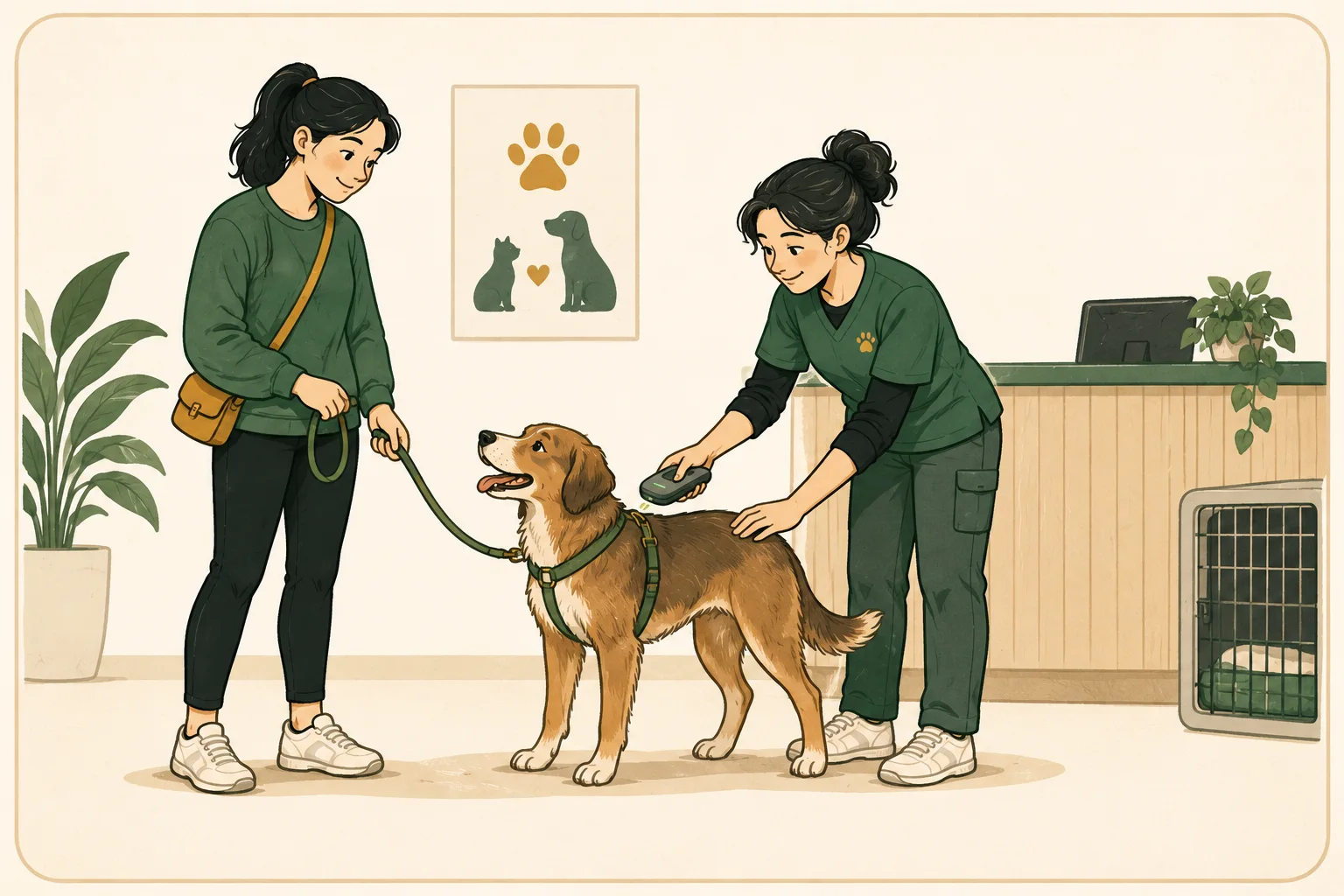
- Do not chase or create a traffic hazard.
- Report the location and follow the local found-animal process.
- Keep tags and arrange a professional microchip scan.
Turn this answer into a walk you can actually track.
GetWalkBuddy is a dog walking app for owners who want a simple route tracker, timer, distance view, and daily walk log without turning the walk into a spreadsheet.
What should you do before approaching?
Assess traffic, the dog’s behavior and your ability to stay safe. Humane World advises calling local animal control when you cannot safely restrain an unfamiliar animal.
If you are walking your own dog, keep it away from the loose dog while you arrange help. Managing two unfamiliar animals is a different task from observing one at a distance.
Do not step into traffic, pursue the dog or assume that reaching for a collar is harmless. A frightened or injured animal may respond unpredictably.
Your useful contribution may be a clear location report and continued observation from a safe place. You do not have to make physical contact to help.
What should you tell animal services?
Give the precise location, observation time, direction of movement, description and any apparent injury. Tell the dispatcher whether the dog is contained or still loose.
Use a road name, intersection, trail entrance or recognizable landmark. “Near me” will not help a responder who does not know your location.
Our report card has six fields: location; time; description; movement; immediate hazards; callback number. Write down any case reference and instructions you receive.
If the dog moves, send a concise update through the agreed channel rather than assuming responders can infer the new position from the first call. Do not put yourself in danger to keep following.
How do you check identification?
Keep any collar or tags with the dog and arrange a microchip scan through a shelter or veterinary clinic. AVMA explains that a scan can identify the registry associated with the chip number.
Only read a tag if you can do so safely. A collar without a readable tag does not tell you whether the dog has another form of identification.
Call ahead to ask where a found dog should be taken and whether staff can scan it. Do not assume that any building with an animal-related name accepts found dogs.
A microchip is not a GPS device and does not display the owner’s address on the dog. Staff use the identification number and registry process to help make contact.
Sources: AVMA: Microchipping FAQs
What if the dog is temporarily staying with you?
Notify the local shelter or animal control service first and follow its instructions. Humane World advises keeping a found animal separate from resident animals.
Clarify who is responsible for the next step: scanning, a found report, transport or temporary care. Write the arrangement down so the dog does not disappear between several well-meaning helpers.
Keep the dog securely and comfortably managed within your abilities. If you cannot provide suitable separation or safe handling, say so and ask the agency for another arrangement.
Do not treat the first quiet moment as proof that introductions to your pets are appropriate. There is no need to add a social meeting while identification is still being resolved.
How do you handle an ownership claim?
Use the local agency’s reunification process and ask for evidence that identifies the dog. Finding a dog without tags does not establish abandonment or make the finder its owner.
Keep a record of who contacts you and which details match. A current photo, veterinary record or distinctive description may help the responsible organization assess a claim.
For a public found notice, include enough information for an owner to recognize the situation while retaining an identifying detail to check. Avoid publishing private contact information from a tag or veterinary record.
If there is a dispute, do not resolve it through an argument at your front door. Ask animal services how to proceed and follow the applicable local process.
Check local requirements before any permanent rehoming decision. Holding and reporting rules vary, so an internet statement about a fixed number of days is not enough.
What makes a useful handover?
Pass along the factual history, retained identification and the steps already taken. A short written record prevents the next person from having to start over.
Include where and when the dog was found, whether it was loose or contained, observed concerns, agencies contacted, scan status and any reference numbers. Distinguish “not scanned yet” from “a scan found no chip.”
Keep interpretation out of the record. “Thin coat and no visible tag” is an observation; “abandoned by a careless owner” is a conclusion you cannot establish from finding the dog.
When the dog is reunited or transferred through the proper process, update your found notices and the people helping. This closes the loop and reduces obsolete reports.
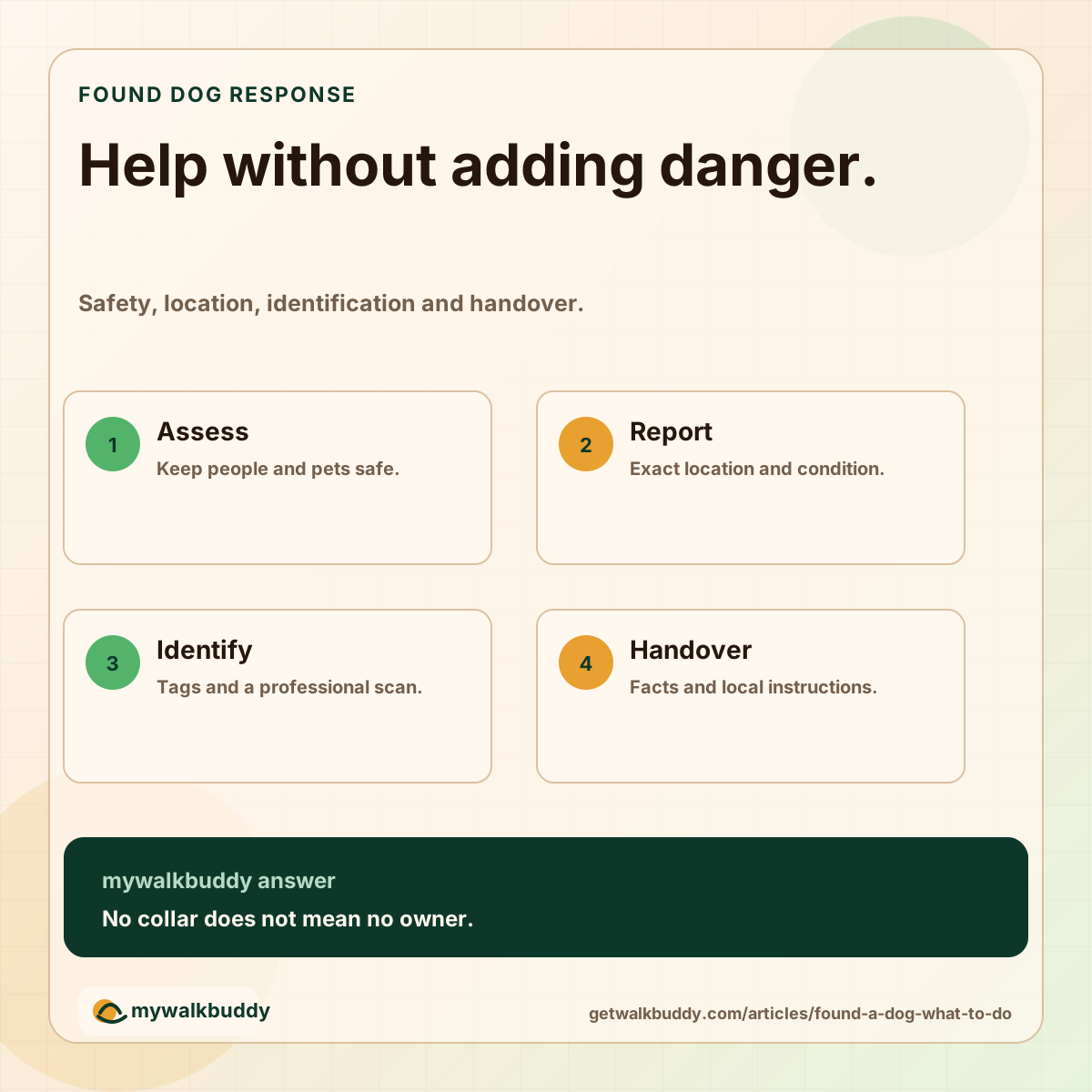
- Before approaching: assess safety and keep other pets away.
- Report: exact place, time and the dog’s condition.
- Identify: retain tags and arrange a scan.
- Handover: share facts, contacts and next steps.
Questions owners ask when the leash is already in their hand
-
Can I keep a dog because it has no collar?
Do not assume that a missing collar means no owner. Follow local found-animal reporting and holding requirements.
-
Where can I get a found dog scanned?
Ask a local shelter or veterinary clinic about microchip scanning and its intake process before transporting the dog.
-
Should I introduce it to my dog?
Keep resident animals separate while arranging identification and appropriate care.
-
What if I cannot safely catch the dog?
Contact local animal services and provide a precise location. Observe from a safe position if possible, without chasing or creating another hazard.
Keep the walk manageable.
GetWalkBuddy helps record your own walks, routes and time. For a found animal, contact local services and use the appropriate identification and reunification process.