
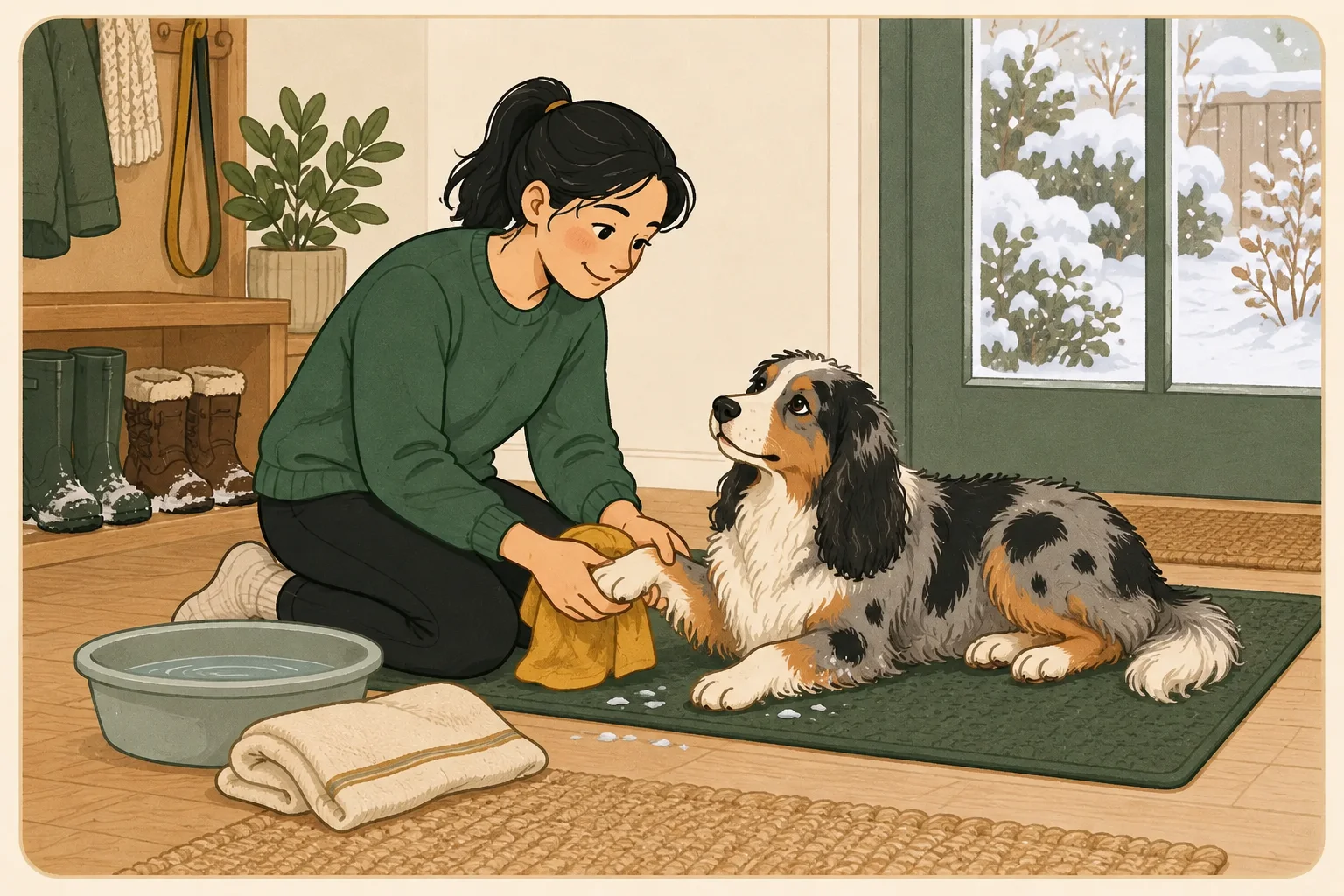
- Stop rather than making the dog walk through discomfort.
- Loosen ice gently with a warm damp towel, then dry.
- Plan prevention and seek help for pain or injury.
Turn this answer into a walk you can actually track.
GetWalkBuddy is a dog walking app for owners who want a simple route tracker, timer, distance view, and daily walk log without turning the walk into a spreadsheet.
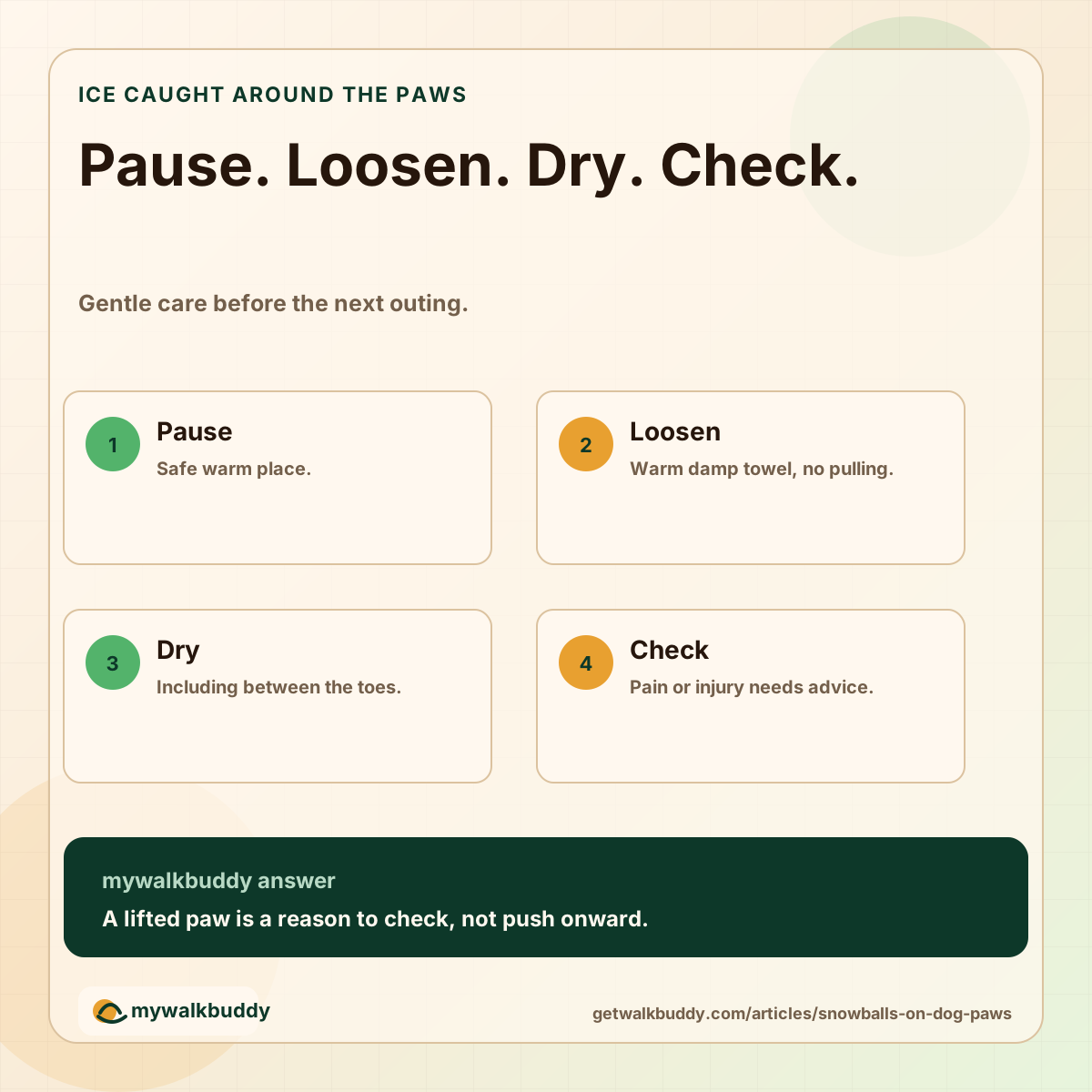
How can you tell the walk needs a pause?
AVMA notes that sudden lameness during a winter walk can reflect injury or ice between the toes. Do not assume that every lifted paw is harmless snow buildup.
Move to a safe place where you can observe the dog without standing in traffic or on slippery footing. If the dog is painful or handling is unsafe, get veterinary help.
Notice which paw is affected and whether the dog can bear weight. Tell the veterinary team what you saw rather than repeatedly flexing or squeezing a sore area.
Choose a return option based on the dog’s condition. Completing the planned loop is not a useful goal when the dog is struggling.
Sources: AVMA: Cold Weather Animal Safety
How do you remove ice balls without pulling?
AKC recommends gently applying a towel soaked in warm water to melt and loosen the ice. Pulling can remove hair and hurt the dog.
Prepare the towel and a stable nonslip place before handling the paw. Use comfortably warm water, not hot water, and avoid dragging a hard clump through the coat.
Work gently and pause if the dog becomes uncomfortable. The objective is to let the ice release, not to scrape, yank or cut it away close to skin.
Dry the paw and spaces between the toes afterward. If material remains stuck or the area appears injured, stop the home routine and ask the veterinary team how to proceed.
Sources: AKC: Paw Care and Snowball Removal
Can grooming reduce repeated buildup?
AKC suggests having a professional carefully trim the hair between the pads of longer-haired dogs. AVMA also identifies toe-hair management as a way to reduce ice accumulation.
If this happens repeatedly, show your groomer or veterinarian where it collects. A photo taken without distressing the dog can make the discussion more specific.
Do not improvise a close trim around a moving, painful paw. Ask for a suitable grooming plan before the next snowy outing.
Keep the observation narrow: which feet, what type of snow and how soon buildup appeared. That helps distinguish a recurring coat-management issue from a new painful change.
Sources: AKC: Paw Care and Snowball Removal; AVMA: Cold Weather Animal Safety
Do boots solve the problem?
Properly fitted boots can provide protection, but fit and the dog’s comfort matter. AVMA advises checking fit when using booties.
Introduce boots before depending on them outdoors. Check that they remain in place and that the dog can move comfortably; use the separate boot-training guide for a gradual introduction.
Carry a spare if losing one would leave you with no practical return plan. Stop to check equipment rather than assuming it remains correctly positioned for the entire walk.
Boots are one management option, not permission to ignore cold tolerance, surface hazards or changes in gait. A shorter route may still be the right choice.
Sources: AVMA: Cold Weather Animal Safety
What should be ready when you return?
Keep a clean towel, access to warm water and a dry nonslip place ready. A small return kit makes gentle care easier than improvising at the door.
Our winter return card has three decisions: ordinary wet paws need drying; visible ice needs gentle loosening; pain or suspected injury needs professional advice. Do not treat all three as the same cleanup job.
If de-icing products or another chemical may be present, prevent licking and get advice appropriate to that exposure. Removing visible snow does not identify what was mixed into it.
After the dog is comfortable, replace the wet towel and note any route section that caused repeated trouble. Use a manageable alternative rather than planning to repeat the same uncomfortable outing.
- Before: prepare towel, warm water and a short return option.
- During: stop for paw lifting, limping or discomfort.
- At home: gently loosen ice and dry the paws.
- After: seek advice for pain, injury or recurring problems.
Sources: AVMA: Cold Weather Animal Safety
Questions owners ask when the leash is already in their hand
-
Should I pull snowballs off the fur?
No. Gently melt and loosen them with a warm damp towel instead of pulling.
-
Is limping always caused by ice between the toes?
No. Injury is another possibility. Persistent limping, pain or bleeding needs veterinary advice.
-
Can I cut out a frozen clump with scissors?
Avoid cutting close to the skin of a moving or painful paw. Ask a professional for help if gentle loosening is not enough.
-
Does this replace normal post-walk cleaning?
No. This guide focuses on ice buildup. Follow an appropriate routine for ordinary dirt or any suspected chemical exposure separately.
Keep the return route short.
Use GetWalkBuddy to record familiar walking routes, time and distance. Choose an easy return in winter and adjust the outing when the dog becomes uncomfortable.