
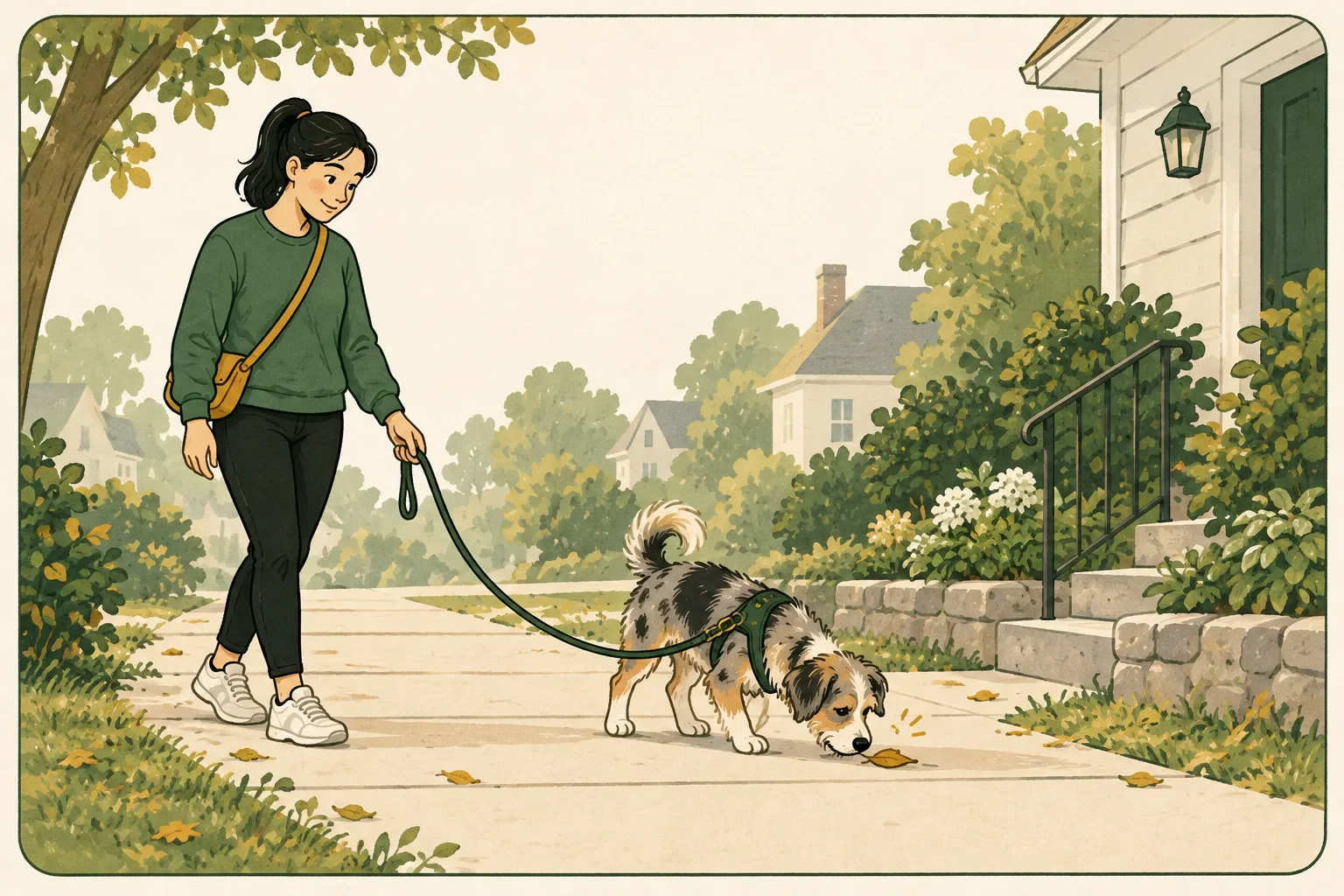
- Ask the rescue about routine, equipment and known concerns.
- Begin with manageable familiar outings and a simple return.
- Record observations and ask for help when the dog struggles.
Turn this answer into a walk you can actually track.
GetWalkBuddy is a dog walking app for owners who want a simple route tracker, timer, distance view, and daily walk log without turning the walk into a spreadsheet.
What should you ask before the first walk?
Ask the rescue organization about the dog’s established routine, health needs, handling and previous walking experience. Dogs Trust emphasizes learning the individual dog’s history and needs.
Bring a short list: what equipment has worked; which cues are familiar; what situations have been difficult; what activity restrictions apply; who should I contact if the first outings are hard?
Ask for a demonstration of the fitted walking setup if you are unsure. Check doors and gates before taking the dog out so the first trip does not begin with a rushed equipment adjustment at an open exit.
Write down what is known and what is still uncertain. “No information about traffic” is useful uncertainty; it is not the same as a dog being comfortable on a busy road.
Sources: Dogs Trust: Settling a Rescue Dog
How should you choose the first route?
Choose a quiet, manageable route with an easy return. Repeating a short familiar location follows Dogs Trust’s advice for the first few days.
Our route sketch needs only an exit, a calm stretch and a turnaround option. Avoid making the first outing depend on completing a loop with no easy way home.
Check the route yourself for narrow passages, busy entrances and places where other dogs gather. Select a quieter time if that changes the experience substantially.
You do not need to introduce every nearby park immediately. Familiar surroundings make it easier to compare how the dog responds from one outing to the next.
Sources: Dogs Trust: Settling a Rescue Dog
What if the dog is hesitant outdoors?
Give the dog space and time, and consult the rescue team if outings are difficult. Do not turn hesitation into a contest over finishing the route.
Pause somewhere safe and observe what changed: a noise, surface, person, doorway or piece of equipment. Write the observation as something visible, such as “stopped at the metal gate,” rather than assigning a motive.
If the dog is frightened, shorten the outing or return by a manageable route. Do not pull them toward a greeting or crowd to make up for missed exposure.
New pain, limping or illness warrants veterinary advice. A recent adoption does not explain every change in movement, and a behavior plan cannot replace a medical assessment.
How do you build a routine without a rigid rule?
Use a predictable pattern while responding to the individual dog. Dogs Trust advises allowing dogs to settle at their own pace and keeping a diary of their progress.
Our observation log has four fields: location; what happened; what helped; how the dog was afterward. “Quiet path, paused at bin, crossed street, rested normally at home” is more useful than “bad walk.”
Change one manageable part when the dog is coping: perhaps a slightly different quiet stretch rather than a longer outing, new handler and busy park all together.
A popular three-day, three-week or three-month slogan is not a deadline your dog has to meet. Ask the rescue team for individual support instead of interpreting the calendar as a test.
Sources: Dogs Trust: Settling a Rescue Dog
When should you contact the rescue or a professional?
Contact the rescue team when you are unsure how to manage an outing, when distress repeats or when you cannot safely meet the dog’s needs. Seek veterinary advice for possible health problems.
Prepare a concise description before calling: when the difficulty begins, what you can safely do, what has changed and whether there are physical signs. Include the rescue’s earlier instructions so the next plan starts from the same information.
Avoid experimenting with increasingly challenging routes while waiting for help. Ask for a workable interim plan for toileting and necessary outings.
Keep adoption support details with veterinary and emergency contacts. Early questions can be specific and practical; you do not need to wait until you feel the whole adoption is going badly.
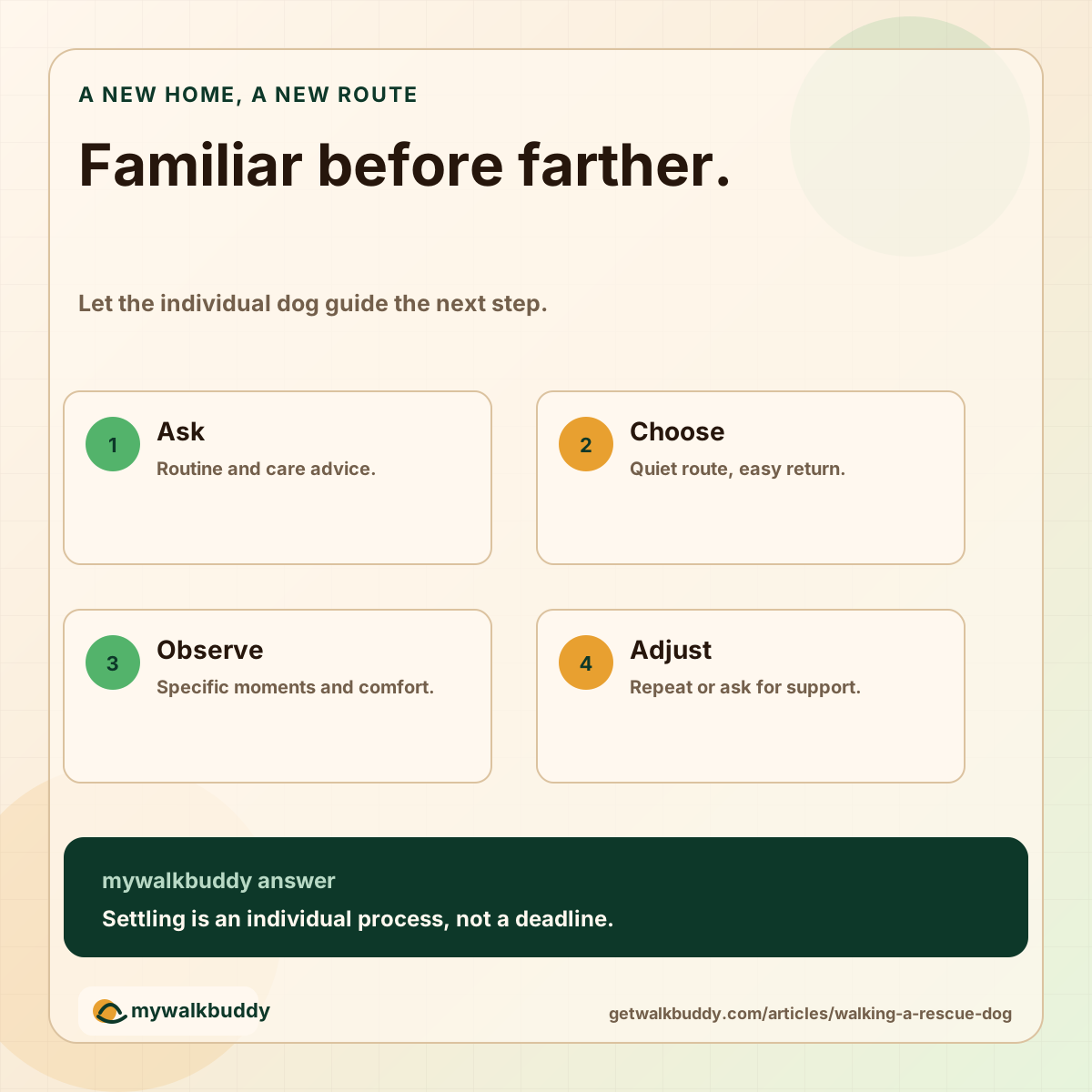
- Before: confirm the rescue’s care and equipment advice.
- Choose: a quiet route with an easy return.
- Observe: what the dog does and what helps.
- Adjust: repeat, simplify or seek individual support.
Questions owners ask when the leash is already in their hand
-
When can I start walking a newly adopted dog?
Ask the rescue organization and veterinary team about the individual dog. Health, previous routine and settling needs matter more than a universal day count.
-
Should the first walk be long to tire the dog out?
Do not use exhaustion as the goal. Start with manageable outings and follow individual care advice.
-
Should my rescue dog meet all the neighborhood dogs?
No. Avoid overwhelming introductions and let a suitable plan develop around the dog’s responses.
-
What should I record after a walk?
Note the route, specific situations, what helped and the dog’s comfort afterward. Share repeated concerns with the rescue team or veterinarian.
Keep familiar walks easy to recognize.
Record routes, time and distance in GetWalkBuddy, and keep observations to discuss with the rescue team. A route log supports the conversation; it does not assess the dog’s health or readiness.